
Imagine buying a charming home near a river, only to discover later that it sits in a high-risk flood zone. Understanding flood zones is essential for homeowners like you, as they can greatly impact your property’s safety and financial security. With various categories and implications for insurance rates, you’ll want to grasp how these zones work and how they could affect your home and future plans. What steps can you take to protect yourself?
What Are Flood Zones and Why Do They Matter?
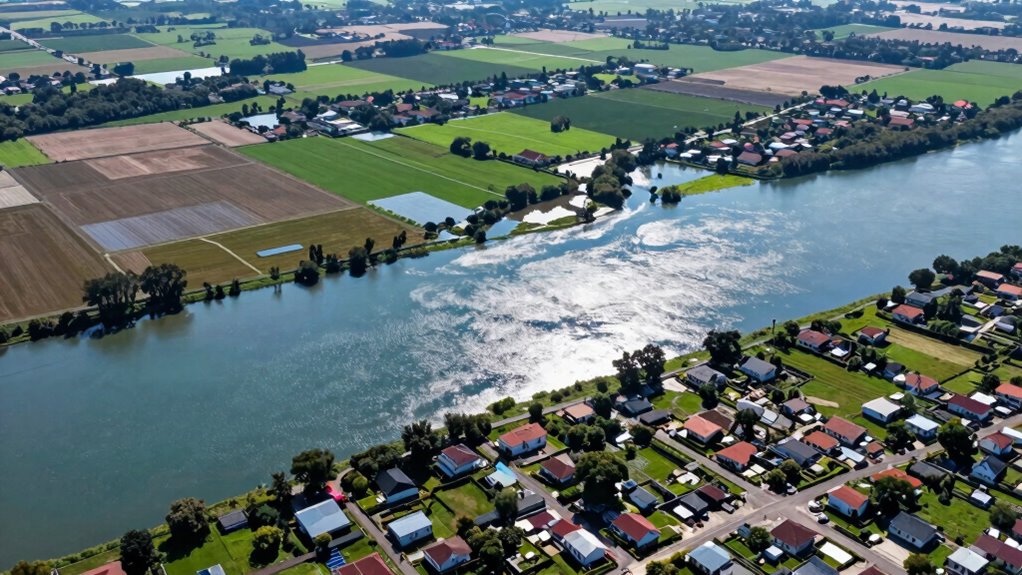
Flood zones are critical areas identified by the Federal Emergency Management Agency (FEMA) that indicate the risk of flooding in a given location. Understanding flood zone definitions is essential for homeowners, as these classifications help you assess potential hazards and make informed decisions about your property.
By conducting flood risk assessments, you can determine your vulnerability to flooding, which can influence everything from home insurance rates to necessary safety measures. Knowing whether you’re in a high-risk zone empowers you to take appropriate precautions, ensuring your freedom to live without constant worry.
Ultimately, awareness of flood zones equips you to better protect your home, finances, and peace of mind against unpredictable natural events.
The Different Types of Flood Zones Explained
When it comes to flood zones, understanding the differences can help you make informed decisions about safety and insurance.
You’ll encounter Special Flood Hazard Areas, where the risk is considerably higher, and Low-Risk Flood Zones, which might seem safer but still warrant attention.
Knowing these distinctions can empower you to protect your property and your peace of mind.
Special Flood Hazard Areas
While many people enjoy the beauty of rivers and coastal areas, they often overlook the risks associated with living in Special Flood Hazard Areas (SFHAs).
If you’re in an SFHA, understanding your flood risk is essential. Here are three key mitigation strategies to take into account:
- Elevate your home to reduce the likelihood of flood damage.
- Purchase flood insurance to protect your investment and finances.
- Implement landscape features like drainage systems to redirect water flow.
Low-Risk Flood Zones
Understanding low-risk flood zones is vital for homeowners and prospective buyers alike, as these areas can often be overlooked in flood preparedness discussions.
Low-risk zones, identified through flood zone mapping, typically have a reduced chance of flooding compared to high-risk areas. However, this doesn’t mean you should ignore the potential for water damage entirely.
Even in low-risk zones, localized flooding can occur due to heavy rainfall or poor drainage systems. It’s important to evaluate your insurance coverage; many homeowners in these zones mistakenly believe they don’t need flood insurance.
How FEMA Maps Flood Zones
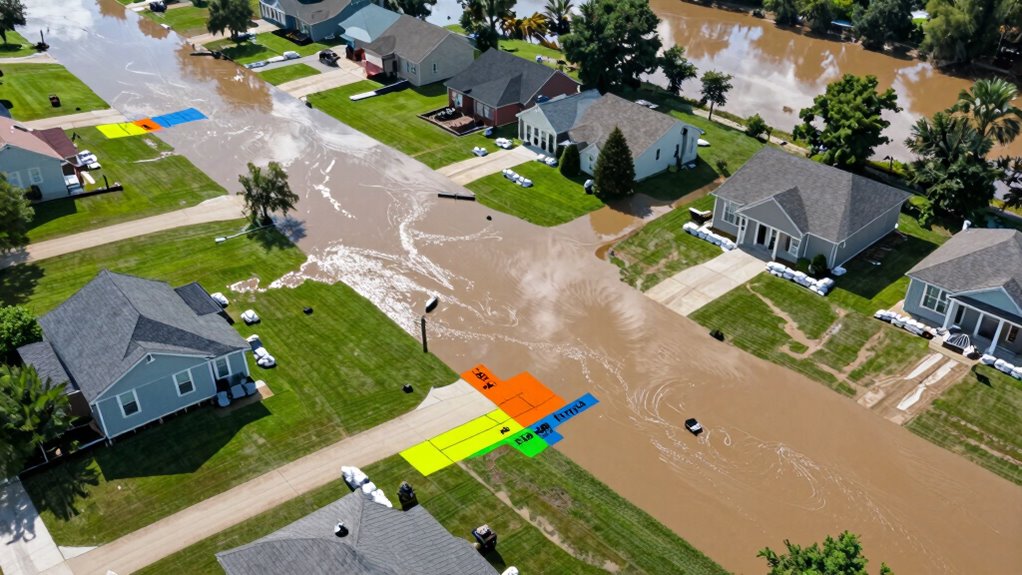
When it comes to mapping flood zones, FEMA employs a meticulous methodology that combines data collection, analysis, and modeling.
You’ll find that each flood zone designation reflects specific risk levels, helping you understand the potential dangers in your area.
Plus, these maps aren’t static; they undergo regular updates and revisions to guarantee they accurately reflect changing landscapes and conditions.
Mapping Methodology Overview
To accurately identify flood zones, FEMA employs a thorough mapping methodology that combines historical data, advanced modeling techniques, and field surveys. This approach helps you understand your flood risk and make informed decisions about your property.
Here are three key components of FEMA’s mapping techniques:
- Historical Data Analysis: FEMA reviews past flood events to identify patterns and trends in flood risk.
- Hydrologic and Hydraulic Modeling: Advanced simulations help predict water flow and flooding scenarios based on various conditions.
- Field Surveys: On-the-ground assessments validate and refine the data gathered from models and historical events.
Zone Designations Explained
FEMA’s flood zone designations are essential for evaluating your property’s flood risk and ensuring safety.
Understanding flood zone terminology is key to maneuvering these designations effectively. FEMA categorizes areas into zones, such as A, V, and X, each reflecting varying flood risks. Zone A indicates a high risk, while X shows minimal risk.
The accuracy of these designations relies on extensive data, including historical flood patterns and geographic features. By grasping these terms, you empower yourself to make informed decisions about insurance, property improvements, and emergency preparedness.
Updates And Revisions Process
Understanding your flood zone designation is just the beginning; knowing how these zones are updated and revised can greatly impact your property’s flood risk assessment.
FEMA regularly conducts flood zone updates and mapping revisions to reflect changes in geography, development, and climate patterns. Staying informed about these updates can empower you as a homeowner.
Here are three key factors that drive mapping revisions:
- New Data Collection: Advances in technology provide more accurate flood data.
- Environmental Changes: Natural events like hurricanes or significant rainfall can alter flood patterns.
- Community Input: Local feedback can highlight areas needing reevaluation.
Impact of Flood Zones on Insurance Rates
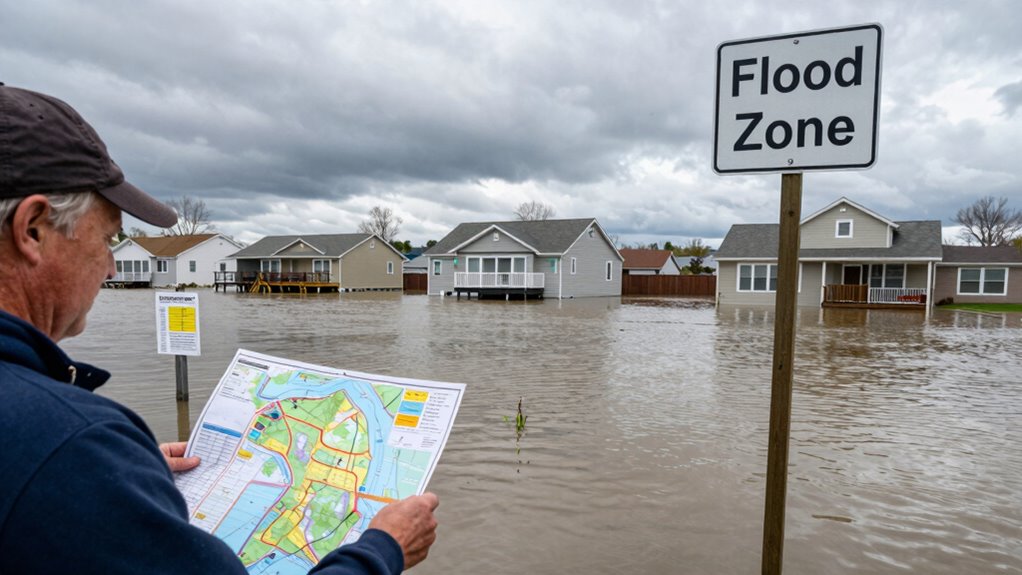
While maneuvering through the complexities of flood insurance, you’ll quickly discover that the flood zone designation of your property greatly influences your insurance rates. Understanding your flood zone is essential for risk assessment, as it directly impacts what you’ll pay for coverage.
| Flood Zone Type | Insurance Rate Impact |
|---|---|
| Zone A | High |
| Zone B | Moderate |
| Zone C | Low |
| Zone X | Minimal |
In high-risk areas like Zone A, you’re likely to face steep premiums. Conversely, properties in lower-risk zones may enjoy more affordable rates. By recognizing your flood zone, you can make informed decisions about your flood insurance, ultimately giving you more freedom in your financial planning.
Key Considerations for Homeowners Regarding Flood Zone Risks
As you navigate the realities of homeownership in flood-prone areas, it’s essential to reflect on various factors that can affect your property’s safety and value.
A proactive approach to flood zone preparedness not only safeguards your home but also enhances its marketability. Here are three key considerations to keep in mind:
- Understand Your Flood Zone: Know your flood zone designation to assess potential risks accurately.
- Insurance Coverage: Review your flood insurance policy to verify it meets your needs and covers potential damages.
- Mitigation Measures: Implement strategies like elevating your home or installing flood barriers to minimize future risks.
Practical Steps to Prepare for Flooding Risks
Preparing for flooding risks requires a proactive mindset and a solid plan.
Start by developing flood preparedness strategies tailored to your home’s specific vulnerabilities. Elevate critical appliances and documents to higher levels in your home.
Create an emergency evacuation plan that includes multiple routes and a designated meeting spot for your family. Stock up on essential supplies like water, non-perishable food, and first-aid kits, guaranteeing they’re easily accessible.
Additionally, stay informed about local weather alerts and flood predictions through reliable sources. Regularly review and practice your evacuation plan to make sure everyone knows their role.
How to Determine Your Property’s Flood Zone Status
To determine your property’s flood zone status, you’ll need to start with flood zone maps that identify different risk levels.
Familiarizing yourself with FEMA flood zone designations is essential, as they inform you about potential hazards.
Additionally, tapping into local government resources can provide valuable insights tailored to your specific area.
Understanding Flood Zone Maps
Understanding your property’s flood zone status is essential, especially if you live in an area prone to flooding.
Familiarizing yourself with flood zone terminology and mastering map interpretation techniques can empower you to make informed decisions.
Here are three key steps to determine your property’s flood zone status:
- Access FEMA Flood Maps: Visit the FEMA website to find and view flood zone maps specific to your area.
- Identify Your Zone: Look for your property on the map, noting the designated flood zone (e.g., Zone A, Zone X).
- Assess Risk Levels: Understand the implications of your zone designation, particularly regarding insurance requirements and potential risks.
FEMA Flood Zone Designations
While traversing FEMA flood zone designations might seem intimidating, knowing how to identify your property’s specific zone is essential for evaluating flood risk and insurance needs.
Start by accessing the FEMA Flood Map Service Center, where you can enter your address to find your zone. Understanding flood zone regulations helps you grasp potential risks and the necessity of flood insurance options.
Properties in high-risk areas often require mandatory flood insurance, while those in lower-risk zones have more flexibility. By familiarizing yourself with these designations, you empower yourself to make informed decisions about protecting your home.
Local Government Resources
If you’re unsure about your property’s flood zone status, local government resources can be invaluable in guiding you through the process.
Here are three steps to help you access local assistance effectively:
- Visit the Local Planning Department: They often have flood zone maps and can provide specific information about your property.
- Check Online Resources: Many municipalities offer online tools where you can input your address and determine your flood zone designation.
- Explore Government Programs: Look into community programs that may offer financial assistance or insurance guidance tailored to your flood zone classification.
Utilizing these resources can empower you to make informed decisions regarding flood risks and insurance options, ensuring you’re prepared for any eventuality.
The Importance of Elevation Certificates in Flood Zones
Elevation certificates play an essential role in flood zones, as they provide crucial data about a property’s elevation in relation to the Base Flood Elevation (BFE).
Understanding the elevation certificate benefits can empower you as a homeowner, helping you make informed decisions about flood insurance and property improvements. By obtaining elevation certificates, you can potentially lower your flood insurance premiums and guarantee compliance with local regulations.
This document also aids in evaluating flood risk, giving you a clearer picture of your property’s vulnerability. Furthermore, it can be a valuable asset when selling your home, showcasing your commitment to safety and informed living.
In short, elevation certificates are key tools that enhance your freedom and security in flood-prone areas.
Upcoming Changes in Flood Zones Homeowners Should Watch For
As climate change intensifies, it’s essential for homeowners to stay informed about upcoming changes in flood zones that could impact their properties.
Future floodplain management is evolving, and it’s critical to understand how these shifts may affect you. Here are three key items to watch for:
Understanding evolving floodplain management is crucial for homeowners to navigate potential impacts on their properties.
- Revised Flood Maps: Expect updates reflecting new data on climate impacts, which may expand the areas designated as flood-prone.
- Insurance Rate Changes: As flood zones change, so will flood insurance rates, potentially increasing your costs considerably.
- Local Policy Adjustments: Municipalities may adopt stricter building codes and zoning laws to adapt to evolving climate impacts, affecting your property’s value.
Staying proactive about these changes can help safeguard your home and financial investments.
Resources for Homeowners in Flood-Prone Areas
Steering through life in flood-prone areas can be challenging, but several resources are available to help you protect your home and family.
First, consider obtaining flood insurance; it’s essential for safeguarding your investment against water damage. Websites like FEMA provide information on available policies and how to apply.
Next, focus on emergency preparedness. Create a family emergency plan, including a communication strategy and evacuation routes. Local government websites often offer resources, such as emergency kits and community support programs.
Additionally, joining local groups or online forums can connect you with fellow homeowners who share tips and experiences.
Frequently Asked Questions
How Can I Appeal My Flood Zone Designation?
To appeal your flood zone designation, gather supporting data, document inconsistencies, and submit your appeal following FEMA guidelines. Be persistent and clear in your argument; you’ve got the right to challenge inaccurate flood zone classifications.
What Should I Do if My Property Floods?
If your property’s flooded, don’t panic! You can assess flood damage, document everything, and contact your insurance. Then, prioritize property recovery by cleaning up, seeking professional help, and preparing for future floods. Freedom awaits!
Are Flood Zones Permanent or Can They Change?
Flood zones aren’t permanent; they can change. Mapping updates reflect environmental shifts, urban development, or climate factors. Stay informed to protect your property and adapt to evolving flood risks in your area.
Do I Need Flood Insurance if I’m in a Low-Risk Zone?
You might think you don’t need flood insurance in a low-risk zone, but those benefits can save you from unexpected disasters. Even in safer areas, flood damage can happen—better safe than sorry, right?
How Do I Find Local Flood Recovery Resources?
You can find local flood recovery resources by contacting your community’s emergency management office, visiting local government websites, or checking with non-profit organizations. They often provide valuable assistance and guidance for flood recovery efforts.