Many people overlook the importance of camera compatibility when choosing security systems, especially with software like Blue Iris. The right camera can greatly enhance your surveillance capabilities, and in 2026, one model stands out from the rest. It combines high-resolution imaging with user-friendly features, making it an excellent choice for your security needs. Curious about which camera could redefine your monitoring experience? Let’s explore what makes it the top pick.
Key Takeaways
- The Amcrest 5MP Turret POE Camera offers UltraHD resolution, ideal for detailed surveillance and identification needs.
- Its compatibility with H.264 video compression ensures efficient storage without compromising image quality in Blue Iris.
- The camera supports POE, simplifying installation with a single cable for both power and data transmission.
- With a 132° wide viewing angle and effective night vision up to 98 feet, it provides comprehensive surveillance coverage.
- ONVIF support and updatable firmware ensure seamless integration and future compatibility with Blue Iris software.
| Amcrest 5MP Turret POE Camera (IP5M-T1179EW-AI-V3) |  | Best Overall | Resolution: 5 Megapixels (2592×1944) | Night Vision Range: 98 feet | Weather Resistance: IP67 rated | VIEW LATEST PRICE | Read Our Analysis |
More Details on Our Top Picks
Amcrest 5MP Turret POE Camera (IP5M-T1179EW-AI-V3)
If you’re looking for a reliable security camera that seamlessly integrates with Blue Iris, the Amcrest 5MP Turret POE Camera (IP5M-T1179EW-AI-V3) is an excellent choice. This UltraHD outdoor camera offers a stunning 5MP resolution and a wide 132° viewing angle, ensuring you capture every detail. With impressive night vision capabilities that reach up to 98 feet, it excels in low-light conditions. Its sturdy IP67-rated housing withstands harsh weather, making it perfect for outdoor use. Plus, with Power Over Ethernet (POE) connectivity, installation is straightforward. Enjoy lifetime support from Amcrest and join thousands of satisfied customers who trust this camera.
- Resolution:5 Megapixels (2592×1944)
- Night Vision Range:98 feet
- Weather Resistance:IP67 rated
- Audio Capability:Built-in mic for one-way audio
- Storage Options:Supports MicroSD (up to 256GB), Amcrest Cloud, NVRs, FTP
- Compatibility:Compatible with Amcrest View Pro 2 app and third-party software (e.g., Blue Iris)
- Additional Feature:5 Megapixel resolution
- Additional Feature:Power Over Ethernet (POE)
- Additional Feature:Starlight low light technology
Factors to Consider When Choosing Security Cameras Compatible With Blue Iris
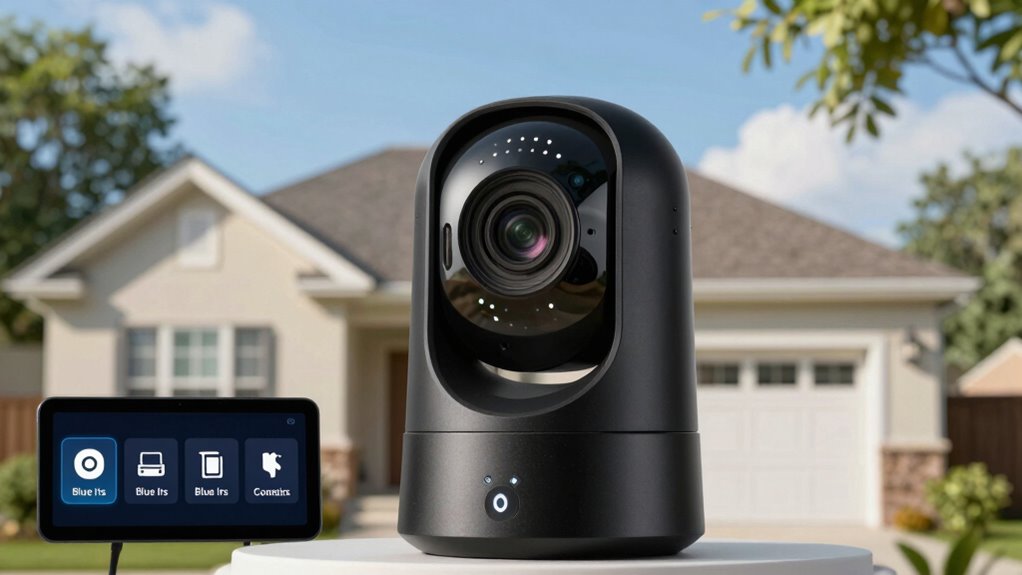
When choosing security cameras compatible with Blue Iris, you need to evaluate several key factors. Camera compatibility, video resolution, and storage capabilities play a significant role in ensuring effective surveillance. Additionally, think about installation ease and the durability of the cameras to withstand different weather conditions.
Camera Compatibility Requirements
Choosing a security camera compatible with Blue Iris requires careful consideration of several key factors to guarantee peak performance. First, verify the camera supports standard video compression formats like H.264, as this is essential for compatibility with Blue Iris software. Next, check that it connects via Ethernet, since Blue Iris typically needs wired IP cameras for reliability. Verify the camera offers a fixed IP address option, since dynamic IPs can complicate integration. Look for cameras with RTSP (Real-Time Streaming Protocol) features for seamless streaming and recording. Finally, confirm the camera’s firmware can be updated, guaranteeing ongoing compatibility and access to new features within the Blue Iris platform. Consider these factors to make an informed choice.
Video Resolution Options
Video resolution options play a critical role in selecting security cameras compatible with Blue Iris. You’ll find resolutions ranging from standard 720p to high-definition 1080p, and even UltraHD options like 4MP and 5MP. Higher resolutions, especially 5MP, provide clearer images, making it easier to identify faces and license plates. However, keep in mind that increased resolution can demand more storage space and bandwidth for video transmission. Blue Iris supports various resolutions, allowing you to tailor your camera choice to your surveillance needs. Also, consider the balance between video resolution and low-light performance, as higher resolution cameras may struggle in low-light situations without additional technologies. Make sure to weigh these factors carefully for best results.
Storage Capabilities Consideration
While evaluating security cameras for compatibility with Blue Iris, it’s essential to contemplate their storage capabilities, as these can greatly influence your overall surveillance strategy. Look for cameras that support MicroSD cards, external hard drives, or Network Attached Storage (NAS) systems to guarantee ample data retention. High-resolution cameras, like those at 5MP, generate larger file sizes, so consider your storage needs accordingly. Opt for models that utilize video compression formats like H.264 to minimize file sizes without compromising quality. Additionally, check the maximum storage capacity, as some can handle larger MicroSD cards or offer cloud storage options. Finally, assess the recording settings—continuous or motion-detected—as they considerably impact storage usage and how often footage is overwritten.
Installation and Setup Ease
When selecting security cameras that work well with Blue Iris, installation and setup ease can greatly impact your overall experience. Look for cameras that support standard protocols like ONVIF, making integration with Blue Iris seamless. Cameras with Power Over Ethernet (POE) capabilities are ideal, as they allow you to transmit power and data through a single cable, simplifying your setup. Choose models that come with user-friendly software or app support featuring clear setup wizards. Consider devices with fixed IP addresses or DHCP support to streamline network configuration. Finally, opt for cameras with thorough documentation and reliable customer support, ensuring you have assistance for any installation challenges you might encounter.
Durability and Weather Resistance
Choosing security cameras that are durable and weather-resistant is vital, especially if you plan to install them outdoors. Look for cameras with high durability ratings, like IP67, to guarantee they resist dust and can withstand water immersion. Heavy-duty housing is essential for enduring harsh conditions such as rain, snow, and extreme temperatures. Built-in IR LEDs are a plus, providing night vision without compromising durability. Additionally, check that the materials are corrosion-resistant to safeguard against humidity and pollution. Finally, consider the operating temperature range specified by the manufacturer to make sure the camera operates effectively in your local climate. By keeping these factors in mind, you’ll enhance your surveillance system’s reliability and longevity.
Frequently Asked Questions
What Is Blue Iris and How Does It Work?
Blue Iris is a powerful video surveillance software that lets you manage multiple cameras from one interface. You can connect IP and USB cameras, enabling you to monitor your property in real-time. It records video, detects motion, and sends alerts when it senses activity. You can customize settings to suit your needs, ensuring you capture what matters most. With its user-friendly interface, you’ll find it easy to keep an eye on your surroundings.
Can I Use Multiple Cameras With Blue Iris?
Absolutely, you can use multiple cameras with Blue Iris! Think of it like a symphony, where each camera plays its part to create a cohesive picture of your surroundings. You’ll connect various IP cameras, configure their settings, and manage them all from a single interface. It’s versatile, allowing you to monitor different areas simultaneously, ensuring you’re always aware of what’s happening. So, go ahead and expand your surveillance setup with confidence!
Is Blue Iris Software Compatible With Mac or Linux?
Blue Iris isn’t natively compatible with Mac or Linux. It’s designed primarily for Windows systems. However, you can run it on these platforms by using a virtual machine or compatibility layer, like Wine. If you’re set on using Mac or Linux, you might want to contemplate alternative software that supports your operating system directly. That way, you’ll get the best performance and features without the hassle of workarounds.
How Does Blue Iris Handle Cloud Storage?
Blue Iris handles cloud storage by allowing you to configure your settings to save footage to various cloud services. You can set up automated uploads for captured video or snapshots, ensuring you have offsite backups. The software supports multiple options, enabling you to choose what’s best for your needs. Just remember, you’ll need a reliable internet connection for smooth uploads, and check that your chosen cloud service is compatible with Blue Iris.
Are There Any Subscription Fees for Using Blue Iris?
You might be wondering if using Blue Iris comes with any hidden costs. The good news is, there aren’t any subscription fees for the software itself. You’ll pay a one-time purchase price for the license, and that’s it! However, keep in mind that additional costs may arise if you choose to use cloud storage or specific hardware. Overall, it’s a cost-effective solution for your security needs without ongoing fees.