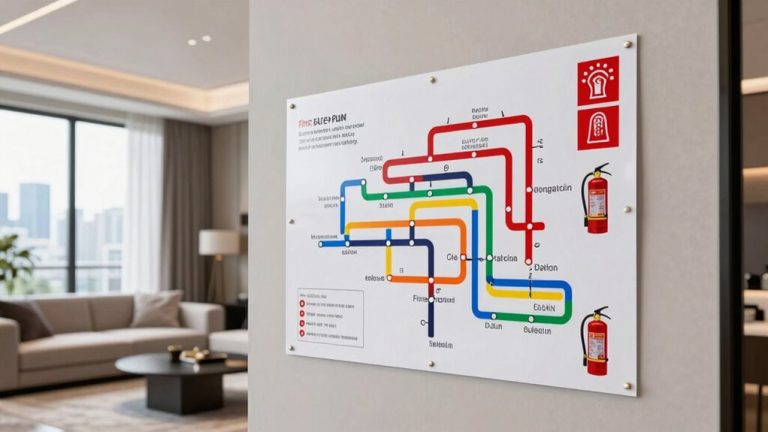
Some might argue that emergency response time is just one factor in survival rates, but the evidence is clear: it plays a pivotal role. A mere delay can drastically reduce the likelihood of a positive outcome for victims, particularly in cases like cardiac arrest. Understanding the nuances of this relationship is essential for communities aiming to enhance their emergency services. What strategies can be implemented to bridge the gap between response times and survival rates?
The Importance of Emergency Response Time in Life-Threatening Situations

When a life-threatening emergency occurs, every second counts. Your ability to access urgent care swiftly can notably impact outcomes. Immediate trauma response is essential; the faster medical professionals arrive, the better the chance of survival.
Delays can exacerbate injuries and complicate treatment, leading to dire consequences. In urgent situations, recognizing signs and acting promptly can save lives. You must understand the importance of rapid communication with emergency services, ensuring that they reach you without unnecessary delays.
Each moment spent waiting for help can reduce the effectiveness of interventions. Consequently, promoting efficient trauma response systems is critical for community safety and individual freedom. The quicker you can secure urgent care, the greater your chances of survival and recovery.
Key Statistics Linking Response Time to Survival Rates
Rapid response time is directly linked to improved survival rates in emergency situations. Understanding the response time statistics can empower you to advocate for better emergency services.
Here are four key correlations that illustrate this connection:
- Under 5 minutes: Survival rates can exceed 70% in cardiac arrest cases.
- 5 to 10 minutes: Survival rates drop to around 50%, highlighting urgency.
- 10 to 15 minutes: Expectations fall further, with survival rates potentially below 30%.
- Over 15 minutes: Chances of survival diminish greatly, often to less than 10%.
These survival rate correlations emphasize the critical nature of prompt emergency response. Recognizing these statistics can inspire communities to prioritize quicker emergency services, ultimately saving lives.
How Communities Can Improve Emergency Response Times?
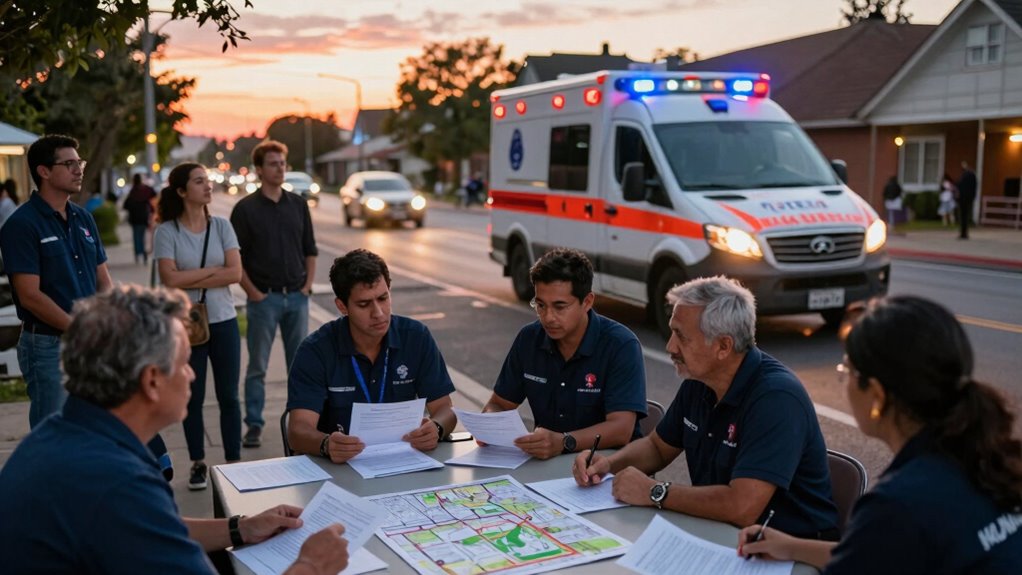
To enhance emergency response times, communities must prioritize improved training programs for first responders.
By investing in advanced communication systems, you can guarantee that emergency calls are handled efficiently and accurately.
Additionally, engaging the community in preparedness initiatives fosters a proactive approach to emergency situations, ultimately saving lives.
Enhanced Training Programs
Although emergency situations can be unpredictable, communities can greatly enhance their response times through well-structured training programs.
By focusing on key components, you can guarantee your teams are prepared.
Consider implementing the following:
- Simulation exercises that mimic real-life scenarios, allowing responders to practice their skills.
- Specialized certifications for emergency personnel, ensuring they’re equipped with the latest knowledge and techniques.
- Regular drills to reinforce training and improve teamwork among responders.
- Community workshops to educate citizens on basic emergency response, empowering them to assist until professionals arrive.
Improved Communication Systems
When effective communication systems are in place, communities can greatly reduce emergency response times. Utilizing advanced communication tools enhances information sharing between emergency responders and the public. For instance, integrating mobile apps and alert systems guarantees timely alerts and updates during crises.
| Communication Tools | Benefits |
|---|---|
| Mobile Alert Systems | Instant notifications |
| Social Media Channels | Real-time information sharing |
| Community Alert Networks | Localized emergency updates |
| Dispatch Software | Streamlined response efforts |
Community Engagement Initiatives
Effective communication systems lay the groundwork for enhanced community engagement initiatives, which can greatly boost emergency response times. Additionally, real-time threat analysis can help communities identify potential emergencies before they escalate.
By fostering community partnerships and increasing public awareness, you can create a proactive environment ready to respond effectively.
Consider these strategies:
- Host training sessions for residents on first aid and emergency procedures.
- Establish neighborhood watch programs to monitor and report emergencies quickly.
- Distribute informational materials about local emergency services and contacts.
- Organize community drills to guarantee everyone knows their roles in an emergency.
Implementing these initiatives not only cultivates a sense of ownership among citizens but also assures that they’re equipped to react swiftly, ultimately leading to improved survival rates during emergencies. Additionally, security awareness training can help communities recognize and mitigate risks associated with emergency situations.
How Different Types of Emergencies Affect Response Time
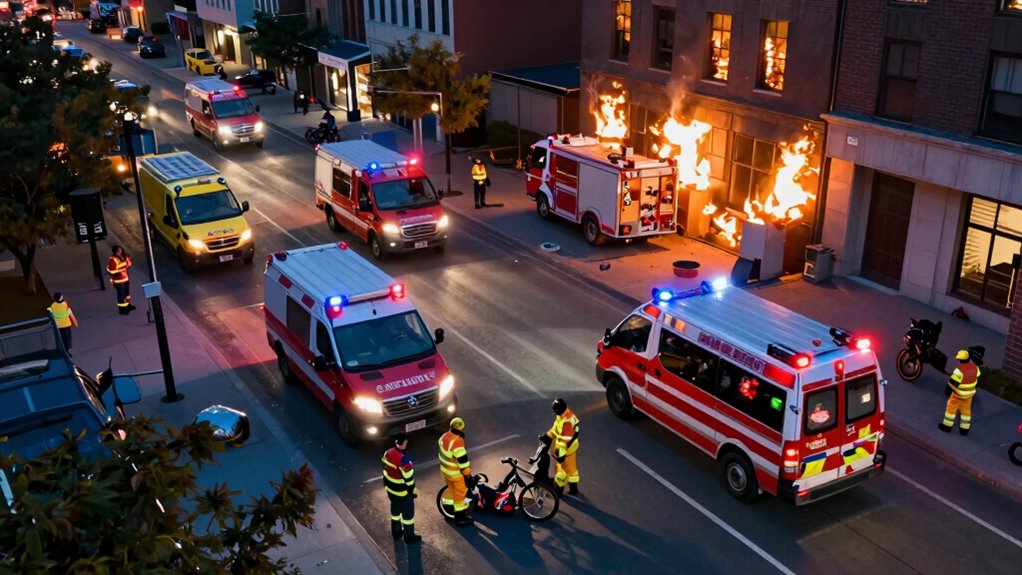
Different types of emergencies greatly influence response times, as each scenario presents unique challenges and demands.
For instance, fire emergencies often require immediate action, with rapid dispatch being vital to prevent escalation. In contrast, medical emergencies might depend on location and the nature of the injury, affecting how quickly help can arrive.
Natural disasters, such as hurricanes or earthquakes, complicate response efforts due to widespread damage and accessibility issues. Traffic accidents can create chaotic situations, where first responders must navigate traffic and guarantee their own safety before assisting victims.
Natural disasters and traffic accidents present unique challenges, hindering response efforts and prioritizing first responders’ safety.
Finally, industrial accidents may involve hazardous materials, requiring specialized teams that could delay response times. Each type of emergency necessitates tailored approaches to optimize response effectiveness and enhance survival rates.
Actionable Strategies to Enhance Emergency Response Efficiency
Understanding the unique challenges posed by various emergencies lays the foundation for implementing actionable strategies that enhance response efficiency.
To optimize your emergency response, consider these four strategies:
- Conduct training simulations to replicate real-life scenarios, improving team readiness and decision-making under pressure.
- Analyze past emergencies to identify weaknesses in your response protocols, enabling targeted improvements.
- Implement efficient resource allocation by ensuring that personnel and equipment are strategically positioned based on historical data and risk assessments.
- Foster clear communication channels among team members and external agencies to reduce response time and enhance coordination during crises.
How Technology Can Enhance Emergency Response Times
You can leverage technology to notably improve emergency response times through real-time data analysis, enabling quicker decision-making.
Drones can facilitate rapid delivery of medical supplies, ensuring that help reaches those in need faster than traditional methods.
Additionally, mobile app integration provides instant communication between responders and the public, streamlining the entire emergency response process.
Real-Time Data Analysis
As emergency situations unfold, leveraging real-time data analysis considerably enhances response times and outcomes.
By implementing effective real-time monitoring and data visualization techniques, you can transform emergency management. Here’s how:
- Instant situational awareness: Access live data feeds to understand the crisis.
- Resource allocation: Identify where to deploy personnel and equipment efficiently.
- Communication streamlining: Keep all responders informed with up-to-the-minute updates.
- Predictive analytics: Anticipate possible developments based on current trends.
These strategies empower you to make informed decisions under pressure, leading to quicker interventions.
By harnessing real-time data, you’re not just reacting; you’re proactively shaping the response landscape.
Embracing technology in this manner guarantees that lives are saved and communities are better protected.
Drones for Quick Delivery
While traditional emergency response methods often face delays due to traffic and logistical challenges, drones have emerged as a revolutionary solution for quick delivery in vital situations.
These unmanned aerial vehicles streamline drone logistics, enabling rapid transport of essential medical supplies, equipment, or even personnel to hard-to-reach locations. With their ability to bypass road congestion, drones greatly reduce response times and improve survival rates.
Additionally, aerial surveillance capabilities allow responders to assess situations from above, providing critical data that informs decision-making and resource allocation.
Mobile App Integration
Integrating mobile apps into emergency response systems can markedly enhance response times and overall efficiency.
With the right mobile app features and an intuitive user interface, you can streamline communication and coordination among responders.
Consider these enhancements:
- Real-time location tracking: GPS integration allows responders to pinpoint incidents quickly.
- Instant alerts: Push notifications keep all personnel updated on evolving situations.
- Resource management: Apps can catalog available equipment and personnel, optimizing deployment.
- Data sharing: Secure platforms enable rapid transmission of critical patient information to hospitals.
Community Initiatives to Optimize Emergency Services and Save Lives
Community initiatives play an essential role in optimizing emergency services and enhancing survival rates during critical situations. By fostering community partnerships, you can create a robust network that enables effective communication and resource allocation.
These partnerships often include local organizations, businesses, and volunteers, all working together to streamline response efforts.
Engaging citizens through training programs and awareness campaigns empowers individuals to act quickly in emergencies, potentially saving lives.
Additionally, strategic resource allocation guarantees that essential supplies and personnel are available where they’re needed most.
Frequently Asked Questions
What Factors Influence Individual Perceptions of Emergency Response Times?
You perceive emergency response times through a lens shaped by perception bias and response expectations. Imagine waiting, heart racing, as seconds stretch painfully—your experience alters based on media portrayals and personal encounters, influencing your judgment.
How Can Bystanders Help Improve Outcomes Before Responders Arrive?
You can improve outcomes through bystander intervention by administering basic first aid, calling for help, and ensuring a safe environment. Community education empowers you to act effectively, enhancing life-saving efforts before responders arrive.
What Role Do Weather Conditions Play in Emergency Response Time?
Weather conditions considerably impact emergency response times. Severe rain or snow can cause response delays, affecting access routes and visibility. Understanding these effects allows you to better prepare and advocate for improved emergency services in your community.
Are There Specific Training Programs for Improving Emergency Response Skills?
Yes, specific training programs exist that focus on simulation exercises for skill enhancement. These programs help you practice real-life scenarios, ensuring you’re prepared and confident in emergency situations, ultimately boosting your effectiveness in saving lives.
How Does Public Awareness Affect Community Emergency Response Effectiveness?
Public awareness greatly boosts community engagement in emergency response. By participating in awareness campaigns, you empower neighbors to act decisively during crises, ultimately enhancing overall effectiveness and fostering a resilient, self-reliant community ready to respond.