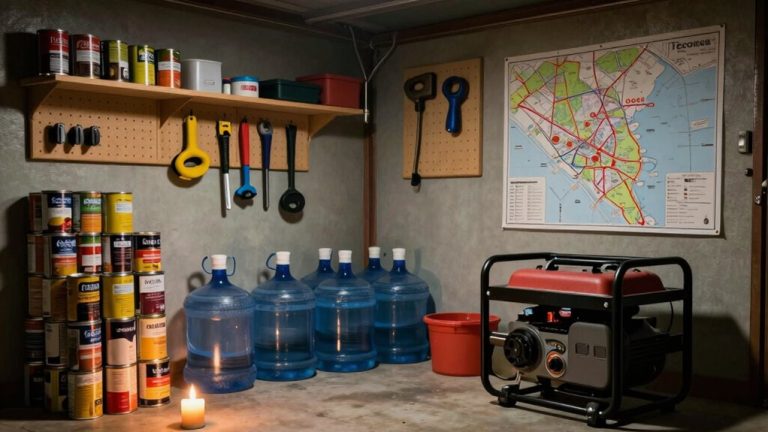
When life throws unexpected challenges your way, having a solid plan can make all the difference. Creating a 72-hour emergency plan for your family isn’t just smart—it’s crucial. You’ll want to assess your family’s unique needs, establish clear communication, and gather important supplies. But what should you include in your emergency kit, and how do you guarantee everyone knows what to do when it counts? Let’s explore the steps to enhance your family’s preparedness.
Assess Your Family’s Unique Emergency Needs and Risks

When evaluating your family’s unique emergency needs and risks, start by identifying specific factors that could impact your safety.
Consider your family health, including any medical conditions or disabilities that may require special attention during emergencies. Conduct a thorough risk assessment of your environment, noting potential hazards like natural disasters, crime rates, or health emergencies.
Assess your family’s location and available resources, such as nearby hospitals and emergency services. Don’t forget to involve every family member in this process; their input can provide valuable insights.
Develop an Effective Family Communication Strategy for Emergencies
Establishing a clear communication strategy is essential for your family during emergencies, as it guarantees everyone knows how to connect and share important information.
Establishing a clear communication strategy ensures your family stays connected and informed during emergencies.
Start by identifying reliable communication tools that work for your family, such as mobile phones, walkie-talkies, or messaging apps.
Make certain each family member knows the following:
- Emergency contacts: List key people to reach out to in a crisis.
- Meeting points: Designate safe locations where your family can regroup.
- Communication methods: Decide on which tools to use based on the situation.
Regularly practice your plan and update your emergency contacts.
This proactive approach guarantees everyone remains informed and safe, allowing your family to navigate through emergencies with greater confidence.
Build Your 72-Hour Emergency Kit Checklist
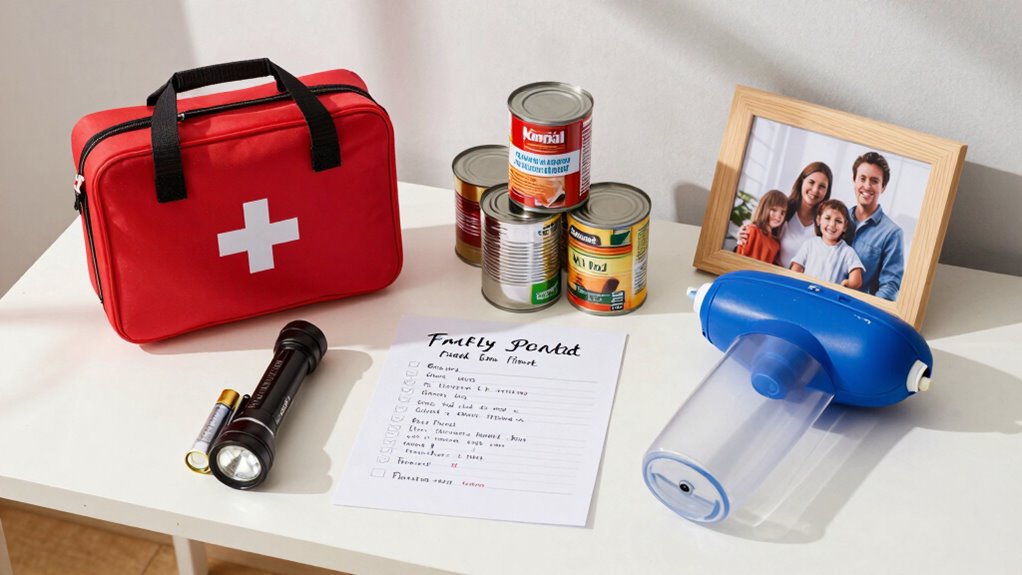
Creating a 72-hour emergency kit is essential for your family’s safety and preparedness during a crisis.
Start by gathering food supplies that are non-perishable and easy to prepare, like canned goods, granola bars, and dried fruits. Don’t forget to include enough water—one gallon per person per day is a good rule.
Next, pack a first aid kit that covers basic medical needs, including bandages, antiseptics, and any personal medications. Add a flashlight, batteries, and a multi-tool for added versatility.
Store these items in a waterproof container for protection. Finally, consider including a whistle, copies of important documents, and cash.
Regularly check and update your kit to keep it ready for any emergency.
Set Safe Meeting Spots and Escape Routes
It’s important to set safe meeting spots and escape routes for your family in case of an emergency. Knowing where to go can greatly enhance your safety and peace of mind. Choose locations that are easily accessible and familiar to everyone.
Consider these points when designating safe locations and evacuation routes:
- Identify a primary meeting spot close to your home, like a neighbor’s yard or a park.
- Select a secondary location farther away, such as a community center or school.
- Make certain all family members know the quickest evacuation routes from your home and other frequented places.
How to Practice Your Emergency Plan for Maximum Readiness?
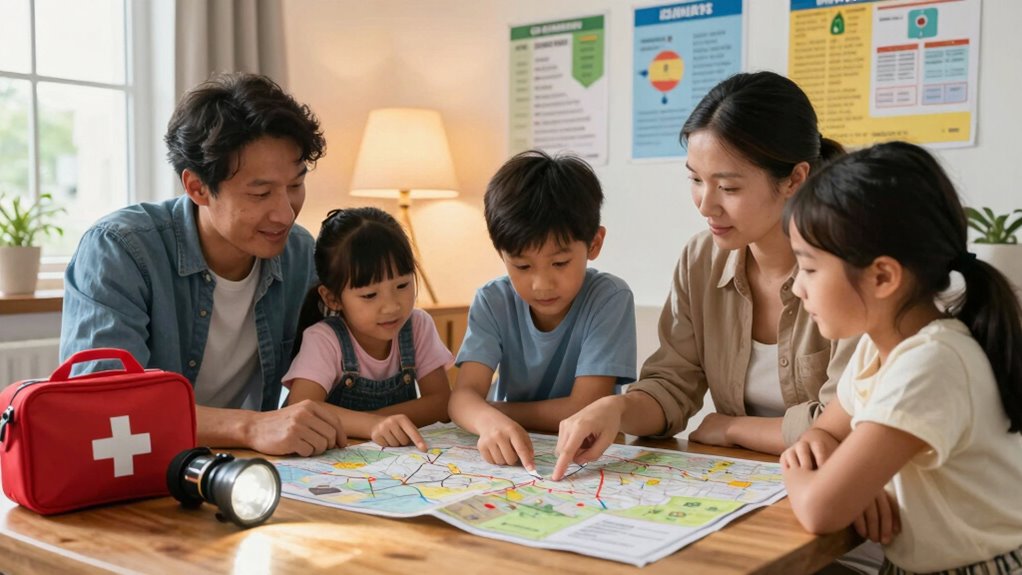
Practicing your emergency plan is essential for ensuring everyone in your family knows what to do when an unexpected situation arises.
Start by creating a drill schedule that outlines regular practice sessions, so everyone stays familiar with the plan. Include different scenarios to keep things engaging and realistic.
Each family member should have a role assignment, ensuring everyone knows their responsibilities during an emergency. For example, designate who grabs the emergency kit, who contacts emergency services, and who leads the family to the safe meeting spot.
After each drill, discuss what went well and what could improve. This feedback loop helps refine your plan and boosts confidence, making your family more prepared for any situation.
Frequently Asked Questions
What Types of Emergencies Should We Prepare For?
When the storm clouds gather, you need to prepare for natural disasters like hurricanes and earthquakes, as well as medical emergencies such as injuries or sudden illnesses. Being ready keeps your family safe and sound.
How Often Should We Review Our Emergency Plan?
You should review your emergency plan at least twice a year. Conduct emergency drills and make necessary plan updates to guarantee everyone’s familiar with procedures and can act swiftly during real emergencies. Stay prepared, stay free!
Can Pets Be Included in Our Emergency Plan?
Absolutely, you can include pets in your emergency plan. Prepare a pet evacuation kit with emergency supplies like food, water, and medications to guarantee their safety and comfort during emergencies. They’re family too!
What if Family Members Are in Different Locations During an Emergency?
When disaster strikes, think of your family as a well-oiled machine. Utilize communication strategies and location coordination to keep everyone informed and connected, ensuring safety regardless of where each member finds themselves.
How Can We Involve Children in the Planning Process?
Involve children by role playing scenarios where they use the emergency kit. Let them choose items for it, discuss their importance, and practice what to do. This makes them feel empowered and prepared for emergencies.