Many homeowners overlook the intricate web of pool safety laws that can greatly impact their liability. Understanding these regulations is vital, as non-compliance can lead to serious legal repercussions. It’s not just about having a pool; it’s about knowing your responsibilities as an owner. What specific measures should you implement to guarantee both safety and compliance? The answer lies in recognizing the essential components of responsible pool ownership.
Understanding Pool Safety Laws: An Overview
When it comes to pool safety laws, understanding their framework is crucial for both property owners and users. These laws often vary by region, reflecting local priorities and community guidelines.
Understanding pool safety laws is essential for property owners and users, as these regulations vary by region and ensure a safe swimming environment.
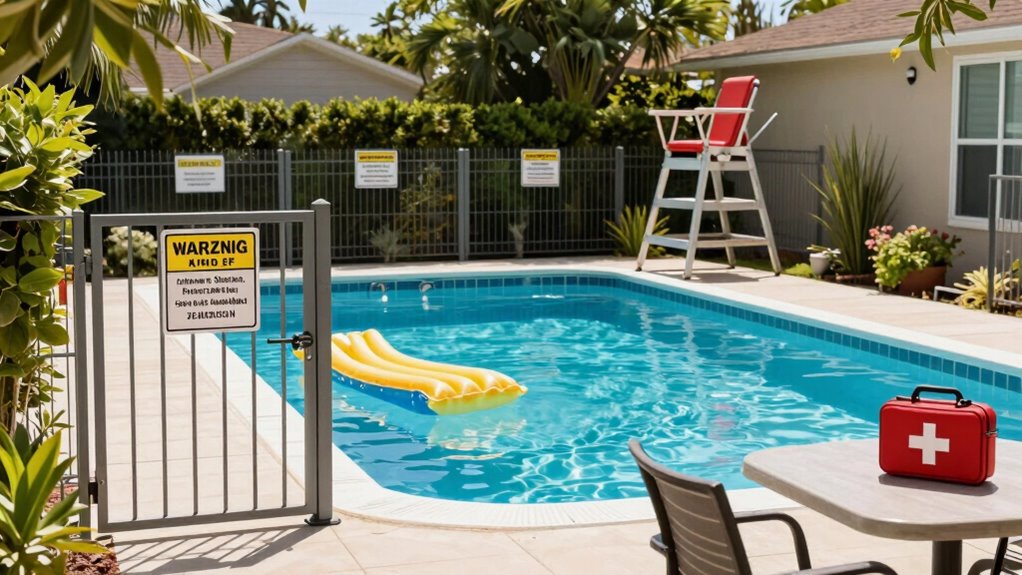
As a pool owner, you’re responsible for familiarizing yourself with regulations regarding fencing, signage, and safety equipment. These rules not only protect users but also enhance your property’s value.
Users, on the other hand, should be aware of their rights and responsibilities within the context of pool ownership. Knowing the legal requirements helps foster a safe environment and encourages everyone to enjoy the freedom of recreational swimming.
Adhering to these laws cultivates a sense of community trust and guarantees that your pool is a safe haven for all.
Essential Responsibilities for Pool Owners to Ensure Safety
Ensuring pool safety requires owners to take specific and proactive measures that go beyond mere compliance with local laws. First, regular pool maintenance is essential; this includes checking water quality, cleaning debris, and ensuring all equipment functions properly. Neglecting these tasks can lead to hazardous conditions, increasing the risk of accidents.
Next, develop a solid emergency preparedness plan. Familiarize yourself with first aid procedures and keep lifesaving equipment, like a reaching pole or flotation device, readily accessible.
Additionally, consider hosting safety drills so everyone understands how to respond in an emergency.
Key Pool Safety Barriers and Fencing Requirements
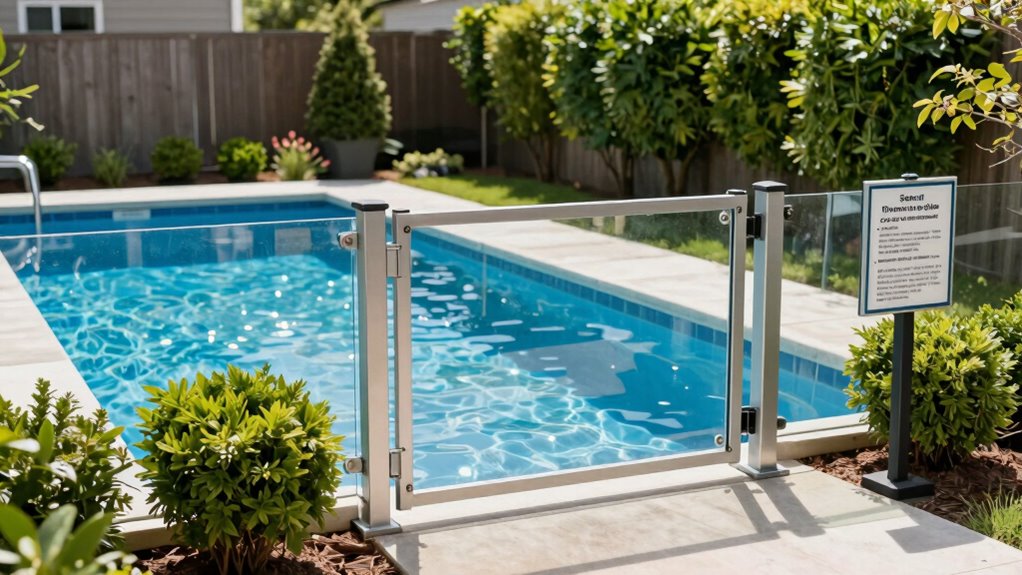
When it comes to pool safety, understanding fencing height requirements is essential to prevent unauthorized access.
You should also pay attention to gate design specifications and barrier material regulations, as these factors play a significant role in ensuring safety.
Compliance with these requirements not only protects swimmers but also helps you avoid legal liabilities.
Fencing Height Requirements
Fencing height requirements play a crucial role in enhancing pool safety by preventing unauthorized access. To guarantee effectiveness, you need to understand the specified heights based on local regulations, which can vary.
Typically, fences should stand at least four feet tall, but height variations may exist depending on your area’s laws or specific hazards. When selecting fence materials, opt for durable options like aluminum, vinyl, or wood, as they can withstand environmental factors while maintaining structural integrity.
Additionally, consider how the material choice impacts overall aesthetics and your property’s value. By adhering to these fencing height requirements, you not only protect others but also embrace a responsible approach to pool ownership, guaranteeing that your recreational space remains both enjoyable and safe.
Gate Design Specifications
A well-designed gate serves as a critical component of pool safety barriers, playing a pivotal role in restricting access to the pool area.
To guarantee effectiveness, your gate must incorporate reliable gate latch mechanisms that are childproof yet easy for adults to operate. These mechanisms should automatically close and latch securely after each use, minimizing the risk of accidental access.
Additionally, consider gate accessibility features that allow for smooth entry while still maintaining safety standards. Ascertain your gate is at least 54 inches high and installed with no gaps larger than four inches at the bottom.
Barrier Material Regulations
While a well-designed gate is essential for restricting access, the materials used for pool barriers also play an important role in ensuring safety.
You must comply with local regulations that outline specific barrier materials and construction standards. Commonly accepted materials include aluminum, vinyl, and tempered glass, each offering different levels of visibility and durability.
Ensure your chosen material can withstand environmental conditions and potential impacts, as this directly affects its effectiveness.
Considerations like height, strength, and design also factor into compliance with safety standards.
Why Pool Safety Equipment and Signage Matter
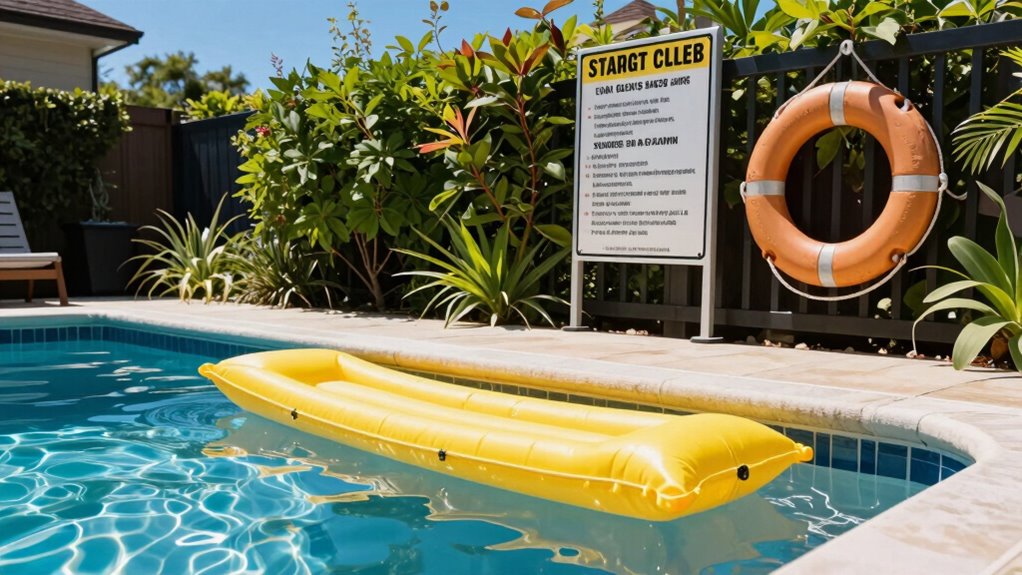
Understanding the importance of pool safety equipment and clear signage is vital for everyone involved in pool management.
These elements not only enhance safety but also guarantee compliance with legal requirements, minimizing liability risks.
Essential Safety Equipment
Equipping a pool area with essential safety equipment and clear signage drastically reduces the risk of accidents and enhances overall safety. Using tools like pool alarms and safety nets can be critical in protecting swimmers. Here’s a quick overview of essential safety equipment:
| Equipment Type | Purpose |
|---|---|
| Pool Alarms | Alerts you when someone enters the pool area unexpectedly. |
| Safety Nets | Prevents unauthorized access and keeps children safe when unsupervised. |
| Life Preservers | Provides flotation support during emergencies. |
| First Aid Kits | Guarantees immediate response to minor injuries. |
Investing in these safety measures not only safeguards lives but also promotes peace of mind. Your responsibility as a homeowner includes guaranteeing that these essentials are readily available and properly maintained.
Clear Signage Importance
Clear signage plays an essential role in pool safety by providing crucial information that helps prevent accidents.
When you maintain high signage visibility, you empower pool users to make informed decisions. Effective signage can greatly reduce risk, ensuring everyone understands the potential dangers.
Here are key elements to take into account:
- Warning labels should clearly state hazards, such as depth and slippery surfaces.
- Instructions on using safety equipment need to be concise and easy to follow.
- Emergency contact information must be prominently displayed for quick access.
- Rules and guidelines should be visible to encourage responsible behavior.
Legal Compliance Requirements
Pool safety equipment and signage aren’t just recommended best practices; they’re often mandated by law.
As a homeowner, you have legal obligations to guarantee your pool area is safe for all users. This includes properly installing safety barriers, alarms, and signage that clearly indicate pool rules and safety measures.
Compliance enforcement varies by jurisdiction, but failure to adhere to these regulations can lead to fines and liability in case of accidents. Understanding these requirements is vital for protecting your freedom as a homeowner.
How to Supervise Pool Use Safely
Although many people enjoy relaxing by the water, ensuring safety during pool use requires vigilant supervision.
You must adopt active supervision strategies to minimize risks and enhance enjoyment for everyone involved. Here are some key practices to implement:
- Assign a designated “water watcher” who actively supervises swimmers at all times.
- Keep emergency equipment, such as flotation devices and a first-aid kit, easily accessible.
- Establish clear pool rules and communicate them to all users before swimming.
- Regularly review your emergency preparedness plan, including CPR training and emergency contact numbers.
Local Pool Regulations and Inspections
When it comes to ensuring a safe swimming environment, understanding local pool regulations and inspections is essential. Local ordinances vary widely, so you need to familiarize yourself with the specific requirements in your area.
These regulations often cover fencing, drainage, and safety equipment, all aimed at preventing accidents. Regular pool inspections are critical for compliance and safety. They help identify potential hazards, ensuring your pool meets the necessary standards.
Some municipalities may require you to submit inspection reports or maintain records of safety checks. By adhering to these local regulations, you not only protect your guests but also safeguard your property from legal liabilities.
Being proactive in understanding and following these rules is important for responsible pool ownership.
Common Pool Safety Violations to Avoid
Many homeowners overlook common pool safety violations that can lead to serious accidents or legal issues.
Homeowners often neglect crucial pool safety violations, risking serious accidents and potential legal repercussions.
It’s important to debunk pool safety myths and address common misconceptions to guarantee a safe swimming environment.
Here are some violations to avoid:
- Not installing a proper fence or barrier around the pool
- Leaving pool covers unsecured or improperly installed
- Failing to have life-saving equipment readily available
- Ignoring local regulations or safety guidelines
Resources for Pool Safety Education and Training
Understanding pool safety violations is just the beginning; educating yourself and others about pool safety practices is essential for prevention.
To enhance your knowledge, consider attending pool safety workshops. These hands-on sessions often provide practical skills and real-world scenarios that you can apply immediately.
Additionally, online training courses offer flexible learning options that fit your schedule, allowing you to study at your own pace. Many of these resources cover essential topics, including emergency response protocols, the importance of supervision, and proper fencing standards.
Frequently Asked Questions
What Are the Penalties for Violating Pool Safety Laws?
If you violate pool safety laws, you could face fines imposed by local authorities. Additionally, legal consequences may include increased liability in case of accidents, affecting both your finances and freedom to operate a private pool.
Do Homeowners Need Insurance for Their Pools?
Yes, you need pool insurance for liability coverage. It protects you from potential accidents or injuries on your property. Without it, you risk significant financial loss, so consider securing adequate coverage for peace of mind.
Can I Use Inflatable Pools Without Permits?
You can often use inflatable pools without permits, but check your local inflatable pool regulations and temporary pool guidelines. Different areas have unique rules, so confirming local requirements guarantees a hassle-free experience while enjoying your pool.
How Often Should I Inspect Pool Safety Equipment?
Safety equipment’s your lifeline; inspect it regularly. For ideal pool maintenance, conduct safety inspections at least once a month. This proactive approach guarantees your pool remains a safe haven for family and friends year-round.
Are There Age Restrictions for Pool Supervision?
Yes, there are age restrictions for pool supervision. Generally, adults must supervise young children. Specific laws vary by location, so you should check local regulations to verify compliance and enhance safety during pool activities.