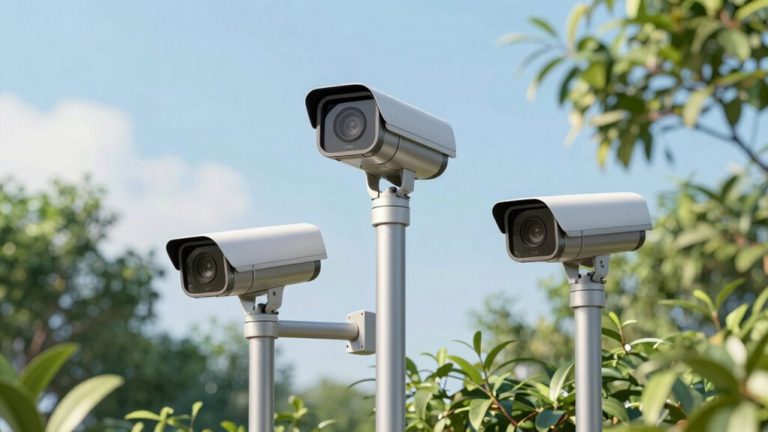
Installing surveillance cameras can feel like putting up a protective shield, but without understanding the laws that govern their use, that shield might become a liability. Privacy laws are complex and vary greatly, shaping how you can legally monitor areas. Do you know what consent is required or how to avoid potential legal pitfalls? These questions are essential as you navigate the landscape of surveillance.
Key Takeaways
- Understand local laws regarding camera placement to avoid infringing on privacy rights in both public and private spaces.
- Familiarize yourself with consent requirements, as recording in private spaces often necessitates consent from individuals present.
- Be aware of the Federal Wiretap Act and the Video Privacy Protection Act, which impose strict regulations on video surveillance practices.
- Implement clear signage to notify individuals about camera presence, fostering trust and transparency in surveillance practices.
- Regularly review stored footage and establish a protocol for deletion to comply with retention laws and protect individuals’ privacy.
What You Need to Know About Surveillance Camera Laws

When considering the installation of surveillance cameras, what legal aspects should you keep in mind?
First, think about camera placement. Guarantee your cameras are directed at areas where you have a legitimate interest, like your property or business space. Avoid pointing them at public areas or neighboring properties to respect others’ privacy rights. Installing video doorbell cameras provides a practical solution for monitoring entry points without infringing on others’ privacy.
Next, consider the recording duration. Many jurisdictions require you to limit how long you store footage, often around 30 days, unless a specific incident mandates longer retention.
Consider limiting your footage storage to around 30 days, unless specific incidents require longer retention.
Familiarize yourself with local laws regarding notification; some areas require you to inform individuals that they’re being recorded. Additionally, it’s wise to ask questions regarding any surveillance laws to ensure full compliance. Understanding these factors helps you navigate legal boundaries while safeguarding your rights and freedoms.
Federal Regulations on Video Surveillance

When it comes to federal regulations on video surveillance, understanding the Federal Wiretap Act and the Video Privacy Protection Act is essential.
These laws outline the permissible boundaries for recording and retaining video footage, while also emphasizing the importance of state-specific regulations that may further restrict your actions.
Knowing these regulations helps you navigate the complex landscape of privacy laws effectively.
Federal Wiretap Act
While the Federal Wiretap Act primarily addresses the interception of electronic communications, it also has significant implications for video surveillance.
When considering installing cameras, you must understand the consent requirements that come into play. Here are three essential points to keep in mind:
- Know Your Rights: Ensuring you respect privacy is vital for maintaining trust.
- Avoid Legal Pitfalls: Violating the federal wiretap can lead to severe penalties.
- Empower Your Space: Thoughtful surveillance can enhance safety without infringing on freedom. Additionally, understanding professional monitoring services can help you navigate the complexities of video surveillance while ensuring compliance with legal standards.
Video Privacy Protection
Understanding the nuances of the Video Privacy Protection Act (VPPA) is essential for anyone considering video surveillance, as it sets strict guidelines on how recorded footage can be used and shared.
The VPPA primarily focuses on protecting individuals’ privacy expectations regarding their video recordings. It prohibits the disclosure of personally identifiable information without consent, ensuring that your footage remains confidential.
Before installing cameras, you need to understand that any video recording that captures identifiable individuals falls under this protection. Violating the VPPA can lead to significant penalties, so you must tread carefully.
Always prioritize transparency and obtain consent from those being recorded, safeguarding both their privacy and your legal standing in the domain of video surveillance.
State-Specific Regulations
Beyond the federal framework established by laws like the Video Privacy Protection Act, it’s vital to recognize that state-specific regulations can impose additional requirements on video surveillance practices.
Familiarizing yourself with state laws regarding camera usage is important for safeguarding your rights and those of others. Here are three key considerations:
- Consent Requirements: Some states require you to obtain consent from individuals before recording them.
- Public vs. Private Spaces: Regulations may differ based on whether cameras are installed in public or private areas.
- Storage and Data Protection: States often have strict guidelines on how long you can store footage and how to protect it.
Understanding these nuances can empower you to navigate the complexities of video surveillance law effectively.
State Privacy Laws Governing Surveillance Cameras

Across the United States, state privacy laws play an essential role in regulating the installation and use of surveillance cameras.
These laws vary markedly, impacting how you can monitor your property. Some states impose strict camera regulations, requiring you to inform individuals being recorded, while others allow greater freedom in surveillance practices.
Understanding your state’s specific rules is important, as non-compliance can lead to legal repercussions. In states with robust privacy protections, unauthorized state surveillance can result in fines and liability.
Always stay informed about updates or changes in legislation to guarantee your use of cameras aligns with legal expectations. This knowledge empowers you to protect your space without infringing on others’ rights to privacy.
Do You Need Consent to Record Footage?

When it comes to recording footage, understanding state privacy laws is essential.
You need to take into account whether you’re in a public or private space, as this affects consent requirements.
Knowing these distinctions helps you navigate the legal landscape effectively.
State Privacy Laws Overview
Understanding state privacy laws is crucial, as they dictate whether you need consent to record footage in various situations.
Your camera placement and recording duration can greatly impact your legal standing. Here are three key considerations:
- Consent Requirements: Some states mandate all parties consent before recording, while others allow for one-party consent.
- Public vs. Private Spaces: The location of your camera influences the need for consent; private spaces generally require more scrutiny.
- Duration of Recording: Long-term recordings might attract more legal scrutiny than brief clips.
Navigating these laws is essential for protecting your rights and maintaining your freedom.
Being informed empowers you to install cameras responsibly and ethically, without unwarranted legal repercussions.
Public vs. Private Spaces
Determining whether you need consent to record footage hinges largely on whether your camera is placed in a public or private space. In public spaces, you typically face fewer restrictions, allowing broad public space considerations.
However, just because you can film doesn’t mean you should; ethical implications still exist. On private property, private property rights come into play, and you usually need consent from the property owner or occupants before recording.
It’s crucial to understand these distinctions, as violating privacy laws can lead to severe penalties. Always assess your environment and guarantee you respect the rights of others while exercising your freedom to record.
Recording Consent Requirements
Do you know whether you need to obtain consent before recording footage? The answer often depends on your recording locations and the laws in your area.
In many jurisdictions, if you’re recording in private spaces, consent documentation from individuals may be required. Here are three key points to take into account:
- Public Spaces: Generally, you can record without consent in public areas, but respect is still essential.
- Private Properties: Always seek permission; failure to do so can lead to legal repercussions.
- Notification: Even in public, informing people about your recording can foster trust and transparency.
Understanding these requirements helps you navigate the balance between your freedom to record and the privacy rights of others.
How Consent Varies in Public vs. Private Spaces

While cameras in public spaces are generally permissible without explicit consent, the rules shift dramatically in private settings. In public areas, people have lower privacy expectations, often accepting surveillance as a norm. This public perception can create a sense of safety but also raises concerns about personal freedoms.
In contrast, private spaces demand a higher standard of consent; individuals expect their privacy to be respected. Installing cameras in these areas typically requires informing those present, as failure to do so could lead to legal repercussions.
Understanding the distinction between public and private consent is essential for maintaining both legal compliance and ethical integrity, ensuring that your desire for security doesn’t infringe on others’ rights to privacy.
Notifying People About Your Cameras

When you install cameras in private spaces, notifying people about their presence isn’t just a legal obligation but also a matter of ethical responsibility.
Understanding the camera signage requirements guarantees you respect others’ rights while maintaining transparency. Use effective notification methods to keep everyone informed. Additionally, legal obligations to protect sensitive data emphasize the importance of transparency in surveillance practices.
Consider these three approaches:
- Clear Signage: Place visible signs indicating camera presence, fostering trust and awareness.
- Direct Communication: Inform individuals personally, promoting a culture of openness and respect.
- Written Policies: Provide written guidelines on how footage will be used, guaranteeing accountability. Additionally, ensure that your surveillance practices comply with privacy laws to avoid potential legal issues.
What Happens If You Break the Privacy Laws?

Failing to adhere to privacy laws regarding camera installation can lead to serious legal repercussions. You might face legal consequences that vary by jurisdiction, including hefty fines and potential criminal charges.
Non-compliance with privacy laws on camera installation can result in severe legal penalties, including fines and criminal charges.
Breach penalties can range from civil suits filed by individuals whose privacy was invaded to substantial monetary damages awarded by the courts. If caught violating these laws, you could also be required to dismantle your cameras and cease any further surveillance activities.
In addition, a tarnished reputation may deter customers or clients, impacting your business or personal relationships. Understanding and respecting privacy laws isn’t just about compliance; it’s about upholding the values of freedom and trust within your community.
Make sure you’re well-informed to avoid these pitfalls.
Ethical Practices for Using Surveillance Cameras

Understanding the ethical practices surrounding the use of surveillance cameras is essential for maintaining trust and respect within any community.
To navigate the complex landscape of surveillance ethics, consider these ethical considerations:
- Transparency: Inform individuals about the presence of cameras, fostering an environment of openness.
- Purpose Limitation: Use cameras solely for their intended purpose, avoiding any unnecessary invasion of privacy.
- Data Protection: Implement strict measures to safeguard recorded data, ensuring it’s accessible only to authorized personnel.
- Professional Monitoring: Consider the benefits of professional monitoring to enhance security effectiveness while adhering to ethical standards.
Resources for Understanding Privacy Laws

Maneuvering the legal landscape surrounding surveillance cameras requires familiarity with various privacy laws that govern their use.
To better understand these laws, start with government websites, which often detail regulations specific to your state or locality. Legal databases and resources like the American Civil Liberties Union (ACLU) provide insights into privacy concerns and rights related to camera placement.
Additionally, consulting legal professionals specializing in privacy law can offer tailored advice to your situation. Engaging with community forums can also shed light on shared experiences and best practices.
Frequently Asked Questions
Can I Use Cameras in My Business Without Informing Customers?
You can’t use cameras in your business without informing customers. Most places require customer consent and clear signage. It’s essential to prioritize transparency, respecting your patrons while protecting your business from potential legal issues.
Are There Limits on Camera Resolution for Privacy Compliance?
Yes, there are limits on camera resolution for privacy compliance. You should follow resolution guidelines to guarantee you’re not infringing on individuals’ privacy rights while balancing the need for effective surveillance in your business operations.
What Are the Penalties for Violating Surveillance Laws?
Violating surveillance laws can bring a storm of penalties. You might face hefty fines, civil liabilities, or even criminal charges. Understanding these consequences helps you navigate the legal landscape and protect your freedom while surveilling responsibly.
How Long Can I Store Recorded Footage Legally?
You can typically store recorded footage for 30 to 90 days, depending on local regulations. Make certain you adhere to data protection laws, maintaining transparency about footage retention and safeguarding individuals’ privacy rights in your recordings.
Can I Monitor Employees Without Their Knowledge?
You can’t monitor employees without their knowledge; workplace privacy laws often require employee consent. Respecting this fosters trust and guarantees a harmonious environment, allowing you to balance security needs with individual rights effectively.