
Like a silent predator, flash floods can strike without warning, leaving devastation in their wake. To shield your home, it’s essential to assess your risk factors carefully. Start by identifying your property’s vulnerabilities and ensuring your drainage systems are up to par. With proactive measures, you can greatly reduce the potential damage. But what specific steps should you take to safeguard your home effectively?
Recognize Your Home’s Vulnerabilities to Flash Floods
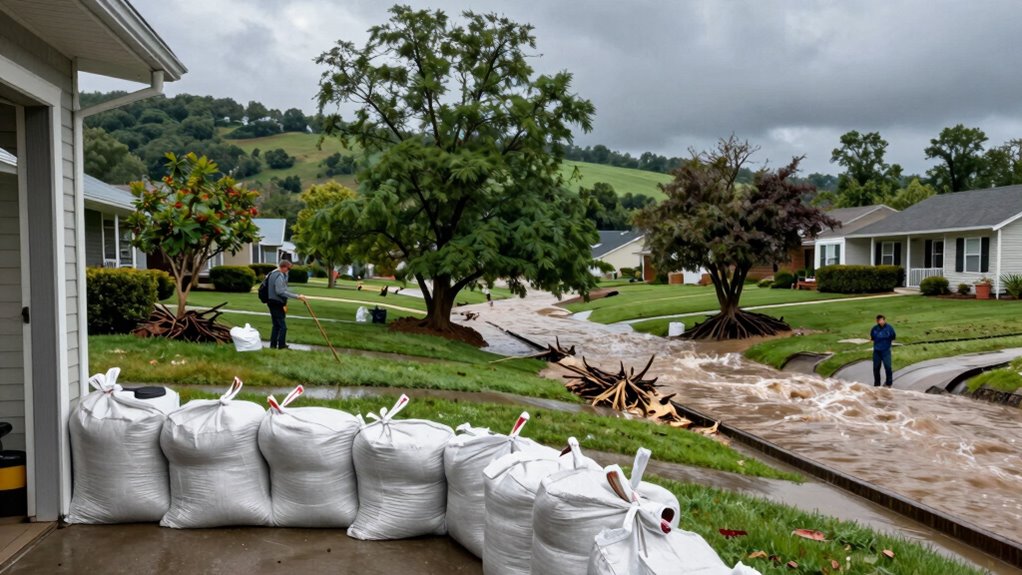
When it comes to safeguarding your home from flash floods, understanding its vulnerabilities is essential. Start by identifying whether your property lies in a designated flood zone. This knowledge can greatly influence your preparedness.
Next, consider your property elevation; homes built at lower elevations are at greater risk. Assess how the surrounding landscape impacts water flow during heavy rains. Look for areas where water might pool or drain poorly, as these spots can exacerbate flooding risks.
Additionally, inspect your foundation and basement, as these areas are often the first to suffer water damage. By recognizing these vulnerabilities, you empower yourself to take proactive measures that can ultimately protect your home and preserve your freedom from the chaos of flooding.
Evaluate Your Drainage Systems for Flood Preparedness
Having identified your home’s vulnerabilities, the next step involves evaluating your drainage systems to enhance flood preparedness.
Start by inspecting your gutters and downspouts; verify they’re clear of debris and functioning properly. Regular drainage maintenance is essential, as clogged systems can lead to overflow during heavy rains.
Assess your property’s grading; it should direct stormwater away from your foundation. Consider installing or upgrading your stormwater management solutions, like French drains or retention basins, to handle excess water efficiently.
Don’t forget to check for any signs of erosion or pooling around your home. By proactively addressing these areas, you’ll greatly reduce the risk of flooding, empowering you to protect your living space and maintain your freedom.
Take Steps to Protect Your Home From Flood Damage
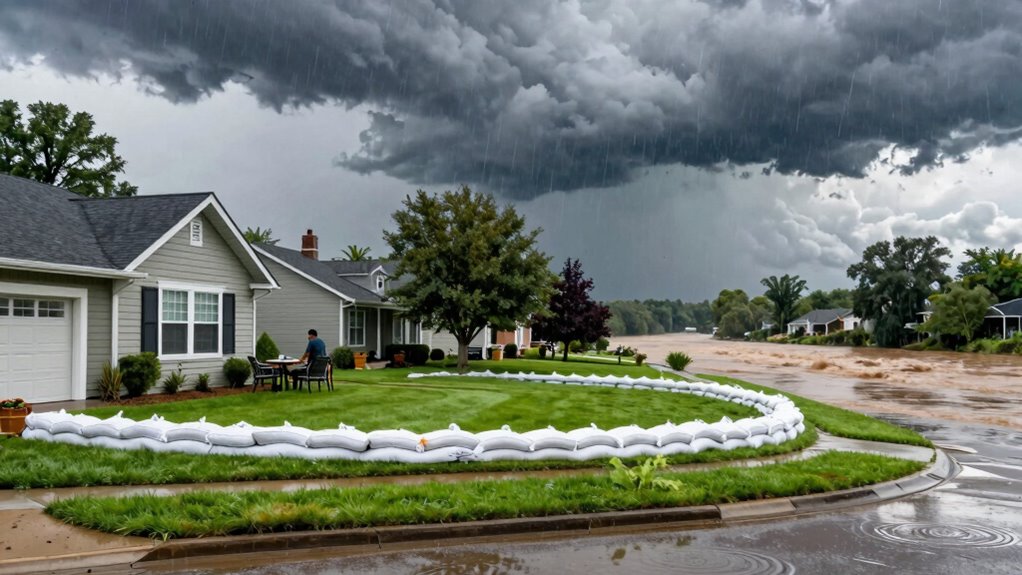
To effectively protect your home from flood damage, it’s vital to implement proactive measures tailored to your specific environment.
Start by evaluating your landscape grading; make sure it directs water away from your foundation. This simple adjustment can greatly reduce the risk of flooding.
Additionally, consider investing in flood insurance to safeguard your property against potential losses. It’s a fundamental step that can provide peace of mind and financial protection.
Elevating important appliances and electrical systems can further minimize damage during heavy rains.
Regularly check gutters and downspouts to prevent clogs, guaranteeing that water flows freely.
Develop an Emergency Plan for Flash Floods
Creating an emergency plan for flash floods is essential, especially if you live in a flood-prone area. Start by identifying your emergency contacts—family members, friends, and neighbors who can help. Make certain everyone knows how to reach each other in case of separation.
Next, map out your evacuation routes. Familiarize yourself with local roads and safe areas, making sure you can act quickly when needed. Designate a meeting point outside the flood zone where everyone can regroup.
Prepare an emergency kit with essentials, including food, water, and first-aid supplies. Regularly review and practice your plan with your household to guarantee everyone’s confident and ready.
Frequently Asked Questions
How Can I Check My Home’s Flood Zone Designation?
You can check your home’s flood zone designation by reviewing flood zone maps online or contacting local authorities. Also, consider obtaining elevation certificates to understand your property’s risk and make informed decisions. Stay proactive!
What Types of Insurance Cover Flood Damage?
Flood insurance options include the National Flood Insurance Program (NFIP) and private insurers. Review their coverage limits carefully to guarantee they meet your needs, helping protect your home and finances from potential flood damage effectively.
Are There Government Grants for Flood-Proofing My Home?
When it comes to flood-proofing options, you’ve got a golden opportunity. Yes, government assistance exists for homeowners seeking financial support. Research local programs that can help you safeguard your home against potential flood damage.
How Often Should I Review My Flood Preparedness Plan?
You should conduct an annual review of your flood preparedness plan. Regularly assess risks, update contact information, and guarantee supplies are current. Staying proactive helps you stay informed and ready for any potential flooding situation.
What Should I Include in My Emergency Flood Kit?
What’s worse than being unprepared? Include water purification tablets, non-perishable food, a first aid kit, flashlights, batteries, and emergency supplies in your flood kit. Stay proactive, and guarantee your safety when disaster strikes.