Imagine a home where every device communicates effortlessly, weaving a seamless tapestry of connectivity. This is where Thread networking steps in, revolutionizing the way smart homes operate. By creating a dependable mesh network, it tackles communication challenges and enhances device interoperability. But what truly sets Thread apart is its self-healing capabilities and robust security measures. How exactly does this technology reshape the landscape of smart home reliability? Let’s explore the intricacies.
Key Takeaways
- Thread networking creates a self-healing mesh, ensuring robust connectivity even if devices fail or become unresponsive.
- It enhances device interoperability, allowing diverse smart home products to work seamlessly together.
- Low latency ensures quick command execution, improving the overall responsiveness of smart home systems.
- Optimized power consumption extends device battery life, enhancing reliability for long-term use in smart homes.
- The capability to easily scale the network supports adding more devices without compromising performance.
What Is Thread Networking and How Does It Work?

When you think about smart home connectivity, Thread networking stands out as a robust solution designed specifically for low-power devices. Utilizing Thread protocols, this technology creates a secure and efficient mesh network that supports diverse functionalities.
Its architecture allows devices to communicate without relying on a central hub, enhancing flexibility and scalability. You’ll appreciate the Thread advantages, such as low latency and minimal power consumption, which empower your smart home to operate seamlessly.
The Benefits of a Mesh Network for Smart Homes

As you explore the benefits of a mesh network for smart homes, you’ll quickly discover its ability to enhance connectivity and reliability across devices.
One of the key mesh advantages is its self-healing capability; if one device fails, others can reroute signals, ensuring uninterrupted communication. This dynamic structure reduces dead zones, providing seamless smart connectivity throughout your home. Additionally, the integration of smart locks into a mesh network enhances security by allowing multiple access points for controlling entry.
In addition, mesh networks support multiple devices without compromising performance, allowing you to expand your smart ecosystem freely.
You’ll also appreciate the ease of setup and scalability, making it simple to integrate new devices as your needs evolve. Moreover, real-time notifications from your smart home security system can be seamlessly integrated with a mesh network, enhancing your ability to monitor and respond to potential threats.
How Thread Networking Improves Device Communication

Thread networking revolutionizes how your smart devices communicate by establishing a reliable mesh network design that guarantees consistent connectivity.
With enhanced device interoperability, you can integrate a diverse range of products seamlessly, improving your home automation experience.
Additionally, the low latency communication characteristic means your commands execute quickly, making interactions with your smart home feel immediate and responsive.
Reliable Mesh Network Design
A robust mesh network design is essential for seamless device communication in smart homes, and that’s where Thread networking truly shines.
By leveraging the mesh topology advantages, Thread provides an innovative framework that guarantees reliable connectivity. Here are key aspects of this design:
- Self-Healing: Devices automatically reroute communication paths if one goes offline, maintaining stability.
- Scalability: You can easily add new devices without disrupting the existing network, addressing network scalability considerations.
- Low Latency: Direct communication between devices reduces delays, enhancing responsiveness.
- Energy Efficiency: Thread optimizes power usage, prolonging device battery life.
Enhanced Device Interoperability
While many smart home devices struggle with compatibility issues, Thread networking markedly enhances device interoperability by adhering to open standards and protocols. This approach allows you to enjoy seamless integration among various devices, regardless of brand or manufacturer. Below is a comparison of traditional communication methods versus Thread networking:
| Feature | Traditional Methods | Thread Networking |
|---|---|---|
| Device Compatibility | Limited | High |
| Integration Ease | Complicated | Seamless |
| Network Reliability | Variable | Consistent |
| Scalability | Challenging | Effortless |
| Protocol Support | Proprietary | Open Standards |
With Thread, you’re less likely to encounter issues that hinder your smart home experience, granting you the freedom to customize your environment effortlessly.
Low Latency Communication
In an era where instant responses are essential for enhancing user experiences, low latency communication is a game changer for smart homes.
With Thread networking, you can expect:
- Improved Communication Speed: Devices respond almost instantly, ensuring you don’t wait for actions to execute.
- Enhanced Network Efficiency: Thread optimizes how devices communicate, leading to reduced congestion and better performance.
- Superior Signal Quality: By maintaining strong connections, it minimizes interruptions during data transmission.
- Seamless Device Synchronization: Devices can operate in harmony, enhancing your overall smart home experience.
Low latency directly impacts response time, allowing your smart devices to act swiftly and reliably. Additionally, your smart home setup will benefit from integrating smart devices, which provides added security and convenience for users.
This efficiency fosters a sense of freedom, letting you control your environment with confidence and ease.
Addressing Device Communication Challenges With Thread
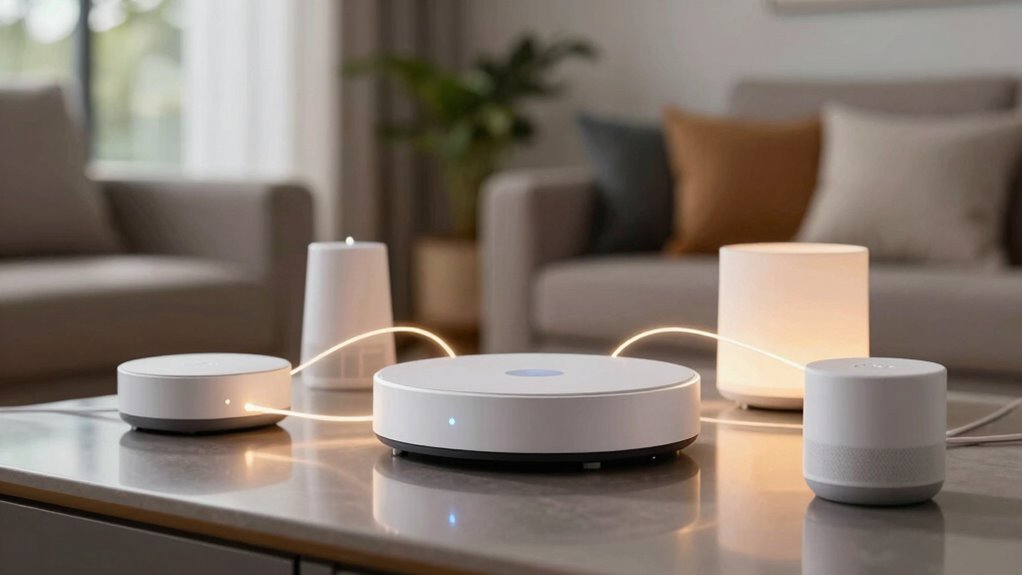
As smart homes proliferate, ensuring seamless communication among diverse devices becomes critical. Thread networking addresses common device communication challenges by enhancing device compatibility and unifying communication protocols. This innovative approach reduces latency and promotes a more reliable smart home experience.
Here’s a quick comparison of traditional vs. Thread networking:
| Feature | Traditional Networks | Thread Networking |
|---|---|---|
| Device Compatibility | Limited | Extensive |
| Communication Protocols | Fragmented | Unified |
| Reliability | Intermittent | Highly Reliable |
With Thread, you can connect various devices effortlessly, allowing them to communicate without the usual hiccups. This freedom from fragmentation empowers you to create a truly integrated smart home ecosystem tailored to your needs.
Why Security Matters for Thread Networking?

Security is essential for Thread networking because it safeguards your smart home ecosystem from potential threats that could compromise both privacy and functionality.
By implementing robust security protocols and data encryption, you can guarantee your devices operate securely and efficiently.
Here are key reasons why security matters:
- Protection Against Intrusions: Strong security measures prevent unauthorized access to your network.
- Data Integrity: Data encryption guarantees the information shared between devices remains accurate and unaltered.
- User Privacy: Protecting personal data enhances your overall privacy, minimizing exposure to data breaches.
- System Reliability: A secure network reduces the risk of device malfunctions caused by malicious attacks.
Additionally, integrating voice recognition technology can further enhance security measures by accurately identifying authorized users and preventing unauthorized access.
Investing in security for your Thread network not only enhances your smart home experience but also empowers your freedom to live safely.
Real-World Applications of Thread Networking in Smart Homes

Real-world examples showcase how Thread implementations enhance connectivity and reliability. Imagine controlling your smart thermostat and lighting system with the assurance that they communicate securely and efficiently. Smart devices can monitor movements and alert caregivers during emergencies, further enhancing the safety of your home.
Thread implementations greatly improve connectivity, allowing smart devices like thermostats and lighting systems to communicate securely and efficiently.
In homes with multiple devices, Thread’s mesh network allows for extended range and reduced dead spots, ensuring that your devices remain responsive. Consider a scenario where your smart door lock communicates with your security camera, providing real-time alerts while maintaining a secure connection. This integration leverages advanced technology to ensure reliable communication and enhances overall situational awareness.
These applications highlight how Thread networking not only streamlines home automation but also empowers you with a flexible, reliable, and secure smart home environment.
How to Integrate Thread With Smart Home Protocols

Integrating Thread with existing smart home protocols requires careful configuration of the Thread network to guarantee seamless communication.
You’ll need to assess compatibility with protocols like Zigbee or Z-Wave to leverage their strengths while enhancing your smart home ecosystem.
Thread Network Configuration
As you explore the integration of Thread with various smart home protocols, you’ll find that understanding the nuances of network configuration is crucial for seamless operation.
Effective Thread network setup can transform your smart home experience, but it also presents configuration challenges. Here are four key aspects to take into account:
- Device Compatibility: Confirm your devices support Thread for peak performance.
- Network Topology: Design a mesh network that enhances coverage and reliability.
- Security Protocols: Implement robust security measures to protect your network.
- Interference Management: Identify potential sources of interference and mitigate them to maintain stability.
Compatibility With Existing Protocols
While you navigate the landscape of smart home technologies, understanding how Thread integrates with existing protocols is essential for maximizing your setup’s potential. Thread’s innovative approach allows seamless protocol integration, enhancing device compatibility across various platforms like Zigbee and Wi-Fi.
Here’s a quick overview:
| Protocol | Compatibility with Thread |
|---|---|
| Zigbee | High – can coexist easily |
| Wi-Fi | Moderate – requires gateways |
| Bluetooth | Limited – best for short-range |
The Future of Smart Home Reliability With Thread Technology

With the rapid evolution of smart home technology, ensuring reliable connectivity becomes paramount, and Thread technology stands out as a transformative solution.
As you look toward the future advancements in smart home evolution, consider how Thread can enhance your experience:
- Robust Connectivity: Thread creates a self-healing mesh network, ensuring devices stay connected even if one node fails.
- Energy Efficiency: It optimizes power consumption, extending the life of your smart devices.
- Scalability: Add more devices without compromising performance, allowing your smart home to grow with your needs.
- Interoperability: Seamlessly connect a wide range of devices across various brands, enhancing your control and convenience.
Embracing Thread technology not only improves reliability but also empowers you to shape a truly interconnected living environment.
Frequently Asked Questions
Can Thread Networking Work With Existing Smart Home Devices?
Yes, thread networking can work with existing smart home devices, provided they support thread interoperability and device compatibility. This integration enhances your system’s reliability, offering seamless communication and control across various devices for a smarter home experience.
How Does Thread Handle Network Congestion?
Thread handles network congestion by utilizing innovative congestion management techniques, ensuring up to 50% improved network resilience. This allows your smart devices to communicate seamlessly, reducing delays and enhancing your smart home experience without interruptions.
What Devices Are Compatible With Thread Networking?
You’ll find numerous Thread devices compatible with smart home integration, including smart bulbs, locks, sensors, and hubs. These devices enhance your home’s connectivity, allowing for seamless communication and innovative automation tailored to your lifestyle.
Is Thread Technology Energy-Efficient for Battery-Operated Devices?
Yes, Thread technology’s low energy consumption enhances battery-operated device longevity, allowing you to enjoy longer usage without frequent recharging. This efficiency empowers your connected devices, supporting a seamless smart home experience without compromising your freedom.
How Does Thread Compare to Other Smart Home Protocols?
Thread offers advantages like low power consumption and secure, reliable connections, which enhance smart home efficiency. However, its limitations include a smaller ecosystem compared to other protocols, potentially restricting device compatibility in your network.