
In security, understanding deterrence and detection is essential for effective protection. Deterrence aims to prevent incidents through visible measures, while detection focuses on identifying breaches in real-time. Each approach serves a distinct purpose, yet they must work together. If you’re relying solely on one method, you might leave vulnerabilities exposed. Exploring how to balance these strategies can greatly enhance your overall security posture. What factors should you consider for ideal integration?
Understanding Deterrence and Detection in Security
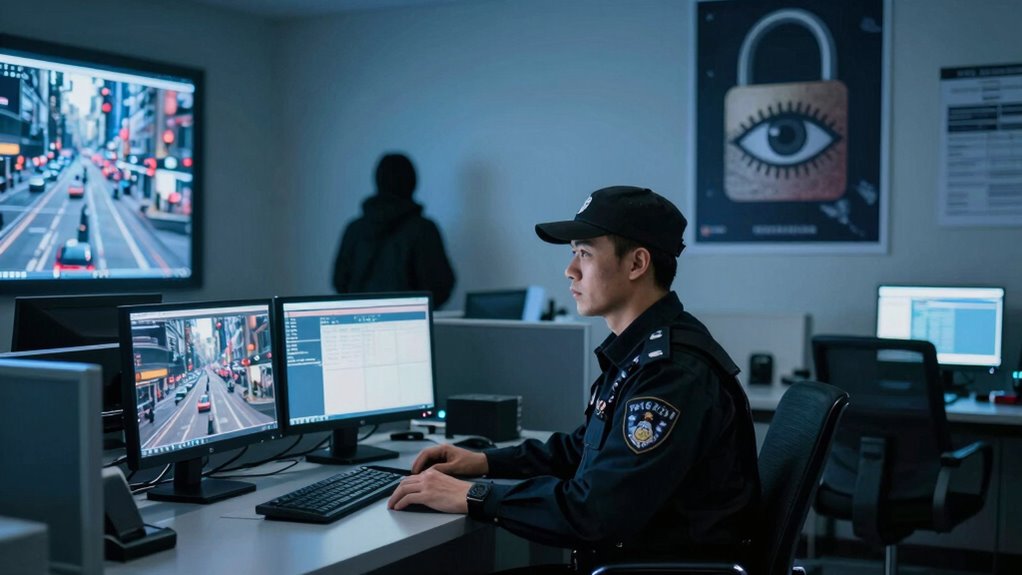
When evaluating security strategies, it’s crucial to understand the difference between deterrence and detection, as each plays a distinct role in safeguarding assets.
Deterrence aims to prevent security breaches by creating an environment that discourages potential threats. This often involves visible security measures, such as surveillance cameras and security personnel, which signal to would-be intruders that risks outweigh rewards. The presence of professional monitoring enhances the effectiveness of these deterrent measures, providing an added layer of security.
Deterrence prevents security breaches by discouraging threats through visible measures like surveillance and security personnel.
On the other hand, detection focuses on identifying breaches as they occur, employing tools like alarms and monitoring systems. Incorporating elements such as home security systems can significantly enhance both deterrence and detection capabilities.
Conducting a thorough risk assessment helps you determine which approach is more appropriate for your specific context. Balancing both deterrence and detection enhances overall security effectiveness, ensuring your assets remain protected while fostering an environment of freedom and safety.
Comparing the Effectiveness of Deterrence and Detection
Balancing deterrence and detection isn’t just about knowing their definitions; it’s about understanding how each approach impacts overall security effectiveness.
Deterrence focuses on preventing threats through visible preventive measures, while detection aims to identify and respond to breaches promptly. You’ll find that both strategies can be effective but serve different roles. Proactive strategies, such as surveillance and security personnel presence, enhance deterrence by discouraging potential threats. In contrast, detection methods like alarms and monitoring systems serve to minimize damage once an incident occurs. Additionally, having a professional monitoring system ensures that trained operators can respond quickly to any detected threats, further enhancing overall security. Effective camera placement can significantly improve both deterrence and detection outcomes.
Ultimately, integrating both approaches creates a robust security framework, allowing you to enjoy greater safety and freedom. Recognizing their unique strengths helps you tailor your security measures effectively, ensuring a balanced, all-encompassing strategy.
The Concept of Deterrence in Security
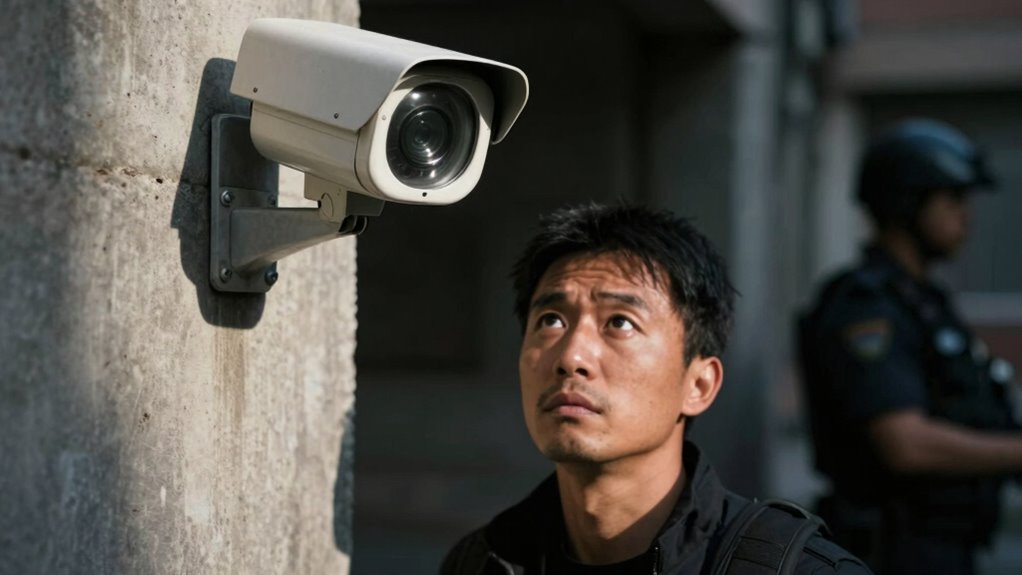
Deterrence in security revolves around the principle of preventing threats before they occur, utilizing visible measures that signal to potential offenders that the risks outweigh any potential gains.
Effective deterrence relies on three key preventive measures:
Effective deterrence hinges on three essential strategies: surveillance systems, security personnel, and clear signage to minimize threats.
- Surveillance Systems: Cameras and monitoring tools create a watchful environment, making offenders think twice. Many modern systems, such as the Blink Outdoor 4 Wireless Smart Security Camera System, provide high-definition video and night vision capabilities, enhancing overall surveillance effectiveness.
- Security Personnel: The presence of guards or patrols enhances the psychological impact, instilling fear of immediate consequences.
- Clear Signage: Visible warnings about penalties or surveillance can dissuade potential threats by emphasizing the risks involved. Additionally, integrating video surveillance systems can further enhance security by providing real-time monitoring and recording capabilities.
Why Detection Is Key to Responding to Incidents?
How can organizations effectively minimize the impact of security incidents? The answer lies in prioritizing detection as a vital element of incident response.
By implementing robust detection systems, you can identify threats in real-time, allowing for swift action before damage escalates. Proactive measures, such as continuous monitoring and advanced analytics, enhance your ability to spot unusual activities and potential breaches early on. Furthermore, utilizing machine learning algorithms can significantly improve detection accuracy and reduce false alerts.
Without effective detection, you risk delayed responses, leading to greater losses and compromised data integrity.
Cultivating a culture that emphasizes the importance of detection empowers your team to act decisively. Additionally, integrating video verification technology enables authentic alarm confirmation, further enhancing incident response capabilities. Ultimately, the quicker you can detect incidents, the more effectively you can respond, safeguarding your organization’s assets and ensuring operational continuity.
How to Balance Deterrence and Detection for Enhanced Security
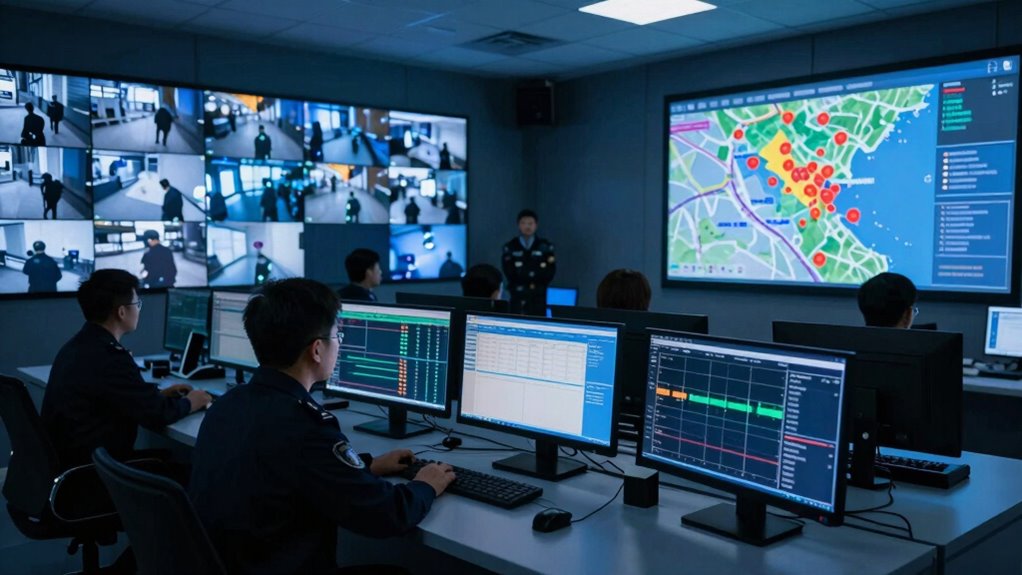
Effective incident detection lays the foundation for an extensive security strategy, but it must be complemented by strong deterrence measures.
To achieve a balance between deterrence and detection, you should implement a combination of proactive measures and reactive strategies.
Consider these three essential components:
- Visible Security Presence: Utilize security personnel or surveillance systems to discourage potential threats. Additionally, implementing wireless alarm systems can enhance your visible security presence without the complexities of wiring.
- Robust Incident Response Protocols: Develop clear, actionable plans for quick response to detected incidents, ensuring threats are neutralized efficiently.
- Regular Security Audits: Conduct assessments to identify vulnerabilities, allowing you to adapt your strategies based on evolving threats. Additionally, integrating professional monitoring services into your security framework can significantly enhance your overall protection strategy.
Frequently Asked Questions
What Are the Psychological Effects of Deterrence on Potential Threats?
Deterrence creates a fear response, heightening risk perception, while also instilling a sense of control. You balance the anxiety of potential threats against the freedom to act, shaping decisions in unpredictable environments.
How Does Technology Influence Detection Methods in Security?
Technology enhances detection methods in security through biometric scanners, surveillance drones, and AI algorithms, enabling data analytics, threat modeling, and predictive policing. Network monitoring and anomaly detection streamline threat identification, ensuring a safer, more secure environment for you.
Can Deterrence Methods Backfire and Increase Risks?
Studies show that 60% of security professionals believe deterrence methods can cause deterrence backlash, leading to risk escalation. When individuals perceive heightened threats, they may adapt their tactics, potentially increasing vulnerabilities instead of enhancing safety.
What Role Does Training Play in Effective Detection Strategies?
Training enhances your effectiveness in detection techniques, equipping you with essential skills to identify threats accurately. By honing your abilities, you’ll increase your situational awareness and reduce vulnerabilities, ultimately creating a safer environment for everyone.
How Do Cultural Differences Affect Perceptions of Deterrence and Detection?
How do you view deterrence effectiveness in your culture? Cultural perceptions shape how communities respond to security measures, influencing their belief in deterrence and detection. Different backgrounds lead to varying expectations and interpretations of security strategies.