When considering the safety and longevity of your home, understanding fire resistance ratings is essential. These ratings indicate how long building materials can withstand fire, directly impacting your choice of construction elements. By grasping these concepts, you can enhance your home’s structural integrity and comply with local codes. But what exactly are these ratings based on, and how can they influence your decisions? The answers may surprise you.
What Are Fire Resistance Ratings and Why Do They Matter?
When it comes to building safety, understanding fire resistance ratings is essential for both design professionals and property owners.
Fire resistance ratings indicate how long a building element can withstand exposure to fire, vital for ensuring fire safety. These ratings are typically defined in hours and are mandated by building codes, guiding material selection and construction practices.
Knowing these ratings helps you make informed decisions about fire-resistant materials and designs, ultimately protecting lives and property. Additionally, adhering to fire resistance ratings fosters compliance with local regulations, which can prevent costly legal issues.
How Do We Figure Out Fire Resistance Ratings?
How do experts determine fire resistance ratings for building materials? They rely on rigorous fire testing procedures, where materials are subjected to controlled fire conditions. This testing assesses how long a material can withstand fire exposure before failing.
During these tests, factors like thermal conductivity, structural integrity, and temperature thresholds are meticulously measured. After testing, experts perform a rating calculation, analyzing data to derive a specific resistance rating.
This rating indicates the material’s ability to inhibit fire spread and maintain structural stability. By adhering to standardized methods, experts guarantee that these ratings are reliable and consistent across various applications, empowering builders and homeowners with the knowledge to make informed decisions regarding fire safety in their homes.
The Different Types of Fire Resistance Ratings Explained
When evaluating fire resistance ratings, it’s essential to understand the various classifications and the materials involved.
You’ll encounter fire-resistive materials that play a key role in determining how structures withstand fire exposure.
Fire-Resistive Materials Overview
Fire-resistive materials are essential components in building safety, designed to withstand high temperatures and slow the spread of flames. Understanding these materials is important for anyone involved in construction or renovation.
You’ll encounter various insulation types, such as mineral wool and fiberglass, which provide thermal resistance and fire protection.
Fire resistive coatings, applied to structural elements, enhance fire resistance by creating a barrier that delays heat transfer and maintains structural integrity.
It’s critical to select appropriate materials based on your specific needs and compliance with local fire codes. By doing so, you guarantee not only the safety of the occupants but also the longevity and resilience of your structure against fire hazards.
Rating Classifications Explained
Selecting the right fire-resistance rating is essential for ensuring the safety and longevity of your structure.
Understanding fire rating classifications can help you make informed decisions. Here are the key resistance rating categories to evaluate:
- Class A: Offers the highest level of fire resistance, typically rated for 1 to 2 hours.
- Class B: Provides moderate resistance, generally rated for 30 minutes to 1 hour.
- Class C: Offers basic fire resistance, usually rated for less than 30 minutes.
- Unrated: Materials not tested for fire resistance; these should be avoided in critical areas.
Importance of Fire-Rated Walls
Fire-rated walls play an essential role in enhancing safety standards within buildings by slowing the spread of fire and smoke.
By implementing these walls, you not only protect lives but also safeguard your property’s value against potential fire damage.
Understanding their importance can lead to more informed decisions in construction and renovation projects.
Enhanced Safety Standards
While building safety is paramount, understanding the importance of fire-rated walls can greatly enhance your facility’s overall safety standards.
These walls are essential in preventing fire spread, protecting lives, and complying with building code advancements. Here are four key benefits of implementing fire-rated walls:
- Containment: They effectively contain fires, allowing occupants more time to evacuate.
- Damage Reduction: Fire-rated walls minimize property damage by slowing the fire’s progression.
- Insurance Benefits: Enhanced fire safety innovations can lead to lower insurance premiums.
- Regulatory Compliance: They guarantee compliance with local building codes, reducing legal risks.
Property Value Protection
When considering the long-term value of a property, integrating fire-rated walls plays an essential role in safeguarding that investment.
These walls not only enhance safety but also considerably impact property insurance costs. Insurers often favor homes equipped with fire-rated materials, potentially lowering premiums and making your property more attractive to buyers.
In a market increasingly concerned with safety and risk management, properties with fire-rated walls can command higher prices and greater market demand.
As you prioritize fire resistance in your construction or renovation plans, you’re not just ensuring safety; you’re also enhancing the property’s appeal and longevity in a competitive real estate landscape.
Ultimately, this strategic choice can yield substantial returns on your investment.
Key Building Materials With Fire Resistance Ratings
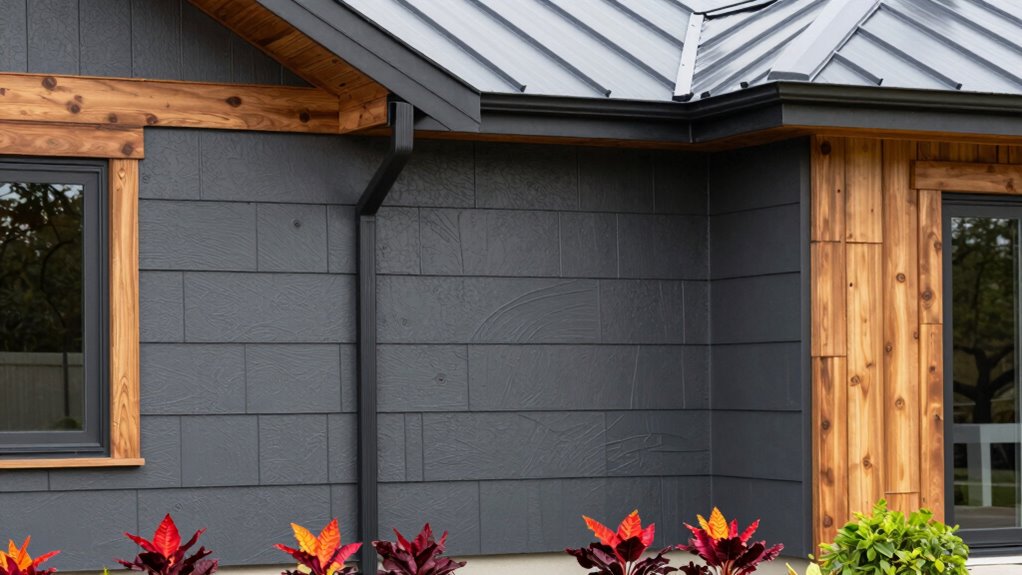
Understanding the fire resistance ratings of key building materials is essential for ensuring safety and compliance in construction.
Selecting the right materials can greatly impact your home’s safety profile. Here are four vital materials to take into account:
- Fire Rated Drywall: This type of drywall is designed to withstand fire for a specific period, making it ideal for areas requiring enhanced protection.
- Non Combustible Insulation: Using non combustible insulation helps prevent fire spread and contributes to overall building safety.
- Steel Framing: Steel’s inherent fire resistance makes it a strong choice for structural elements.
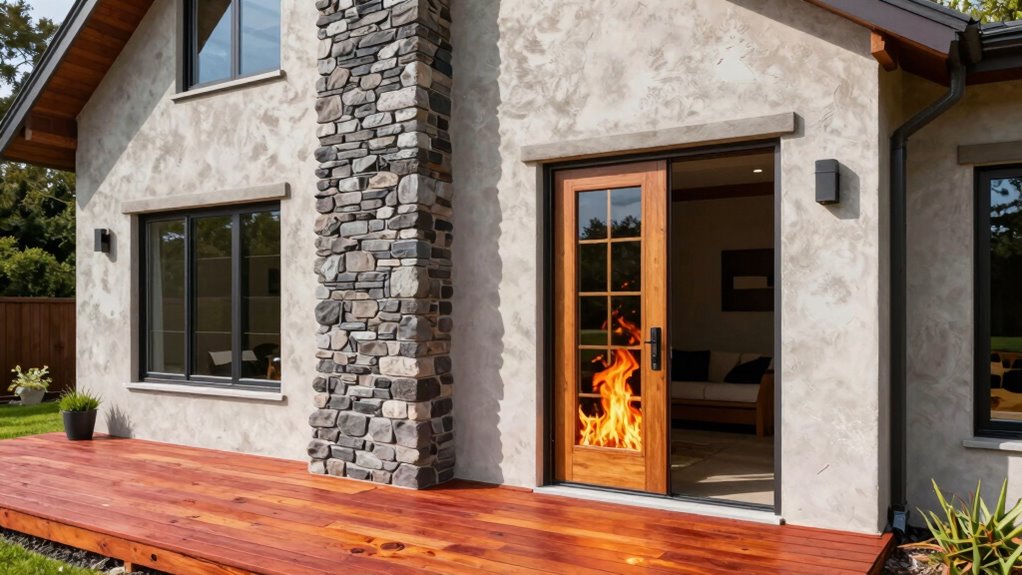
- Fire Resistant Glass: This glass can withstand high temperatures and is often used in doors and windows to enhance safety.
Practical Tips for Selecting Fire-Resistant Materials
Selecting fire-resistant materials is a critical step in enhancing the safety of any construction project. To begin, choose fire resistant insulation that meets or exceeds relevant fire codes. This not only protects your home but also contributes to overall energy efficiency.
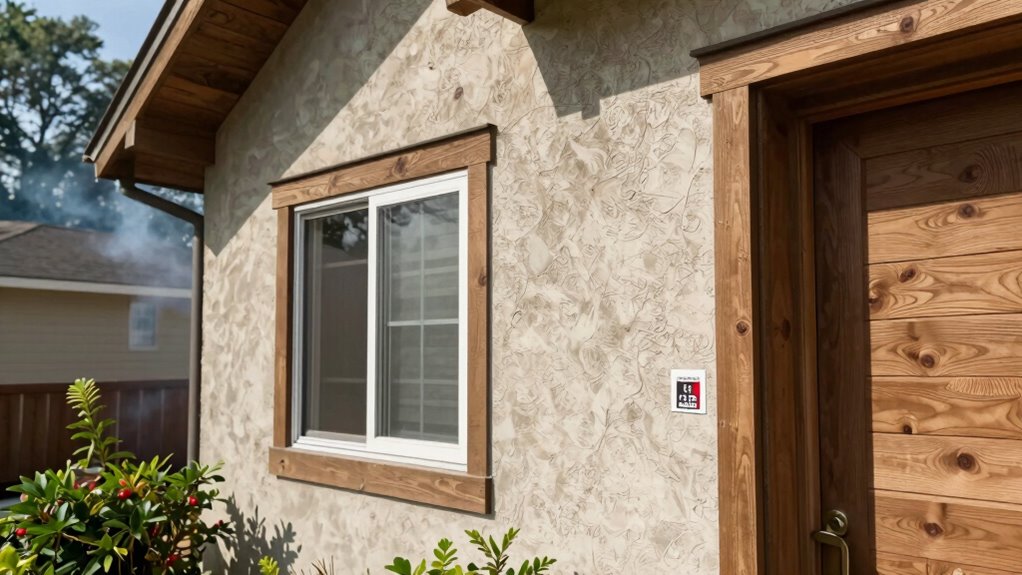
Next, consider non combustible siding options such as fiber cement or stucco, which can greatly reduce fire risks. Evaluate each material’s fire resistance rating, and consult with manufacturers for specific performance data.
Consider non-combustible siding like fiber cement or stucco to significantly lower fire risks while ensuring compliance with fire resistance ratings.
Additionally, verify proper installation to maximize effectiveness; even the best materials can underperform if not installed correctly.
Finally, stay informed about local regulations and standards, as these can guide your material choices and guarantee compliance with safety requirements.
These steps will help you create a safer living environment.
Debunking Myths About Fire Resistance Ratings
Although many people assume that higher fire resistance ratings always guarantee better protection, this is a common misconception. Here’s some myth clarification to help you navigate rating misconceptions:
- Material Types Matter: Not all materials with high ratings offer the same level of performance in real-world conditions.
- Duration vs. Performance: A higher rating doesn’t always mean longer-lasting protection against fire; performance can vary greatly over time.
- Complete Systems: Fire resistance ratings apply to entire assemblies, not just individual materials. An effective system depends on how components work together.
- Geographic Variations: Local building codes may influence ratings, meaning what works in one area mightn’t be suitable in another.
Understanding these points helps guarantee you’re making informed decisions regarding fire safety in your home.
Ongoing Fire Safety Considerations for Homeowners
As you assess your home’s fire safety, remember that ongoing vigilance is essential for maintaining effective protection.
Regular inspections of your fire safety systems, including smoke detectors and fire extinguishers, guarantee they function correctly. Check your escape routes periodically, making sure they remain clear and accessible.
Emergency planning should involve rehearsing escape routes with your family, making certain everyone knows their roles during a crisis.
Update your fire safety plan as your home or family dynamics change.
Consider consulting fire safety professionals for advanced assessments, particularly if you’ve made renovations.
Frequently Asked Questions
How Do Fire Resistance Ratings Affect Home Insurance Premiums?
If you install fire-resistant materials in your home, you might qualify for premium discounts on your fire insurance. Insurers often lower rates for properties with enhanced fire resistance, reflecting reduced risk and potential claims.
Can I Retrofit My Home to Improve Fire Resistance?
Yes, you can retrofit your home with fire resistant upgrades, enhancing home safety. Consider installing fire-rated doors, non-combustible siding, and fire-resistant roofing materials to greatly improve your home’s overall fire resistance and safety profile.
Are Fire Resistance Ratings the Same for Commercial Buildings?
No, fire resistance ratings differ for commercial buildings based on specific building codes and fire safety requirements. You must consult local regulations to understand how these ratings apply to your property’s design and materials.
Do Fire-Resistant Materials Require Special Maintenance?
Think of fire-resistant materials as guardians of your safety. They don’t require special maintenance, but regular checks and upkeep guarantee peak fire safety. Staying proactive with material upkeep keeps your home protected and secure.
What Is the Lifespan of Fire-Resistant Materials?
Fire-resistant materials typically offer significant longevity, often lasting 20 to 50 years depending on environmental factors. Their durability hinges on proper installation and maintenance, ensuring you maximize their protective capabilities over time.