
In today’s complex cyber landscape, relying on a single security solution can leave your organization vulnerable to sophisticated threats. Each layer of security addresses specific weaknesses, creating a more resilient defense. By integrating components like firewalls, intrusion detection systems, and employee training, you can mitigate various attack vectors effectively. However, understanding how to implement this strategy and adapt it to evolving threats is vital. What elements are essential to fortifying your defenses?
Why Businesses Need Layered Security Against Cyber Threats

As cyber threats evolve in sophistication and frequency, businesses must adopt layered security measures to effectively safeguard their sensitive data and infrastructure.
The current cyber threat landscape demands an agile approach. Relying solely on single security solutions exposes vulnerabilities that sophisticated attackers can exploit. Additionally, following the NIST Cybersecurity Framework helps organizations implement best practices for a comprehensive security strategy.
By implementing layered security, you create multiple barriers, enhancing your defense against various attack vectors. This approach not only bolsters your system’s resilience but also guarantees compliance with security compliance measures mandated by regulatory bodies.
Each layer, whether it’s firewalls, intrusion detection systems, or encryption, plays a critical role in mitigating risks. Additionally, the global shortage of 2.8 million cybersecurity professionals emphasizes the need for businesses to invest in robust security measures and skilled personnel.
In an era of digital freedom, embracing layered security allows you to protect your assets while maintaining the autonomy necessary for innovation and growth.
Limitations of Single Security Solutions
Single security solutions often provide limited protection scope, leaving gaps that cyber threats can exploit. When you rely on one method, you increase the risk of vulnerability exploitation, as attackers can target these weaknesses with ease. Understanding these limitations is vital for developing a more robust security posture that addresses diverse threats effectively. Implementing strong passwords is a key aspect of a layered security approach that helps mitigate the risks associated with single solutions. 5G technology enhances connectivity and interoperability among security devices, thereby improving overall protection against potential threats.
Limited Protection Scope
While relying on a single security solution might seem convenient, it often results in a limited protection scope that leaves critical vulnerabilities unaddressed. This limited access to thorough security measures creates significant scope limitations, making systems susceptible to various threats. A singular approach can create blind spots, exposing you to risks that multi-layered solutions would otherwise mitigate. Additionally, integrating professional monitoring into your security strategy can provide round-the-clock vigilance and immediate response, further enhancing your protection. Regularly conducting routine inspections of your security systems can also help identify potential issues before they lead to significant breaches.
| Security Solution | Protection Scope |
|---|---|
| Antivirus | Malware only |
| Firewall | Network threats |
| Encryption | Data confidentiality |
| IDS/IPS | Intrusion detection |
| Password Manager | Credential theft |
Vulnerability Exploitation Risks
How can organizations effectively safeguard their systems when relying solely on a single security solution? The truth is, one-dimensional approaches often leave significant gaps, exposing you to vulnerabilities.
Without thorough vulnerability assessments, you may overlook critical weaknesses that attackers can exploit. A single solution can fail to adapt, leaving your defenses static and ineffective against evolving threats.
Consider these vulnerabilities:
- Inadequate detection of outdated software
- Insufficient response to emerging attack vectors
- Limited coverage across diverse platforms
- Difficulty in addressing complex threat landscapes
- Lack of thorough exploit mitigation strategies
Essential Elements of an Effective Layered Security Strategy

To create an effective layered security strategy, you must integrate multiple security measures that work together to protect your assets. Start with a thorough risk assessment to identify vulnerabilities and prioritize your security needs. Establish robust security policies that dictate how your organization will handle potential threats and guarantee compliance at all levels.
Implement a combination of firewalls, intrusion detection systems, and endpoint protection to create a formidable defense. Regularly update your software and conduct penetration testing to assess your strategy’s effectiveness. Additionally, incorporating encryption methods can significantly enhance the privacy and security of your communications.
Employee training is vital; knowledgeable staff can act as your first line of defense. By weaving together these essential elements, you’re not just securing your assets, but also fostering an environment where freedom and security coexist harmoniously. Additionally, consider collaborating with CISA resources to enhance your organization’s cybersecurity posture.
Adapting Layered Security to Evolving Threats
As cyber threats continue to evolve in sophistication and frequency, adapting your layered security strategy is essential for maintaining robust protection.
To effectively respond to threat evolution, you need to implement proactive, adaptive responses that can adjust to new vulnerabilities.
Consider the following strategies:
- Regularly update security protocols and software.
- Conduct frequent risk assessments to identify new threats.
- Integrate threat intelligence for real-time insights.
- Train employees on emerging security practices.
- Utilize automated tools for rapid incident response.
How Firewalls Contribute to Layered Security
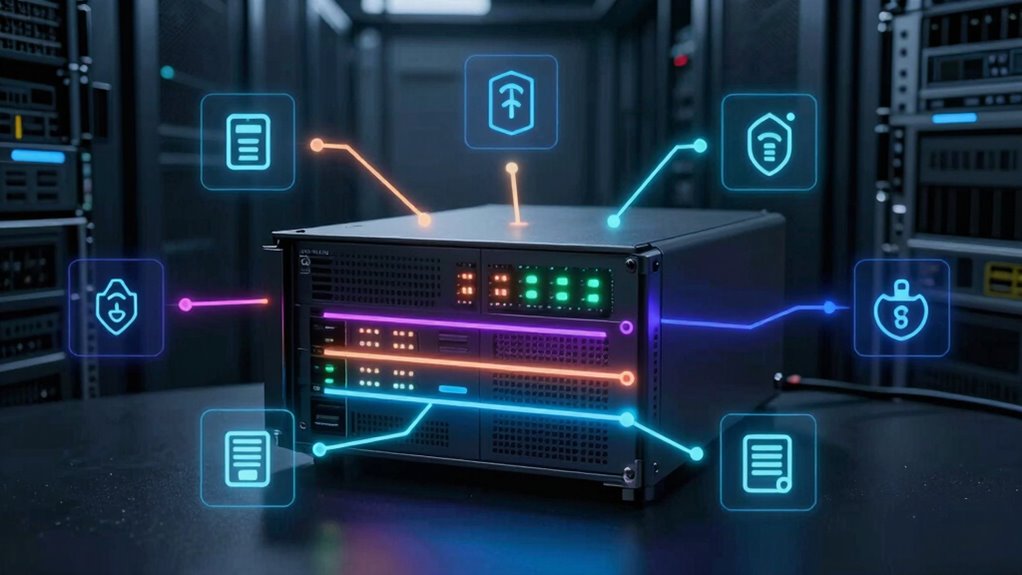
Firewalls serve as a foundational component of layered security, acting as the first line of defense against unauthorized access and cyber threats. By filtering incoming and outgoing traffic, you can prevent malicious activities before they penetrate deeper into your network.
There are various firewall types, including packet-filtering, stateful inspection, and next-generation firewalls, each offering unique capabilities for different scenarios. Effective security integration guarantees that firewalls work in conjunction with other security measures, such as intrusion detection systems and endpoint protection, creating a thorough shield.
This multi-layered approach not only enhances protection but also provides you with greater visibility and control over your network environment. Ultimately, firewalls play an essential role in maintaining the integrity and security of your digital infrastructure.
How Intrusion Detection Systems Strengthen Security
While firewalls establish a perimeter defense, Intrusion Detection Systems (IDS) enhance security by actively monitoring network traffic for suspicious activities and potential threats.
By integrating IDS into your security framework, you gain critical insights into your network’s behavior, allowing for rapid response to incidents. Additionally, implementing IDS can significantly reduce false alarms by using advanced pattern recognition to distinguish genuine threats from normal activities.
Here are some key benefits of IDS:
- Real-time alerts for suspicious activities
- Detailed logging of network traffic for analysis
- Behavioral analysis to identify anomalies
- Integration with other security tools for layered protection
- Compliance support through monitoring and reporting
These features not only bolster intrusion detection but also contribute greatly to your overall security enhancement strategy, ensuring you can proactively address vulnerabilities and maintain freedom from external threats. Additionally, implementing IDS can help organizations meet their legal obligations to protect sensitive data as emphasized by the FTC.
Why Employee Training Is Key to Your Security
Employee training is essential for fostering security awareness among your team, as informed employees can recognize and respond to potential threats effectively.
By equipping your workforce with the knowledge to identify risks, you greatly reduce the likelihood of human error, a common vulnerability in security protocols.
Ultimately, a well-trained staff acts as a robust first line of defense against cyber threats.
Importance Of Security Awareness
Effective security measures extend beyond technology; they hinge on the knowledge and behavior of your workforce. Security awareness is vital for maintaining a robust defense against threats. By investing in extensive security training, you foster employee engagement, empowering your team to recognize and respond to potential risks.
Consider these key aspects:
- Understanding Threats: Employees learn to identify phishing, malware, and social engineering attacks.
- Incident Reporting: Training encourages reporting suspicious activities promptly.
- Best Practices: Employees adopt secure password management and data protection techniques.
- Crisis Response: Teams are prepared to act decisively in the face of an incident.
- Culture of Security: Cultivating an environment that prioritizes security awareness strengthens overall resilience.
Your workforce is your first line of defense; equip them wisely.
Reducing Human Error Risks
Human error remains one of the leading causes of security breaches, often stemming from a lack of awareness or inadequate training. To combat this, implementing robust training programs is essential.
These programs should focus on real-world scenarios, educating employees about potential threats like phishing, social engineering, and insider risks. By fostering a culture of security mindfulness, you empower your team to recognize and respond effectively to security challenges.
Regular training updates keep knowledge current and reinforce the importance of vigilance. Additionally, using simulations can enhance retention and improve response times during actual incidents.
Ultimately, reducing human error isn’t just about protocols; it’s about creating informed individuals who understand their critical role in maintaining security within your organization.
Real-Life Examples of Layered Security Success
Layered security solutions have proven their worth in real-world scenarios, showcasing their effectiveness in thwarting cyber threats. Numerous case studies and success stories illustrate how organizations fortified their defenses by integrating multiple security measures.
You’ll see that these layered approaches drastically reduce vulnerabilities, making it harder for attackers to penetrate systems.
- A financial institution prevented a significant data breach by employing firewalls, intrusion detection systems, and employee training.
- A healthcare provider maintained patient confidentiality through encryption, access controls, and regular audits.
- An e-commerce platform utilized two-factor authentication, anti-malware tools, and continuous monitoring to secure transactions.
- A tech company implemented network segmentation, VPNs, and security patches to defend against advanced persistent threats.
- A government agency successfully thwarted cyberattacks by combining threat intelligence with real-time monitoring.
Cost-Effectiveness of Layered Security Solutions
While you might think that implementing multiple security measures could be too costly for your organization, the reality is that layered security solutions often provide significant cost savings in the long run.
By distributing your budget allocation across various layers, you can minimize the financial impact of potential breaches. Each layer acts as a safeguard, reducing the likelihood of costly incidents that single solutions might miss.
This multi-faceted approach not only enhances your organization’s overall security posture but also yields cost benefits through decreased recovery expenses and lower insurance premiums.
Investing in layered security is a strategic decision that prioritizes both protection and financial prudence, ultimately empowering your organization to thrive in a complex digital landscape.
Implementing Layered Security in Your Organization
Successfully implementing layered security in your organization requires a systematic approach that integrates various protective measures tailored to your specific needs.
Implementing layered security demands a systematic approach that customizes protective measures to meet your organization’s unique requirements.
You must assess your current security technology landscape and identify vulnerabilities, ensuring you align your risk management strategies with your operational objectives.
Consider the following key steps:
- Evaluate existing security protocols and technologies.
- Identify critical assets and potential threats.
- Implement multi-layer defenses (firewalls, intrusion detection, etc.).
- Train staff on security best practices and incident response.
- Regularly review and update security measures based on new risks.
This structured approach will bolster your defenses and foster a culture of security awareness, empowering your organization to navigate the complexities of today’s threat environment with confidence.
Frequently Asked Questions
What Are the Most Common Types of Cyber Threats Today?
Today, you face various cyber threats: phishing attacks tricking users, ransomware threats locking data, malware variants spreading rapidly, insider threats compromising systems, DDoS attacks disrupting services, and social engineering manipulating individuals for unauthorized access.
How Can I Assess My Current Security Measures’ Effectiveness?
Like a skilled detective, you should conduct regular security audits and threat assessments. Analyze vulnerabilities, review incident response times, and test your defenses to guarantee your current measures effectively protect your digital assets against evolving threats.
What Industries Benefit Most From Layered Security Approaches?
Healthcare security, financial institutions, manufacturing resilience, retail protection, and education cybersecurity all thrive with layered security. You’ll find that multiple defenses enhance protection, reducing vulnerabilities and ensuring compliance across these critical sectors.
How Often Should I Update My Layered Security Strategy?
You should evaluate your layered security strategy quarterly, implementing security updates as needed. Regular assessments help identify vulnerabilities, ensuring your defenses remain robust and adaptive against evolving threats while maintaining your operational freedom and integrity.
What Role Does Compliance Play in Layered Security?
Compliance guarantees your layered security aligns with compliance frameworks and regulatory requirements. By integrating these standards, you mitigate risks and enhance your defenses, empowering you to maintain freedom while protecting sensitive data effectively.