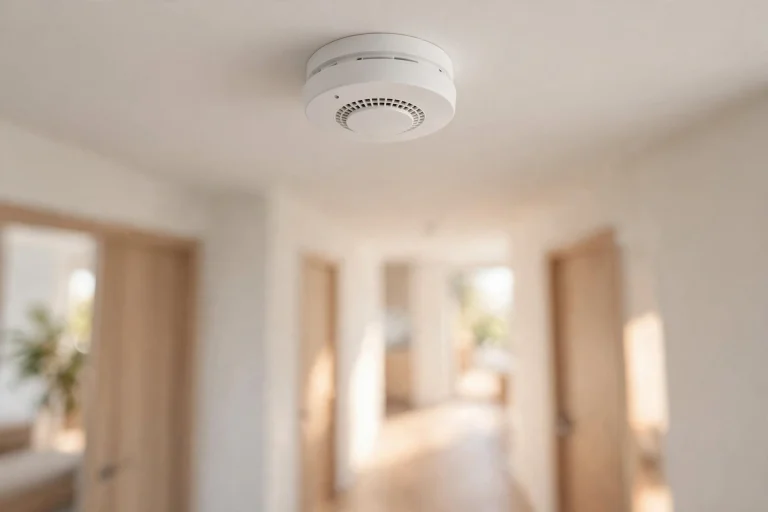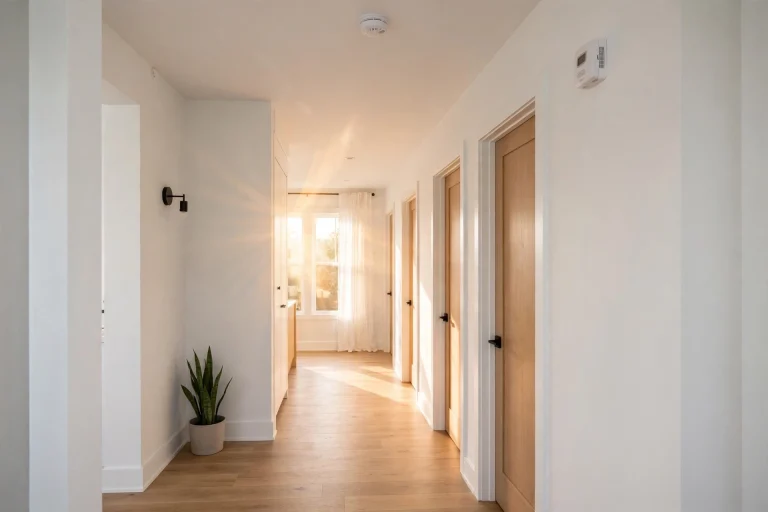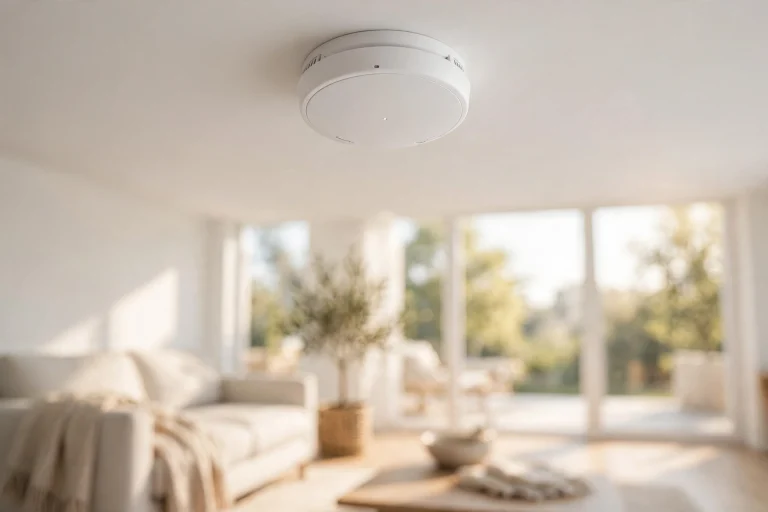

Standard smoke alarms assume one thing: that everyone in the house can hear them. For the millions of households with a deaf or hard-of-hearing family member, that assumption is a gap in the fire safety plan — and it is one that standard advice about “test your alarms monthly” does nothing to close.
The good news is that effective alternatives exist and are well established. Strobe-light smoke alarms, bed shakers, and low-frequency sounders are specifically designed for people who cannot rely on a high-pitched siren. This guide covers the options, how to choose them, and how to build a complete fire safety plan that does not depend on hearing.
Why Standard Alarms Fall Short
Conventional smoke alarms emit a high-pitched tone around 3,000 Hz. That frequency was chosen because it cuts through background noise for people with normal hearing — but age-related hearing loss typically erodes high frequencies first, which is exactly why fire safety for elderly individuals deserves special attention. A person with moderate high-frequency hearing loss can sleep straight through an alarm that is painfully loud to everyone else in the house.
Sleep is the critical factor. Research on waking effectiveness has consistently shown that strobe lights and tactile devices (bed shakers) wake sleeping adults — including those with hearing loss — far more reliably than a standard high-pitched alarm. The NFPA’s smoke alarm guidance specifically addresses alerting devices for people who are deaf or hard of hearing, including strobe lights and pillow or bed shakers that activate with the smoke alarm.
The takeaway for families: if anyone in the household cannot reliably hear a standard alarm — from the bedroom, with the door closed, while asleep — the standard alarm alone is not enough for that person.
Strobe Alarms: The Visual Alert
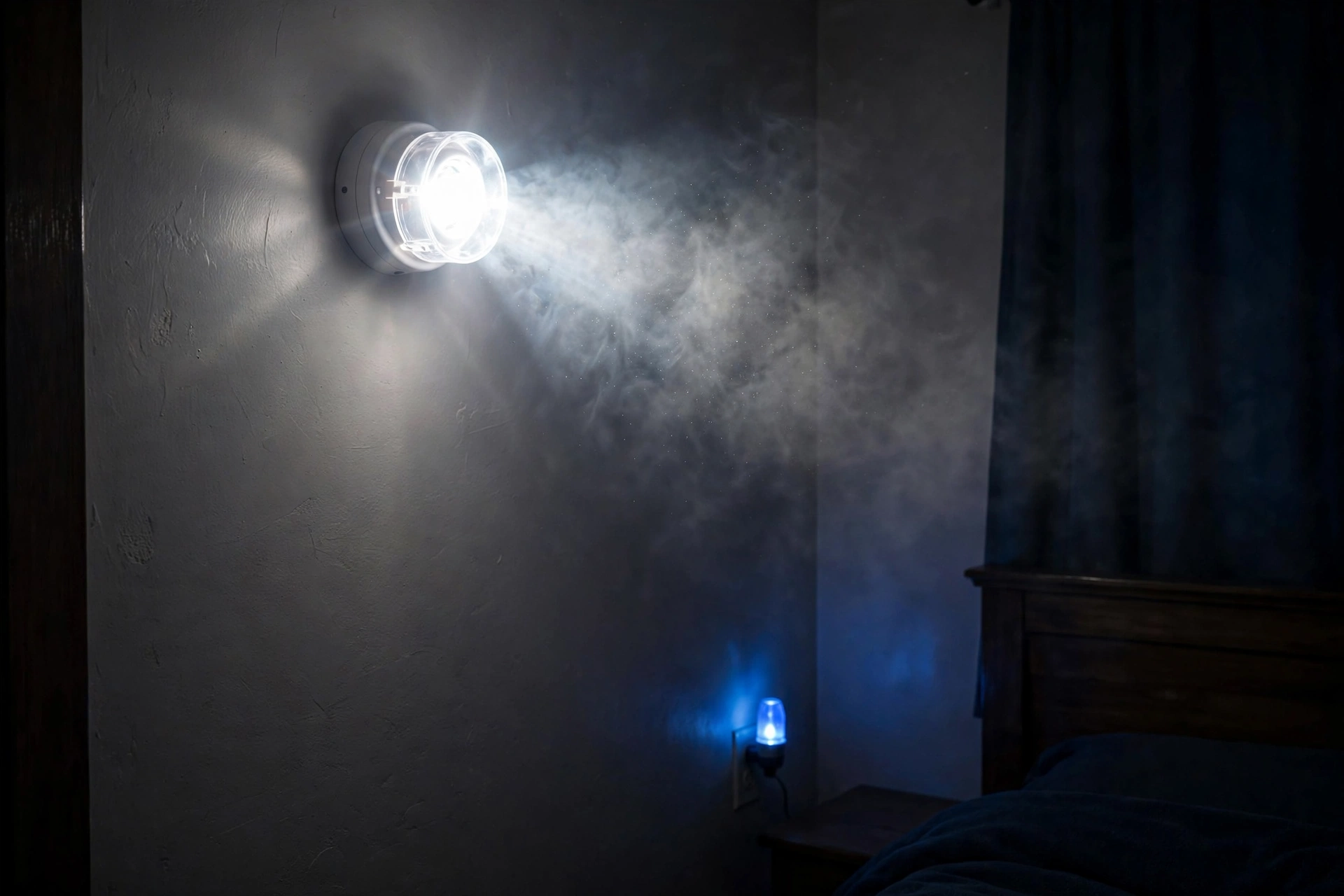
Strobe smoke alarms replace (or supplement) the siren with an intense flashing white light, typically rated around 177 candela. That is bright enough to be seen through closed eyelids while sleeping, which is precisely the point.
When choosing a strobe alarm, check these points:
- Strobe intensity: look for 177 candela, the level referenced in accessibility standards for waking sleepers.
- Interconnection: the strobe should trigger when any alarm in the house sounds, not just the one in the same room. Wireless interconnection makes this easy without rewiring.
- Placement: mount the strobe where it will be seen — the bedroom of the person who needs it, positioned so the flash reaches the bed. A hallway strobe does not help a sleeper behind a closed door.
- Power: hardwired models with battery backup are the most reliable; battery-only models work but need the same battery discipline as any other alarm.
Strobes work best as part of a system rather than a single device. Our best strobe smoke alarms roundup compares models with built-in strobes versus add-on strobe accessories.
Bed Shakers and Low-Frequency Sounders
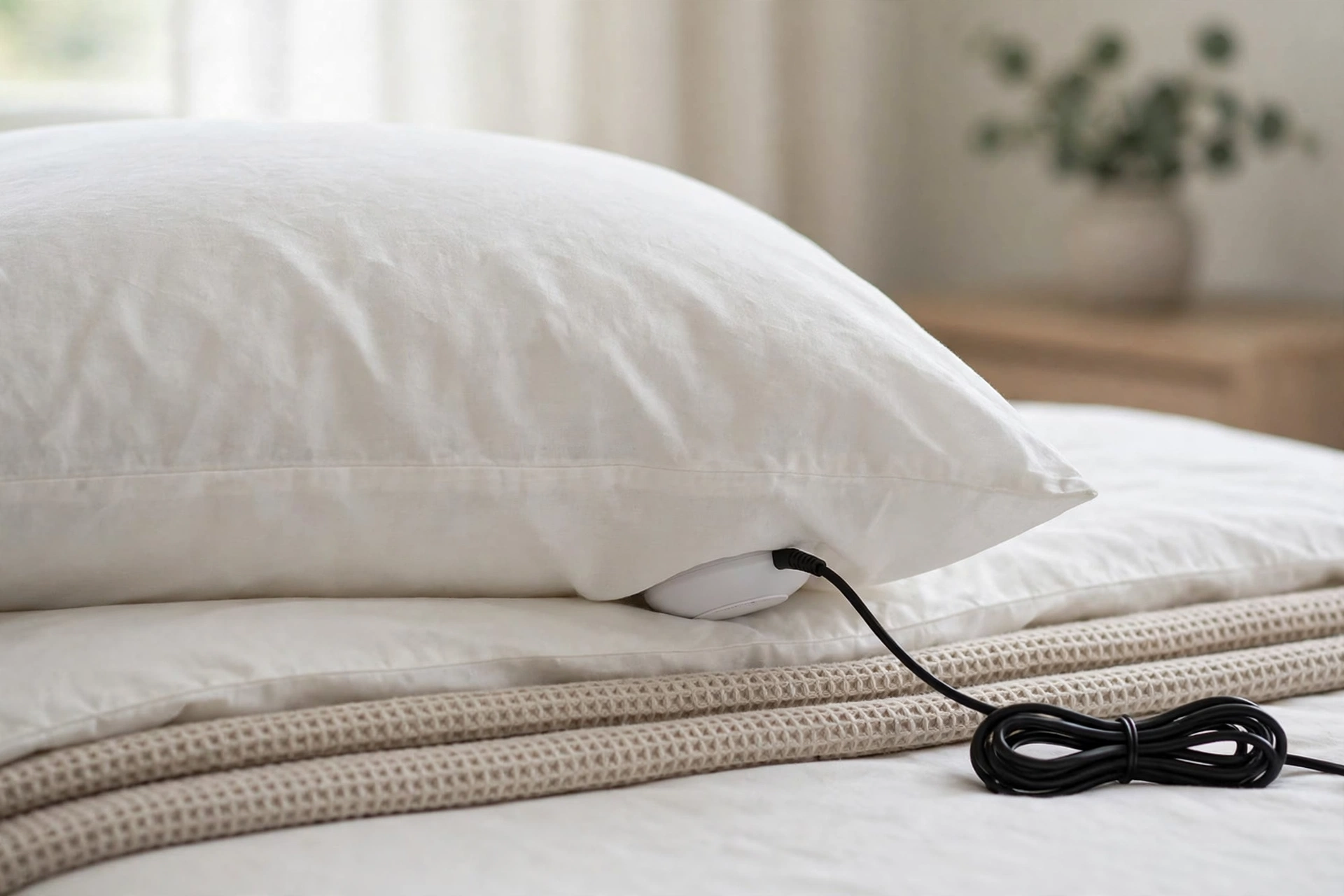
For many people, the most reliable nighttime alert is tactile: a bed shaker (also called a pillow shaker) is a small vibrating pad placed under the pillow or mattress that shakes violently when the smoke alarm sounds. Most are triggered by a transmitter that listens for the specific temporal-3 pattern of a smoke alarm, so they work with your existing alarms — no rewiring needed.
Low-frequency sounders take a different approach. Instead of the standard 3,000 Hz tone, they emit a loud low-pitched square-wave signal around 520 Hz. Research has found this frequency wakes people — including those with hearing loss, children, and older adults — significantly more effectively than the traditional high-pitched tone. Some building codes now require 520 Hz alarms in certain sleeping areas for exactly this reason.
In practice, the strongest setup layers these together: a strobe alarm in the bedroom plus a bed shaker under the pillow. Redundancy is the point — fire safety for individuals with disabilities is about making sure at least one alert channel always gets through.
Build a Complete Plan, Not Just Better Alarms
Devices are only half the equation. A fire safety plan for a hearing-impaired household needs a few extra elements that hearing households take for granted.
Plan for communication during the emergency. Agree in advance on how family members will alert each other — a designated person checks on the hearing-impaired member, with a backup person if the first is not home. Do not assume shouting down the hallway will work.
Practice the escape route physically. Walk it together, in the dark, from the bedroom to the outside meeting point. Creating a fire escape plan is recommended for every household, but for one that cannot rely on shouted instructions mid-emergency, the rehearsal matters even more.
Keep the path clear and the exits operable. Window locks, security bars, and cluttered hallways are obstacles for everyone, but they are worse when the occupant may already be disoriented by a strobe flashing in a smoky room. Run through our fire safety checklist for homeowners with this lens.
Consider monitored alerting. Some systems can send alerts to a smartwatch (vibration on the wrist) or flash smart bulbs throughout the house when an alarm triggers. These are useful supplements — but keep the dedicated strobe and bed shaker as the primary alerts, since they do not depend on your Wi-Fi or phone battery.

Frequently Asked Questions
What is the best type of smoke alarm for a deaf person?
A smoke alarm with a high-intensity strobe light (around 177 candela), paired with a bed shaker for nighttime. The strobe provides the visual alert; the shaker provides the tactile one. Together they cover both waking and sleeping hours.
Do bed shakers work with any smoke alarm?
Most bed shaker systems use a transmitter that listens for the standard temporal-3 alarm pattern, so they work with the vast majority of smoke alarms, including ones you already own. Check compatibility with your specific alarm brand before buying.
Are strobe smoke alarms required by law?
Requirements vary by jurisdiction, but accessibility standards and many local codes require visual alarm notification in certain settings (hotels, some rentals, new construction). For a private home, they are generally a choice — but an important one if anyone in the household has hearing loss.
Can a smartwatch replace a bed shaker?
It can supplement one, but it should not be the only nighttime alert. A watch needs to be charged, worn, and connected to work — a bed shaker has none of those failure modes. Use the watch as a backup layer, not the primary.
How do I test a strobe alarm or bed shaker?
Test monthly, just like a standard alarm: press the test button on the smoke alarm and confirm the strobe flashes and the bed shaker activates. Replace batteries on the same schedule as your other alarms, and replace the smoke alarm unit itself every 10 years.
The Bottom Line
Fire does not check whether everyone in the house can hear. A high-pitched siren is only one way to deliver a warning — strobe lights, bed shakers, and low-frequency sounders deliver the same warning through sight and touch. Match the alert to the person, layer more than one method for sleeping hours, and rehearse the escape plan until everyone can execute it without being told. That is what a complete fire safety plan looks like.