
A hotel room is a strange place to sleep: hundreds of strangers have keys to your building, staff can enter your room, and you’re surrounded by people you know nothing about. Most hotel stays pass without incident — but a few simple habits can close the gaps that do exist, and none of them require paranoia.
This guide covers practical hotel room security from booking to checkout: choosing a safer room, smart check-in habits, physically securing your door, protecting your valuables, and the privacy check most travelers skip. Toss a portable door lock in your carry-on and you’re already ahead of most travelers.
Before You Book: Picking a Safer Stay
Security starts before you arrive. When comparing hotels, look past the photos and check reviews for mentions of safety, hallway lighting, and how the property handles key control. Well-reviewed hotels in busy, well-lit areas are worth a small premium over a bargain in a deserted district.
When you reserve, you can request a room on an upper floor — rooms at street level or with direct exterior access (like ground-floor motel rooms) are easier targets for break-ins. Mid-level floors are the sweet spot: high enough to deter casual intrusion, low enough for fire ladders to reach. Also note whether the hotel has interior corridors (better) versus exterior walkways, and whether the lobby is staffed around the clock.
If you travel often for work, consider keeping a small dedicated travel security kit: a portable door lock, a rubber door wedge, a tiny flashlight, and a cable lock for your bag. It weighs almost nothing and lives in your suitcase permanently.
Smart Check-In Habits
The front desk interaction is your first security moment. A few low-effort habits go a long way:
- Don’t announce your room number. If the clerk says it out loud, that’s their slip — but don’t repeat it yourself where the lobby can hear.
- Ask for a business card or write down the address. In an emergency — or just a late-night return — you want the hotel’s name, address, and phone number on you, not just in your phone.
- Note the fire exits on your floor. Count the doors between your room and the nearest stairwell when you arrive. In smoke, you may be crawling and counting.
- Inspect the room on arrival. Check that windows and balcony doors lock, the phone works, and the smoke detector is present. Peek behind the curtains and in the closet — it takes thirty seconds and establishes that the room is as expected.
Travel safety authorities also recommend practical basics like keeping valuables out of sight and using the room safe for passports — see these travel safety tips from the Washington State Attorney General’s office for a solid checklist. And if privacy worries you, our guide on how to find hidden spy cameras in hotel rooms walks you through a quick sweep you can do in five minutes.
Securing Your Room Door
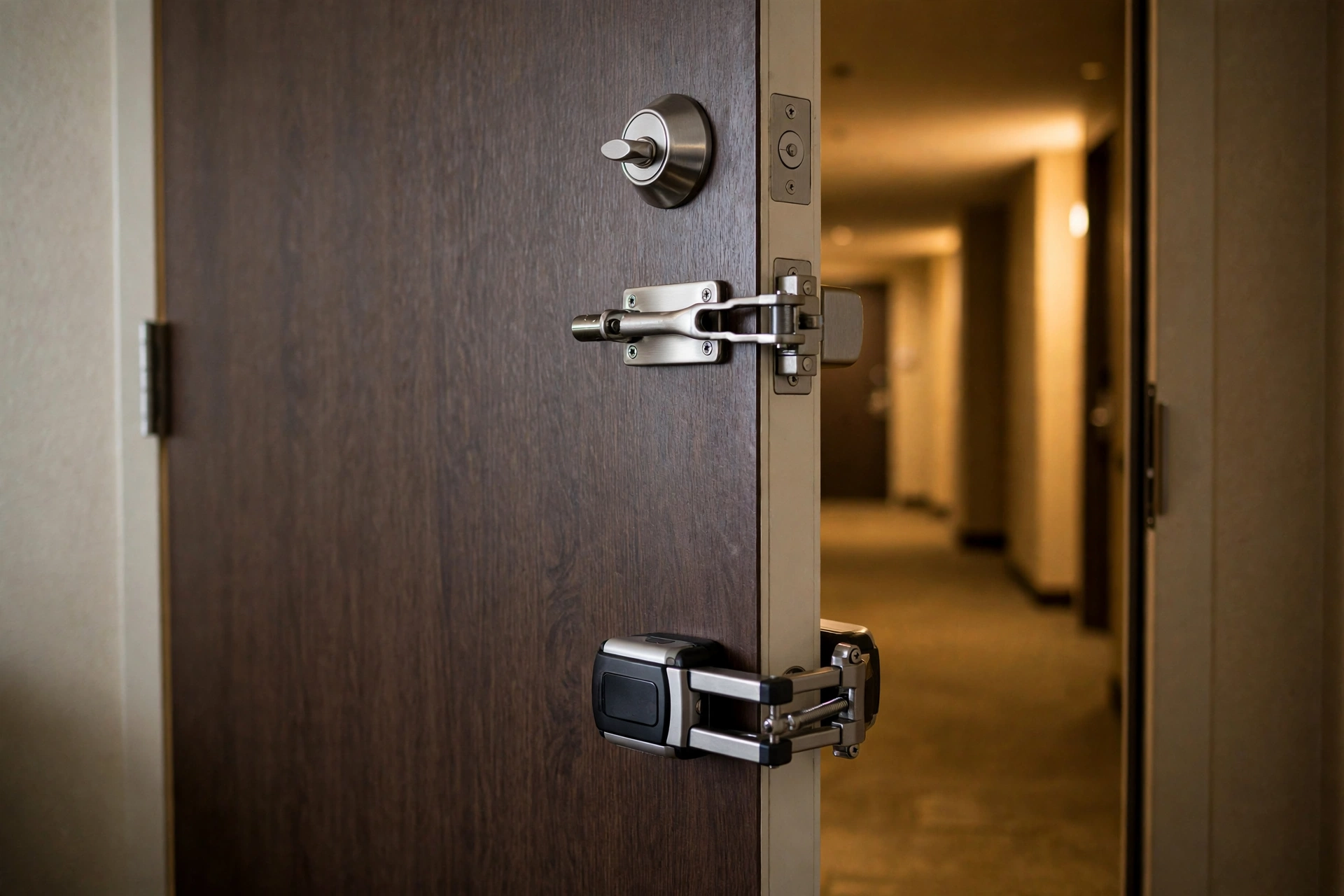
Hotel door locks are better than they used to be, but they have known weaknesses: key cards can be lost or cloned, and housekeeping staff carry master access. Your best defense is a physical barrier you control.
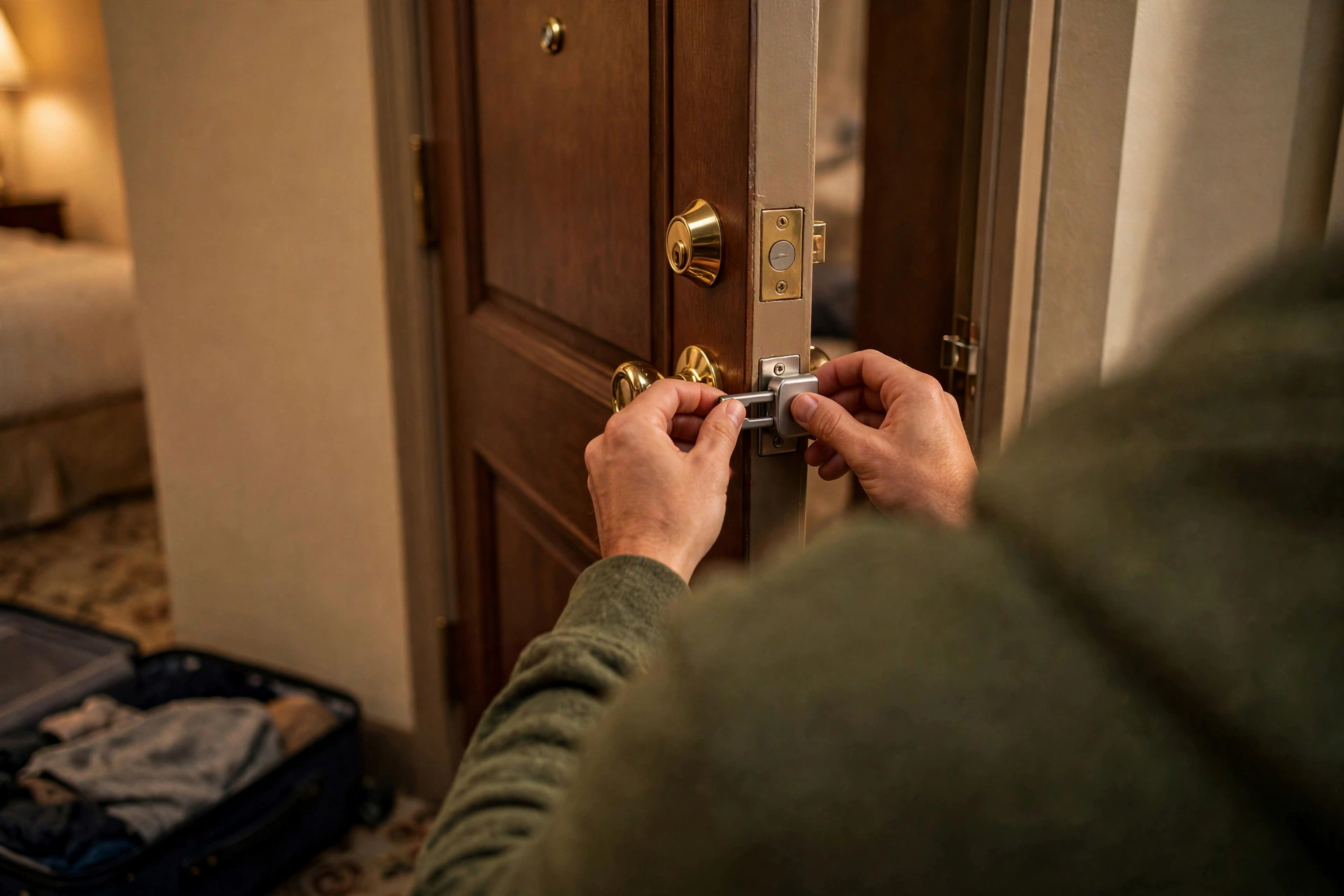
Always engage every lock the door has — the deadbolt, the swing bar or chain, and the privacy latch. Then add your own layer: a portable door lock wedges into the strike plate from inside and prevents the door from opening even with a key, and it installs in seconds with no tools. A simple door wedge alarm is another good option — it physically blocks the door and shrieks if someone pushes against it.
For a breakdown of the best options by door type, see our roundup of the best portable door locks for travel. Whichever you choose, practice installing it at home once so you’re not fumbling with it at midnight in a strange room.
Two more door rules: never open the door without verifying who’s there (use the peephole or call the front desk to confirm any “maintenance” visit), and don’t prop your door open while you run down the hall — that’s when opportunistic theft happens.
Protecting Valuables and Privacy
The in-room safe is convenient but not impregnable — hotel staff can typically open it. Use it for passports and spare cash, but don’t treat it as a bank vault. Truly irreplaceable items are safest on your person or locked in your luggage with a cable lock securing the bag to fixed furniture.
When you leave the room, take the “lived-in” approach: leave the TV or a light on, hang the Do Not Disturb sign, and close the curtains. It costs nothing and makes your room a less appealing target. Split up cash and cards so a single theft doesn’t strand you, and keep digital copies of your passport and itinerary in your email or cloud storage.
Renters face a similar challenge at home — securing a space you don’t own and can’t modify. Many of the same portable, no-damage principles apply; our guide to home security for renters is worth a read if you want that mindset full-time.
Fire Safety Basics in Hotels
Fire kills more hotel guests than intruders do, yet almost nobody plans for it. When you check in, find the two nearest stairwells — never plan on the elevator in a fire. Keep your room key, phone, and shoes by the bed so you can leave fast in the dark. If the alarm sounds, feel your door before opening it; if it’s hot, stay put, seal the door with wet towels, and signal from the window.
Frequently Asked Questions
Are portable door locks legal to use in hotels?
Yes — they’re non-damaging devices that install from inside your room and remove without a trace. They don’t violate fire codes because they only block entry from outside; you can always open the door from inside to exit.
What floor is safest in a hotel?
Upper floors (roughly the 3rd to 6th) are generally preferred: they’re out of easy reach from the street but still accessible to fire ladders. Avoid ground-floor rooms with direct exterior access when you can.
Should I use the hotel room safe?
Yes for convenience items like spare cash and a backup card — but remember staff can open most in-room safes. Keep irreplaceable items with you or secured in locked luggage instead.
How can I tell if someone entered my room while I was out?
Simple tamper tricks work: place a small piece of tape low on the door frame, balance a coin on the door handle from inside, or take a quick photo of how you left things. None are foolproof, but they catch casual entry.
What should I do if someone knocks claiming to be staff?
Don’t open the door. Speak through it, and call the front desk yourself to verify the visit is legitimate. Real staff will wait; anyone pressuring you to open up immediately is a red flag.
Conclusion
Hotel security isn’t about fear — it’s about removing easy opportunities. Book thoughtfully, check in smart, lock your door like you mean it with a portable lock, and give thirty seconds of thought to the fire exits. These small habits turn an unfamiliar room into a space you can actually relax in.