

When someone forces a door, they almost never break the door itself. They break the frame. A solid kick lands near the lock, the thin wooden jamb splits, the short screws pull out, and the door swings open — often on the first or second try. Understanding that is the key to real door security: you’re not armoring the door so much as fixing its weakest link.
The good news is that reinforcing a door is one of the cheapest, highest-impact security upgrades you can make. Most of it takes basic tools, an afternoon, and well under a hundred dollars in parts. Here’s how to do it properly, in the order that matters most.
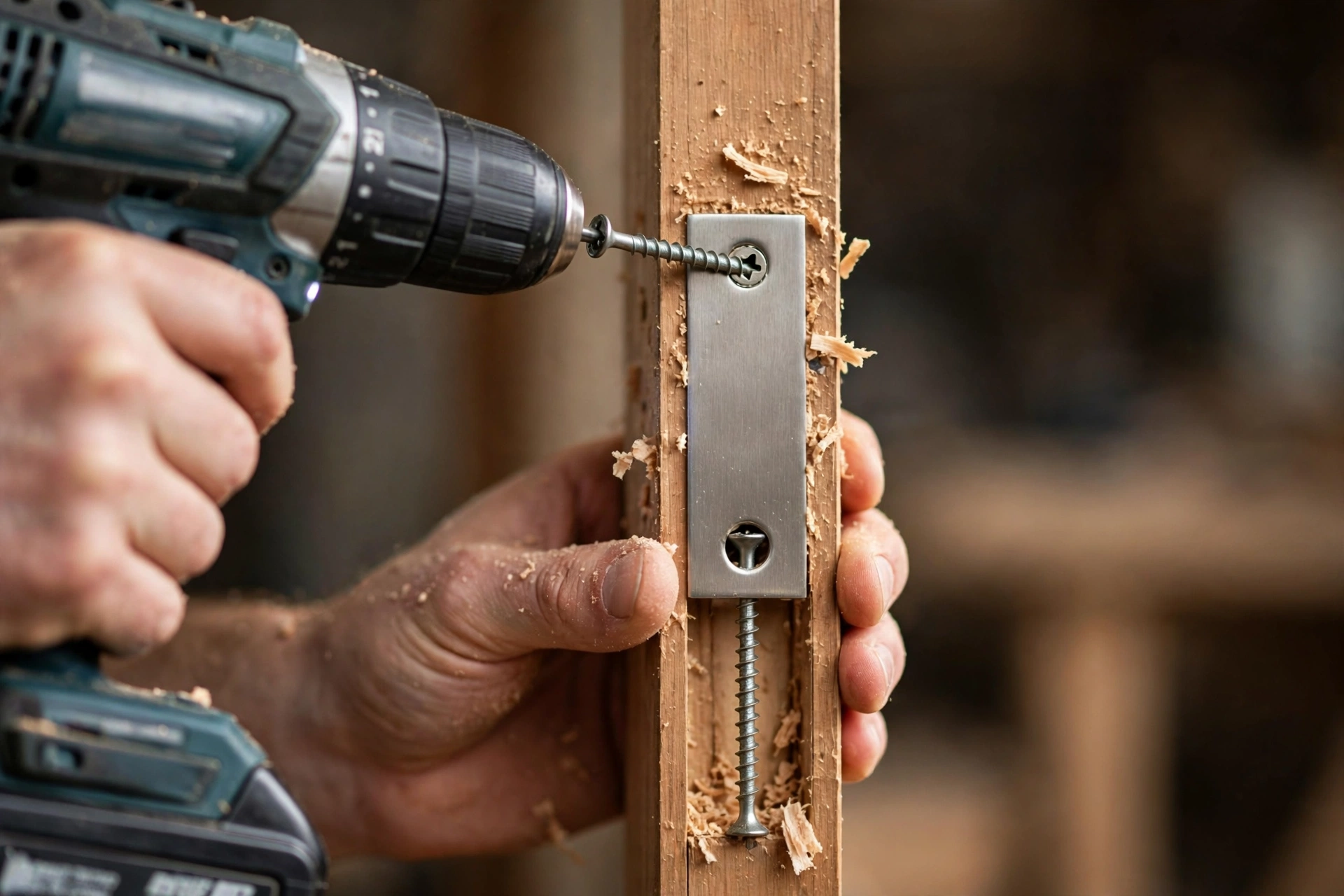
Start With the Strike Plate and Screws
The single most effective upgrade is also the simplest: replace the short screws in your strike plate and hinges with long ones. Standard builder-grade strike plates are held by 3/4-inch screws that bite only into the thin door jamb — decorative trim, essentially. A hard kick rips them straight out.
Swap those for 3-inch screws that reach through the jamb and anchor into the structural framing (the stud) behind it. Do the same for at least one screw per door hinge — this prevents the door from being kicked off its hinges as well. Police burglary-prevention guidance specifically recommends anchoring the strike plate to the house framing with 3-inch screws, and it’s advice worth following exactly.
This one change costs a few dollars and takes fifteen minutes per door. If you do nothing else on this list, do this.
Reinforce the Frame and Jamb
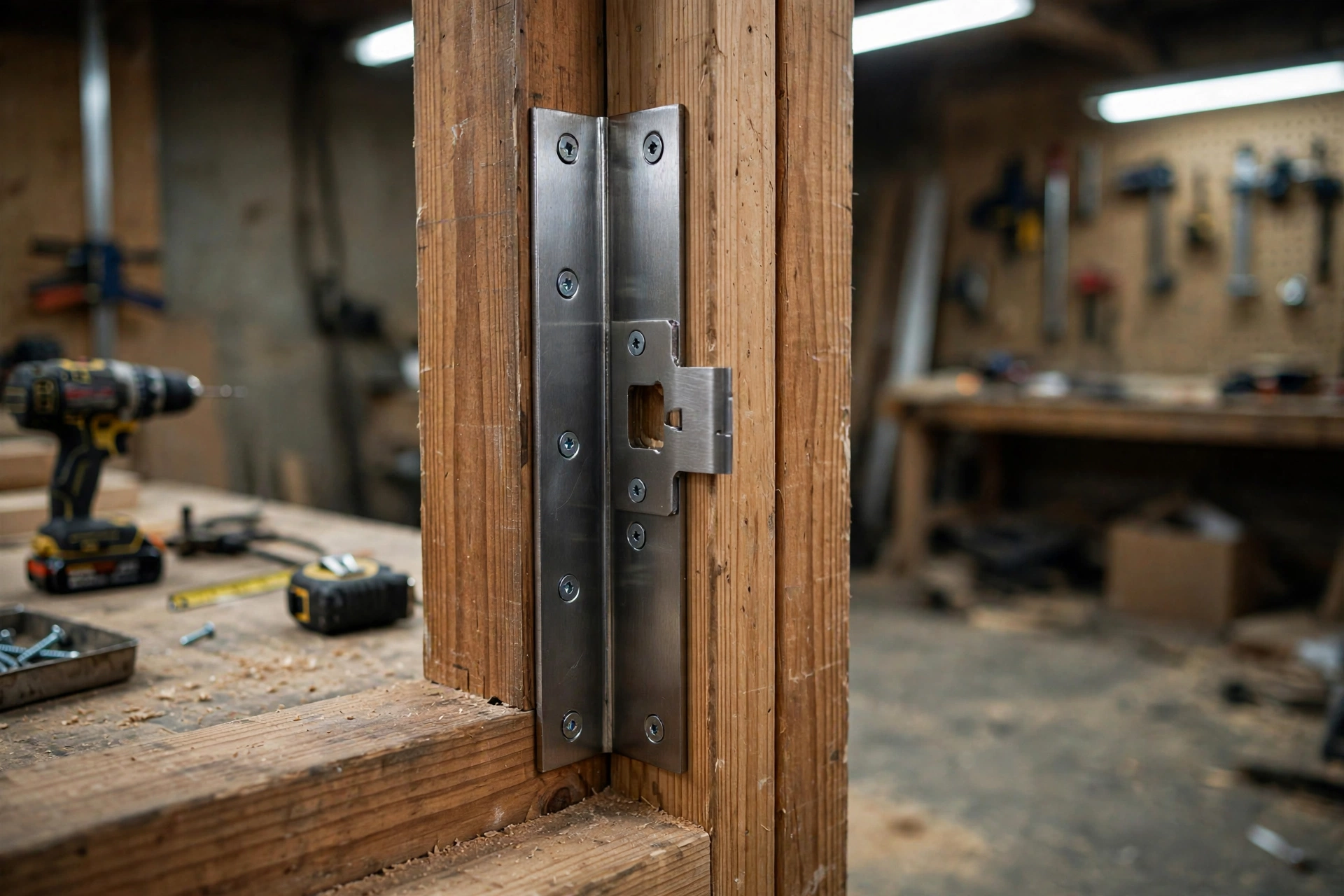
The jamb — the wooden frame the door closes into — is the next weak point. Even with long screws, a narrow or cracked jamb can split under repeated kicks. A jamb reinforcement kit (a steel sleeve or set of plates that wraps the jamb around the lock area) spreads impact force across a much larger area so the wood can’t split.
Look for kits made from heavy-gauge galvanized steel that run the full height of the lock side of the frame, not just a small plate around the strike. Installation usually means removing the trim, fitting the reinforcement over the jamb, and driving long screws through it into the studs. Our roundup of the best door reinforcement kits compares the most popular options and what each one actually strengthens.
While you’re at it, check the door’s fit. A door with a large gap between the door and the frame gives a pry bar room to work. If the gap is wide, a wider strike plate or a latch guard (a steel plate that shields the latch area) closes that opportunity.
Upgrade the Door and Lock Together
Reinforcement only pays off if the door and lock are worth protecting. Hollow-core interior doors should never be used as exterior doors — they can be punched or kicked through with little effort. Exterior doors should be solid wood, steel, or fiberglass, at least 1-3/4 inches thick.
On the lock side, a quality single-cylinder deadbolt with a one-inch throw is the baseline. The deadbolt’s strike must be a heavy-duty box strike (a reinforced metal pocket the bolt slides into), not a flimsy surface plate. If your deadbolt is due for an upgrade anyway, see our picks for the best deadbolt locks for front doors — and pair the new lock with the long-screw treatment from day one.
Don’t neglect the hinges either. If your door opens outward, make sure the hinge pins are non-removable or secured with set screws; otherwise an intruder can simply pop the pins and lift the door off. For inward-opening doors, drive one 3-inch screw through each hinge leaf into the framing.
One detail people overlook: check the door’s edge and the frame for rot or soft spots before reinforcing. Screws — long or short — can’t hold in crumbling wood. Probe suspicious areas with a screwdriver; if it sinks in easily, cut out the rot and fill with epoxy wood filler or replace the section before mounting any hardware. Reinforcement anchored into solid wood performs dramatically better than the same hardware screwed into decay.
Layer It: The Full Kick-Resistant Setup
No single product makes a door kick-proof, but layers stack up fast. A sensible, complete setup looks like this:
- Solid door (steel, fiberglass, or solid wood), properly hung with minimal gaps.
- Quality deadbolt with a one-inch throw and a reinforced box strike.
- 3-inch screws in the strike plate and hinges, anchored into the studs.
- Jamb reinforcement spreading impact force along the lock side of the frame.
- Hinge protection appropriate to which way the door swings.
Each layer is cheap on its own; together they turn a door that fails in seconds into one that demands serious tools, serious noise, and serious time — which is exactly what burglars don’t want. For a broader look at entry-point hardening, our guide to front door security techniques covers lighting, visibility, and habits that complement the hardware. And if you’re weighing electronic options too, read up on smart locks and access control — a reinforced door with a good smart deadbolt is a strong combination.
Frequently Asked Questions
Can a reinforced door still be kicked in?
Given enough time and the right tools, almost anything can be forced. The goal of reinforcement isn’t to make entry impossible — it’s to make it slow, loud, and difficult. Most break-ins are crimes of opportunity, and a door that resists the first few kicks sends an intruder looking for an easier target.
Do I need a reinforcement kit, or are long screws enough?
Long screws are the best first step and may be enough for a sturdy, well-fitted frame. A reinforcement kit adds meaningful protection when the jamb is thin, cracked, or soft, or when you want the strongest practical setup. They’re complementary, not competing, upgrades.
Will reinforcement work on a rental?
Long screws are usually renter-friendly since they don’t change how anything looks — just save the original screws to swap back. Full jamb kits that require removing trim are harder to justify in a rental; check with your landlord first.
Should I reinforce every door or just the front?
Prioritize the doors a burglar would actually use: the front door, back door, and any door from the garage into the house. Side doors and basement entries come next. Interior doors don’t need this treatment.
Does door reinforcement help against lock picking or bumping?
Not directly — reinforcement addresses forced entry, not lock manipulation. For that, choose a deadbolt with anti-bump and anti-pick features (look for a UL 437 rating or equivalent) and keep the reinforcement as your second layer.
Conclusion
Door reinforcement is unglamorous work, but it’s the highest-return security project most homeowners can do in a weekend. Start with 3-inch screws in every strike plate and hinge, add jamb reinforcement where the frame needs it, and make sure the door and deadbolt are worthy of the frame you’re protecting. Layered together, these simple upgrades turn your door from the weakest link into a genuine barrier.


