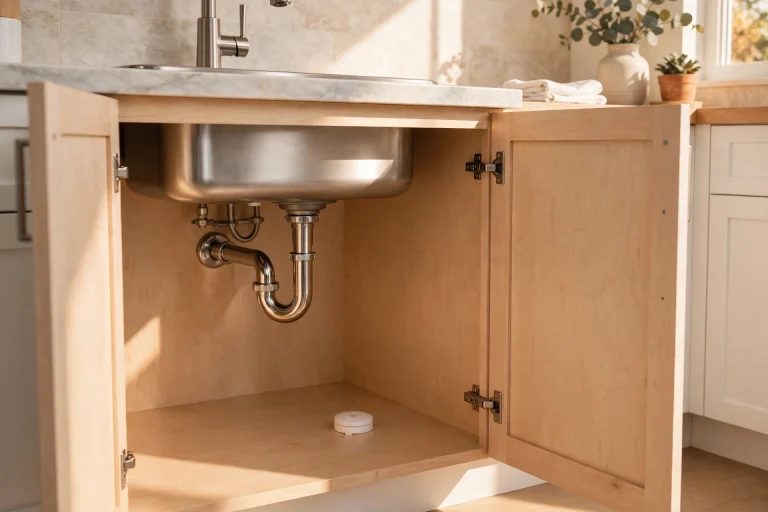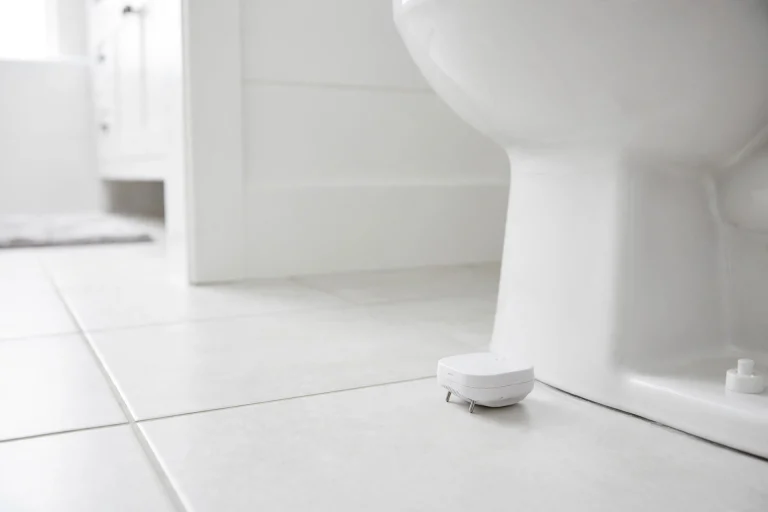

A leak detector tells you there is water on the floor. An automatic water shutoff valve does something better: it stops the water at the source. When its sensors detect a leak, the valve closes your home’s main water supply on its own — whether you are in the next room or on another continent.
That automatic response is what separates a mop-up from a catastrophe. A burst pipe can pump out hundreds of gallons while you are at work; a valve that closes within seconds limits the damage to whatever already escaped. This guide explains how these valves work, the two main types, what to consider before buying, and how to keep one working reliably.
How They Work
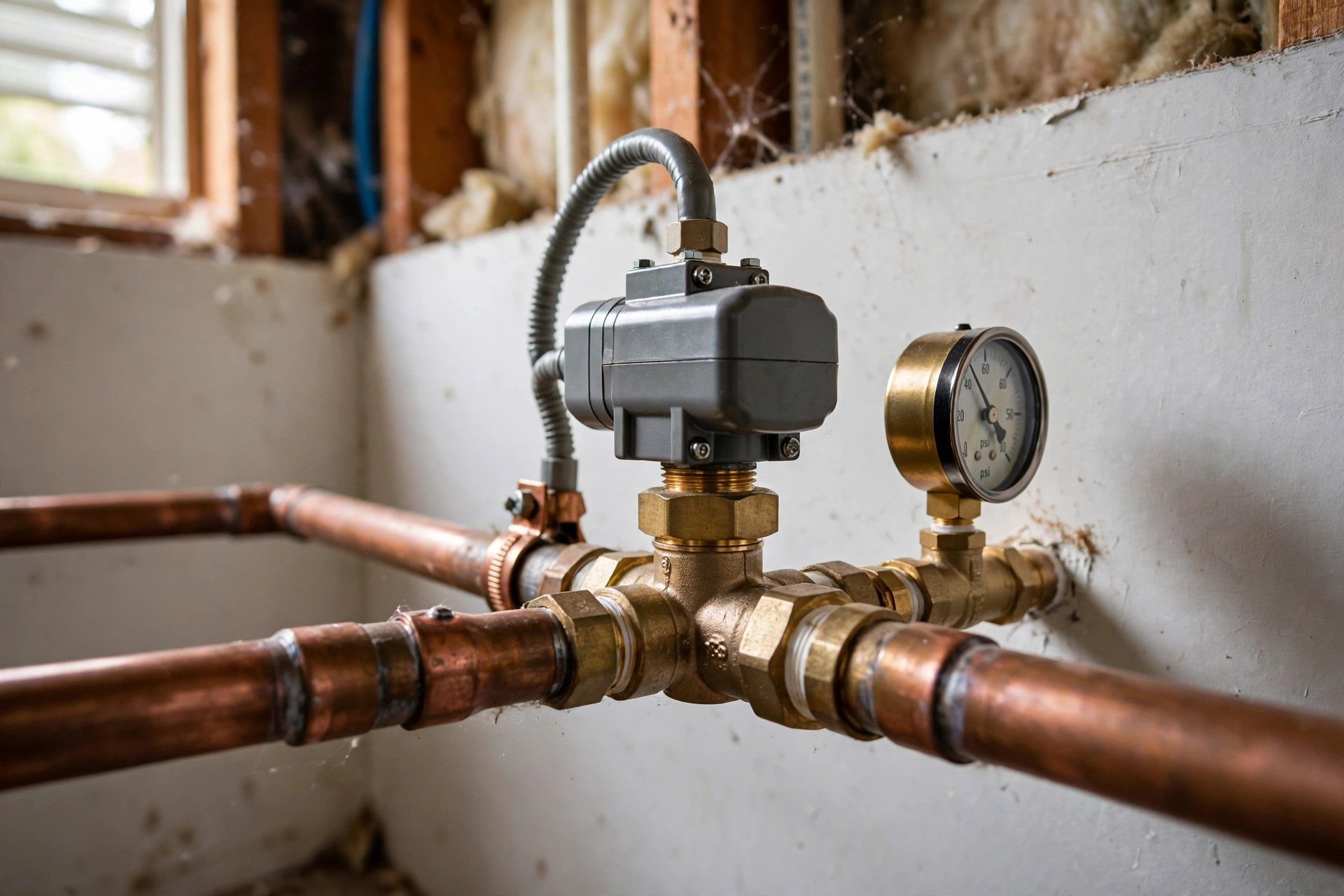
The system has two parts: sensors and the valve itself. Wireless leak sensors sit at risk points around the house — under sinks, behind the washing machine, at the water heater — the same spots covered in our environmental sensors guide. When a sensor detects water, it radios the valve controller, and a motorized ball valve on your main water line rotates closed, cutting supply to the whole house.
The whole sequence typically takes seconds. Some systems also detect abnormal flow patterns: if water runs continuously for an unusually long time (a toilet flapper stuck open at 2 a.m., say), the valve can shut off even without a leak sensor triggering. A few advanced models monitor pressure and can catch pinhole leaks and slow drips by noticing pressure decay when no fixtures are in use.
Most valves are fail-safe by design: they need power to stay open or to close, depending on the model, so check what yours does during a power outage. Many include battery backup that keeps the valve operable through outages — worth confirming before you buy, since storms that knock out power are exactly when you want protection active.
The Two Main Types
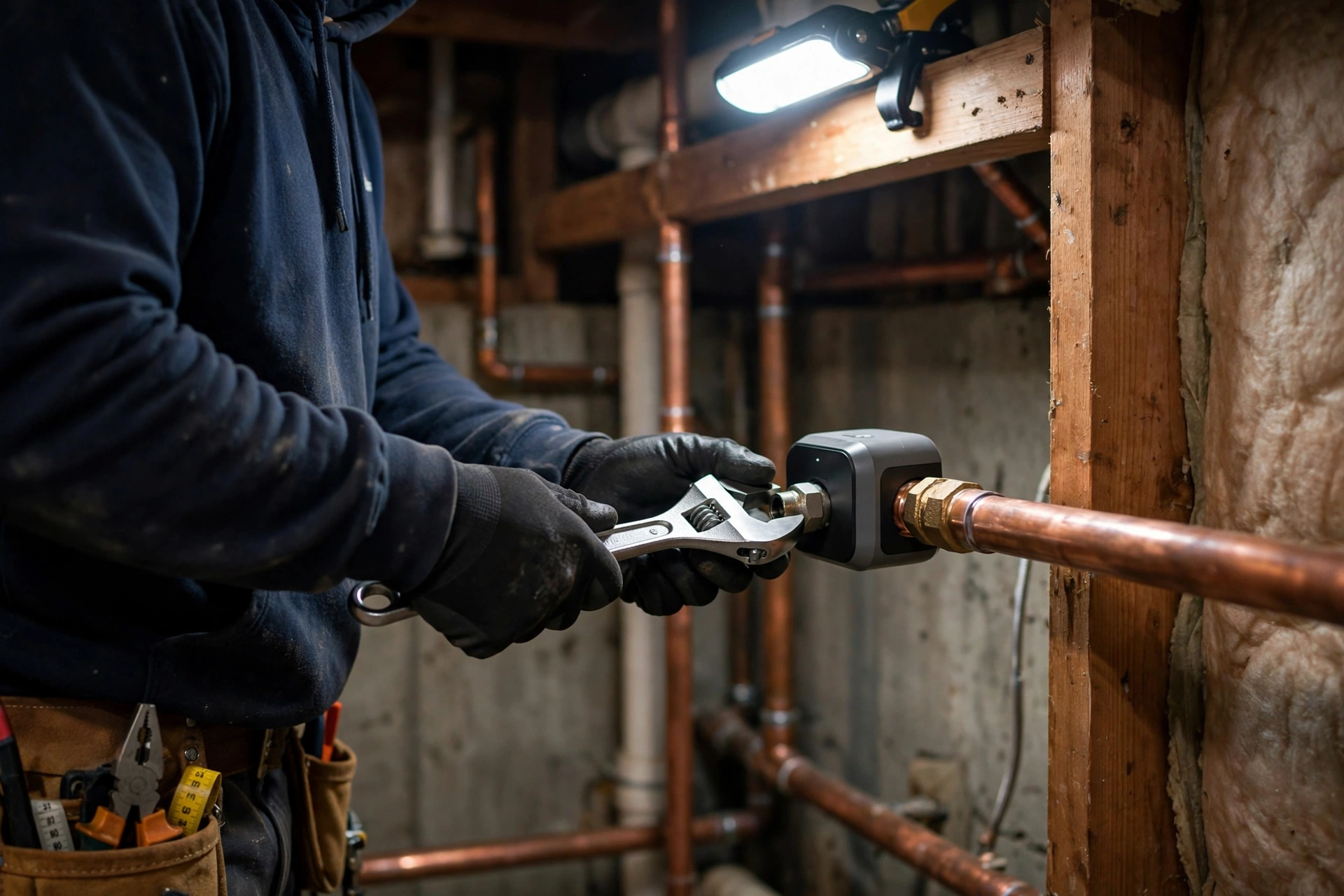
1. Whole-house inline valves. A motorized ball valve is installed directly on your main water line (usually where it enters the house). When triggered, it shuts off water to the entire home. This is the most complete protection: it stops supply-line bursts, appliance failures, and fixture leaks alike. Installation requires cutting into the main line, so it is plumber territory for most homeowners — budget for professional installation on top of the device cost.
2. Point-of-use valves. These smaller motorized valves install on individual supply lines — under a sink, behind a toilet, at the washing machine. They only shut off that one fixture when their local sensor detects water. They are cheaper, easier to install (many are DIY-friendly), and a good option for renters or for protecting one high-risk appliance. The trade-off: a burst pipe elsewhere in the house is not covered.
Which you need depends on your risk profile. A single-family home with an aging water heater and a finished basement justifies the whole-house valve. A condo owner mainly worried about the washing machine hose can start with point-of-use. Our best smart water shutoff valves roundup compares both types side by side.
What to Consider Before Buying
Pipe size and type. Whole-house valves come in standard sizes (typically 3/4-inch or 1-inch) to match residential mains. Know your pipe diameter and material (copper, PEX, CPVC) before ordering — and confirm the valve is rated for your local water pressure.
Power and connectivity. The valve needs power (usually a wall outlet nearby) and, for smart features, Wi-Fi or a hub connection. The shutoff function itself should work locally even if the internet is down — remote alerts and app control are the parts that need connectivity. Ask specifically: “If my router dies, does the valve still close on a leak signal?” The answer should be yes.
Manual override. Every valve should have a manual way to open and close it — a lever on the unit itself. If the motor fails or the batteries die, you still need to control your water. Test the manual override after installation so you know it works.
Freeze protection. Some smart valves include temperature sensing and will alert you (or even trickle-protect) when pipes approach freezing. If you live where winters bite, this feature alone can justify the upgrade — frozen-pipe bursts are among the most destructive residential water events.
Insurance. Many insurers offer discounts for homes with automatic shutoff valves, and some now require them for high-value homes or homes with a claims history. It is worth a call to your agent before you buy — the discount can meaningfully offset the cost. Water damage is also a major driver of the mold problems described in the EPA’s flood cleanup guidance, which is another reason early shutoff pays for itself.
Installation and Maintenance
For whole-house valves, hire a licensed plumber. The job involves shutting off water at the street, cutting the main line, and installing the valve with proper fittings — typically a one-to-three-hour job. While the plumber is there, have them show you the main shutoff location if you do not already know it, and consider having them install a separate manual ball valve upstream as a backup.
Point-of-use valves are often DIY-friendly: they typically thread onto existing supply-line connections with basic hand tools. Still, turn off the water first, keep a bucket and towels handy, and check for drips after pressurizing.
Maintenance is light but not zero:
- Exercise the valve every few months — most apps have a test function that partially cycles it. Ball valves that sit open for years can seize; regular cycling keeps them free.
- Test the sensors with a damp cloth twice a year, the same schedule as your smoke alarms.
- Check battery backups annually and replace per the manufacturer’s schedule.
- Keep the app updated and confirm alert notifications still reach your phone after any phone or router change.
One more thing: tell your household how the system works. If the valve shuts off the water while someone is mid-shower because a sensor got splashed, they should know to check the app (or the valve’s manual lever) rather than assuming the water company cut service. A quick family briefing prevents confusion — and prevents someone from “fixing” the system by disabling it.
For the broader flood-protection picture, see how a home security system helps against flooding and our flash flood risk assessment guide.
Frequently Asked Questions
Will a shutoff valve stop all water damage?
No — it stops water coming from your plumbing supply. It cannot stop rain intrusion, sewer backups, or water already in the pipes downstream of the valve. It dramatically limits damage from the most common indoor sources: burst pipes, failed hoses, and appliance leaks.
What happens if the power goes out?
It depends on the model. Good systems include battery backup that keeps the valve operable during outages, and many are designed so the valve holds its last position without power. Check the specs — and remember that leak sensors with their own batteries keep watching regardless.
Can I install a whole-house valve myself?
If you are comfortable sweating copper or working with PEX and your local code allows homeowner plumbing work, it is doable — but most people should hire a plumber. An improper installation on the main line can cause bigger problems than it prevents.
Will it shut off the water by accident?
False triggers are rare but possible — a sensor knocked into a mop bucket, for example. Most systems let you reopen the valve from the app in seconds, and flow-based auto-shutoff can usually be tuned or disabled if it misfires. Place sensors thoughtfully to minimize nuisance trips.
Do I still need leak detectors if I have a shutoff valve?
The valve system includes its own sensors, so standalone detectors become redundant in covered areas. Keep any extras for spots the valve’s sensors do not cover, like an attic HVAC pan or a detached garage.
The Bottom Line
A leak detector tells you about the flood; an automatic shutoff valve prevents most of it. For homes with finished basements, expensive flooring, or long empty hours, a whole-house valve is one of the highest-value protection devices you can install — it acts in seconds, works while you sleep or travel, and may even earn you an insurance discount. Pair it with well-placed sensors, exercise the valve regularly, and your plumbing gets a guardian that never blinks.