
A burst washing machine hose can release hundreds of gallons of water per hour. A slow leak under a sink can rot a cabinet and breed mold for months before anyone notices. Water damage is one of the most common and expensive home insurance claims — and much of it starts small, hidden, and silent.
Water leak detectors are cheap, simple devices that sit on the floor and sound an alarm (or ping your phone) the moment they touch water. But a detector only helps if it is sitting where the water actually goes. Placement is the entire game with these devices, so this guide walks through exactly where to put them, room by room.
How Water Leak Detectors Work
Most leak detectors are refreshingly simple: two metal contacts on the bottom of the unit. When water bridges the contacts, the circuit completes and the alarm sounds. Smart models add Wi-Fi or a hub connection so you also get a phone alert — worth having, since leaks love to start while you are at work or on vacation.
Some detectors use a remote sensor probe on a cable, which lets you tuck the probe into tight spots (behind a washing machine, inside a sump pit) while the main unit sits somewhere accessible. Others add temperature or humidity sensing, which can warn you about freezing pipes before they burst. For a broader look at how these fit into home protection, see our guide to environmental sensors in home security.
One limitation to understand: a detector only senses water that reaches it. It will not find a leak inside a wall cavity or under a slab. That is why placement — putting sensors at the lowest point where water from each risk area would naturally flow — matters more than the number of sensors you own.
The Priority Spots, Room by Room
If you are starting with a handful of sensors, put them where leaks are most likely and most damaging:
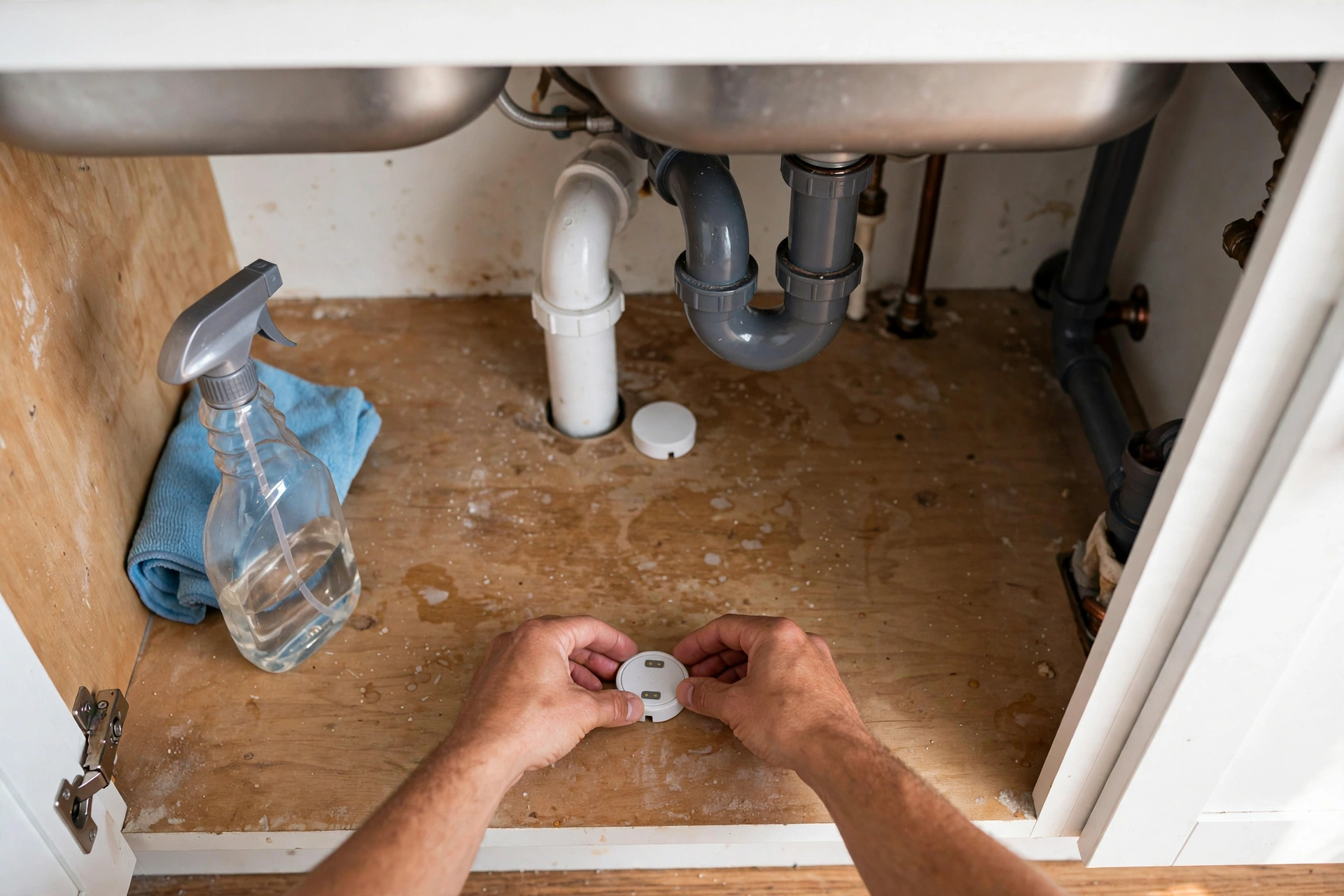
- Under every sink — kitchen and bathrooms. Supply-line connections and P-traps are the most common indoor leak sources. Slide the detector to the back of the cabinet, where water would pool.
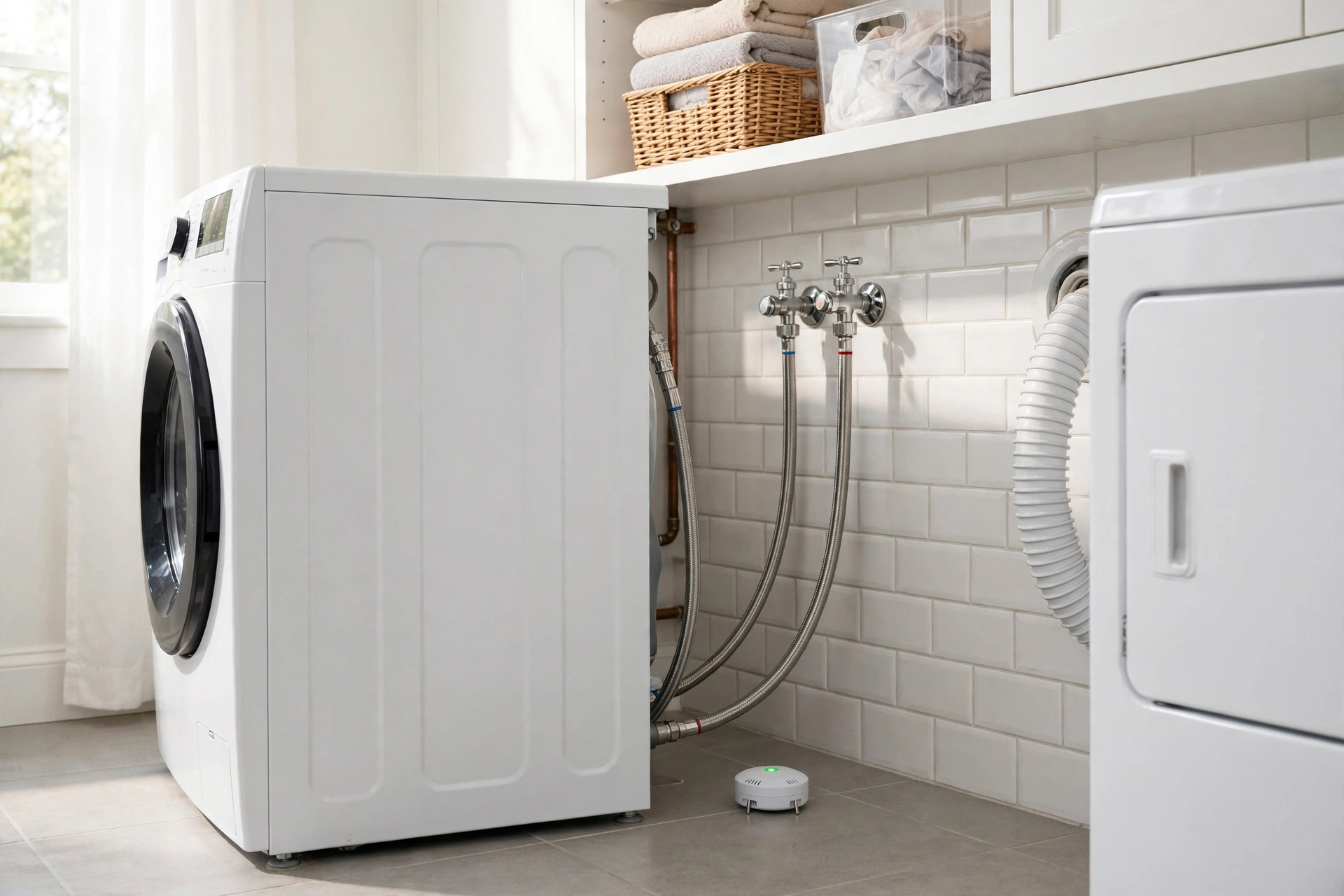
- Behind the washing machine. Hoses crack, connections loosen, and drain pumps fail. Place the sensor on the floor behind or beside the machine, near the water supply hoses.
- Next to the water heater. Tank water heaters eventually fail — often catastrophically. A sensor at the base of the tank, or in the drain pan if yours has one, gives you the earliest possible warning.
- Behind the refrigerator if it has a water line for ice or chilled water. Those thin plastic lines are notorious for slow leaks.
- Under the dishwasher. Hard to reach, which is exactly why a sensor belongs there — place it at the front edge under the kick plate where water would seep out.
- Around toilets, especially at the base where the wax ring can fail, and near the supply valve.
- In the basement or crawl space at the lowest point of the floor, near the sump pump if you have one, and under any visible plumbing runs.
- Near the main water shutoff valve and anywhere pipes enter the house — these are the spots where a freeze-related burst is most likely.
Think like water: it flows downhill and pools at the lowest point. In each risk area, find that point and put the sensor there. A detector perched on a high shelf in the laundry room is just decoration.
Spots Most Homeowners Forget
Beyond the obvious appliances, a few locations deserve a sensor that most people never think about:
- HVAC condensate drain and drip pan. Air conditioners produce gallons of condensate daily in summer. A clogged drain line overflows the pan — usually into a ceiling or closet you rarely inspect.
- Under upstairs bathrooms. A leak upstairs becomes ceiling damage downstairs. If you can only afford a few sensors, prioritize fixtures above finished living spaces.
- Near the sump pump. A sensor in the sump pit (or beside it) tells you the pump has failed before the basement floods. Pair this with a pump that has battery backup for power outages.
- Attics with plumbing or HVAC equipment. Rarely visited, slow to show damage — a sensor here is cheap insurance.
- Wet bars, utility sinks, and laundry tubs in basements and garages.
If you live in an area where flooding is a known risk, detectors are one layer of a bigger strategy. Check whether you are living in a flood zone, and read how a home security system can help against flooding for the wider picture.
Placement Tips That Actually Matter
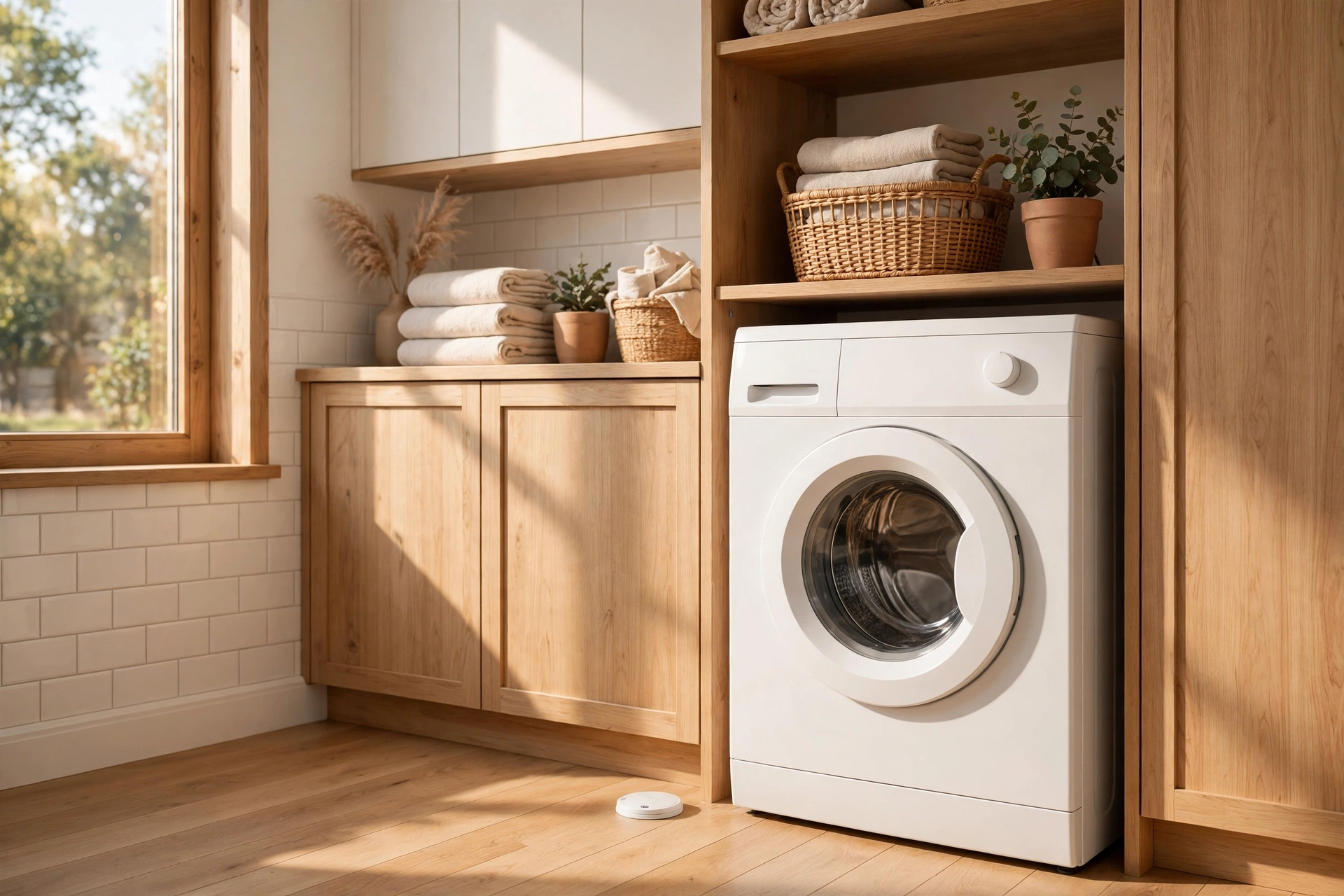
Keep the sensor contacts on the floor. It sounds obvious, but sensors get knocked over, kicked aside during cleaning, or “temporarily” moved and never put back. Check positions a couple of times a year — when you test your smoke alarms is a good reminder.
Do not seal them in. A sensor inside a zipped waterproof bag or buried under stored boxes cannot touch the water it is supposed to detect. Give it a clear patch of floor.
Mind the temperature range. Most detectors are rated for indoor temperatures. In unheated crawl spaces or garages, check the specs — extreme cold can kill batteries fast and push the sensor outside its operating range.
Test them. Touch the contacts with a damp cloth or fingertip; the alarm should sound within seconds. Do this when you install them and at least twice a year after. A dead sensor is worse than no sensor because it gives you false confidence.
Consider why early detection matters. The EPA’s mold guidance emphasizes that controlling moisture is the key to preventing mold — and mold can start growing within 24 to 48 hours of water exposure. A detector that catches a leak on day one versus day thirty is the difference between mopping up and remediation.
Ready to buy? Our best water leak detectors roundup compares the top standalone and smart models.
Frequently Asked Questions
How many water leak detectors do I need?
Most homes are well covered with 4 to 8: under the kitchen sink, behind the washing machine, at the water heater, behind the fridge (if it has a water line), and in the basement or near the sump pump. Add more for upstairs bathrooms and HVAC equipment.
Do water leak detectors need Wi-Fi?
Basic models just sound a local siren — fine if someone is usually home. Smart models send phone alerts, which is what makes them valuable when you travel or work long hours. The sensor itself works the same either way.
Will a leak detector find a leak inside a wall?
No. Detectors only sense water that physically reaches their contacts. For in-wall leaks, watch for secondary signs: unexplained musty smells, discolored drywall, peeling paint, or a water bill that jumps without explanation.
Where exactly should the sensor sit under a sink?
At the back of the cabinet, on the cabinet floor, near the supply-line connections and the P-trap — that is where drips land and pool. Keep it clear of stored cleaning bottles so water can reach it.
How long do the batteries last?
Typically 1 to 3 years depending on the model and how often it alarms. Smart Wi-Fi models tend toward the shorter end. Test twice a year and replace batteries on the schedule the manufacturer recommends.
The Bottom Line
Water leak detectors are among the cheapest protection you can buy for your home — but only if they sit where the water goes. Cover the big risk points (sinks, washing machine, water heater, fridge line, basement low spots), think like water when positioning each sensor, and test them regularly. Ten minutes of thoughtful placement beats a drawer full of detectors that never touch a drop.