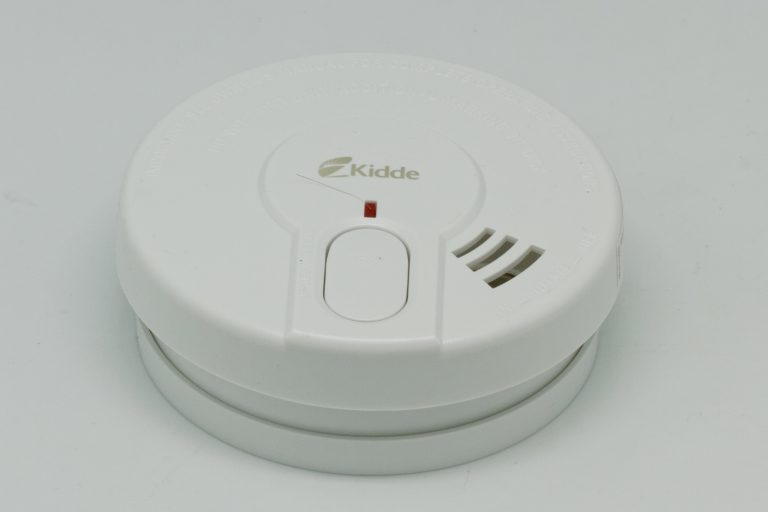

A traditional smoke detector does one job: it screams loudly when it senses smoke. A smart smoke detector does that job too — but it also pings your phone, tells you which room the smoke is in, and can talk to your other smart home devices. For a homeowner who spends most of the day away from the house, that difference matters.
But the word “smart” does a lot of heavy lifting on the box. Some smart detectors are little more than traditional alarms with a Wi-Fi chip bolted on. Others are genuinely intelligent devices that can tell burnt toast apart from a real fire, test themselves silently, and call for help when nobody is home to hear the siren.
This guide explains how smart smoke detectors actually work: the sensing technology inside, what the “smart” features really do, how they communicate with your home, and how to place and maintain them.
How Smoke Detectors Sense Fire
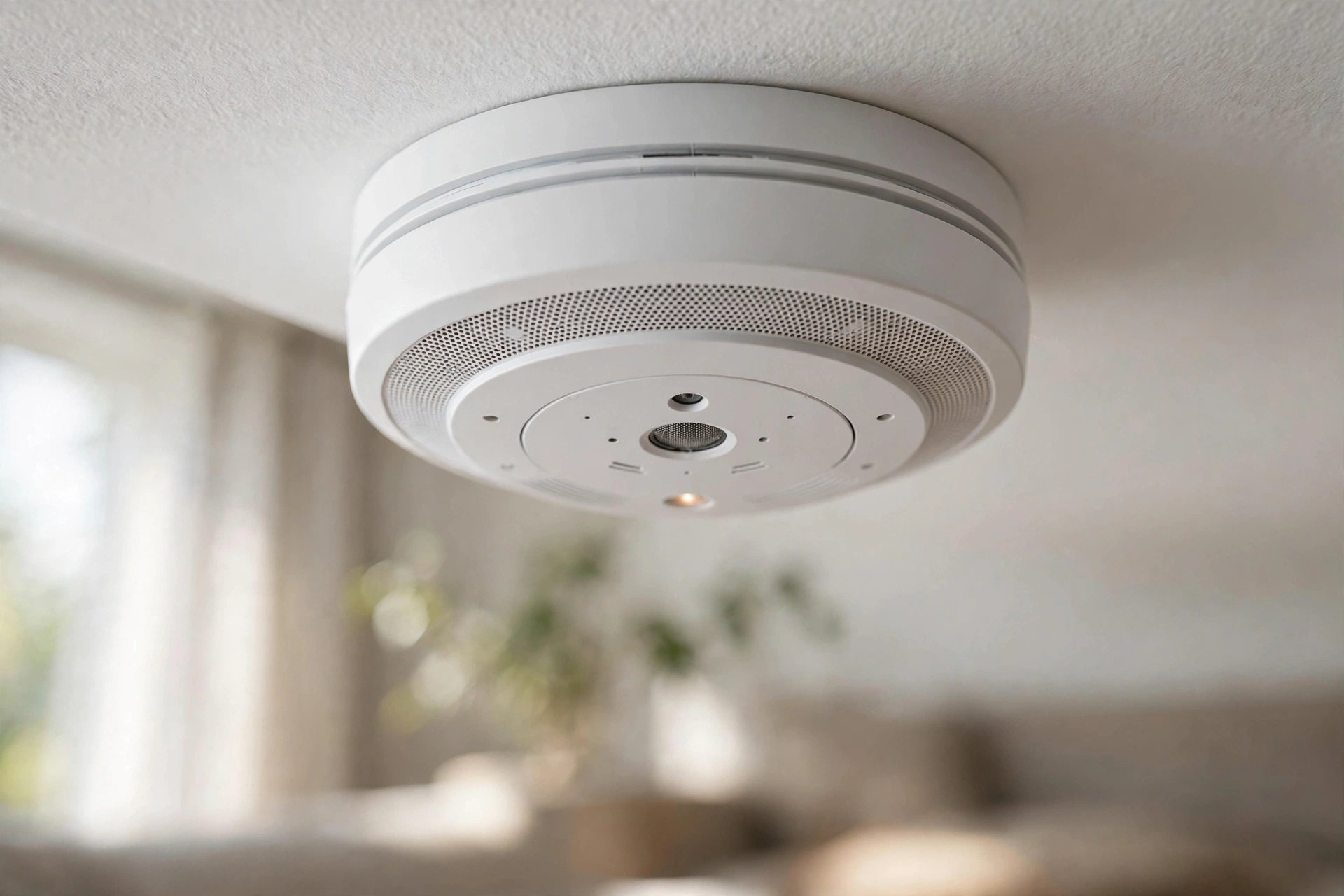
Before the “smart” part, every smoke detector is still a smoke detector. Most units use one of two sensing technologies, and understanding them helps you shop wisely. If you want a deeper primer on the basics, our ultimate smoke detectors buying guide walks through the fundamentals.
Ionization sensors use a tiny amount of radioactive material to ionize air inside a sensing chamber. When smoke particles enter, they disrupt the electrical current, which triggers the alarm. Ionization sensors react fastest to fast-flaming fires with lots of small combustion particles.
Photoelectric sensors use a light beam and a light sensor. When smoke drifts into the chamber, particles scatter the light onto the sensor and the alarm sounds. Photoelectric sensors respond faster to slow, smoldering fires — the kind that start in upholstery or bedding and produce thick smoke before flames.
Many smart detectors now use multi-criteria sensing: they combine photoelectric detection with additional sensors (heat, and sometimes carbon monoxide) plus software that analyzes the pattern. That analysis is what lets a good smart detector ignore steam from your shower while still catching a real fire early. It is also why placement matters so much — the way smoke travels inside a home determines whether the sensor ever sees the particles in time.
What “Smart” Actually Adds
The sensor is only half the story. Here is what the smart layer typically includes, and which features are genuinely useful versus nice-to-have.
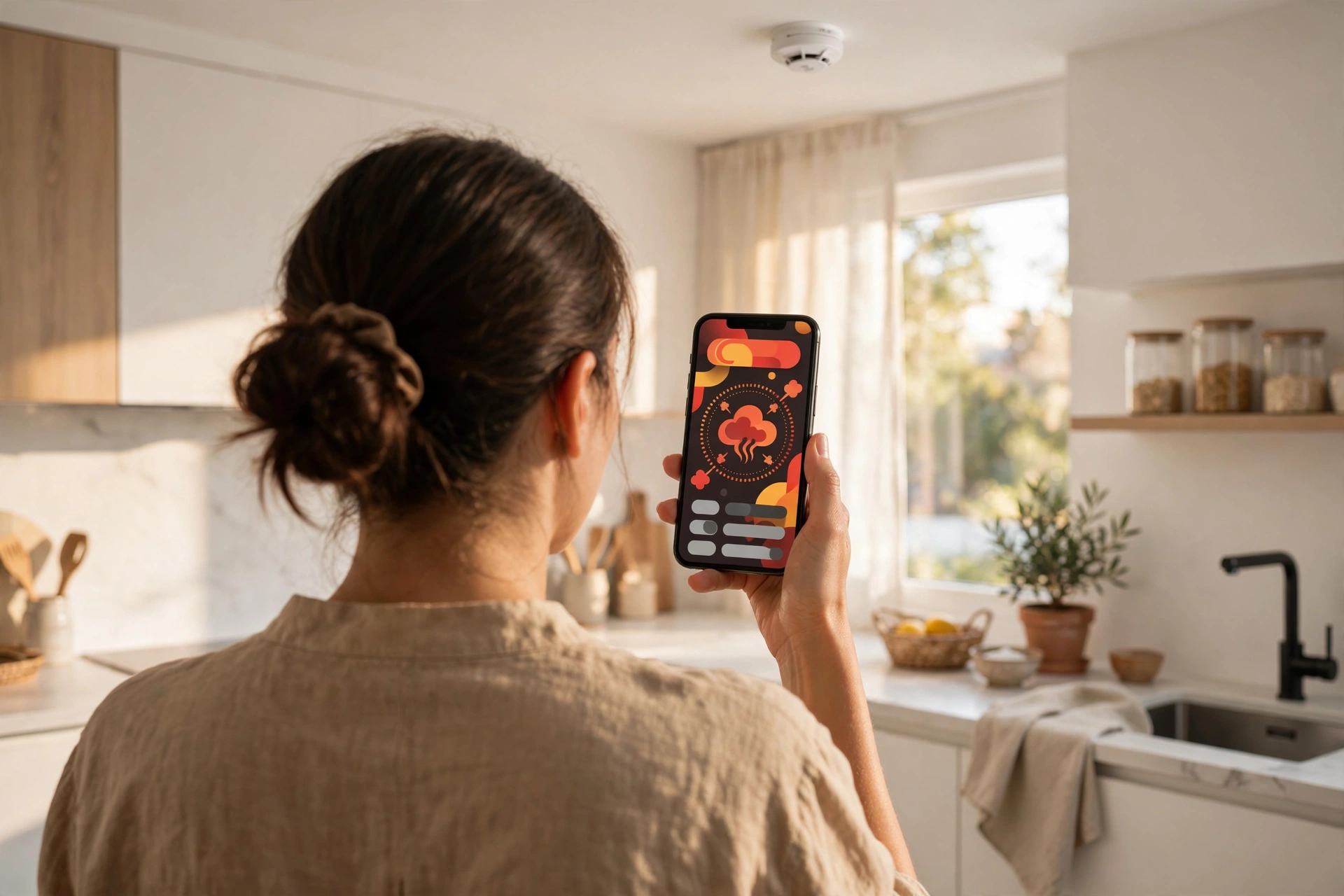
Phone alerts. When the alarm triggers, you get a push notification — even if you are at work or on vacation. This is the single most valuable smart feature: a traditional alarm is useless if nobody is home to hear it. Some models also send alerts for low batteries and sensor faults, so you find out about a dead detector before an emergency does.
Room-specific voice alerts. Instead of a generic siren, many smart detectors announce the location: “Smoke detected in the kitchen.” In a real fire, knowing where the danger is helps your family choose the right escape route instead of running toward the smoke.
Wireless interconnectivity. When one alarm sounds, every connected alarm in the house sounds. Traditional hardwired systems have done this for years, but smart detectors do it over your home network or a dedicated wireless protocol — no electrician required. That matters because smoke alarms are central to fire prevention only when the whole household can actually hear them.
Remote hush and self-testing. Burned dinner again? Instead of fanning the alarm with a towel, you can silence a nuisance alarm from your phone. Higher-end models also run automatic silent self-tests and report the results in the app. If your current alarm keeps beeping for no clear reason, a smart detector’s diagnostic alerts will at least tell you why.
How Smart Detectors Talk to Your Home
Smart detectors connect in one of two ways. Wi-Fi models connect directly to your router, which makes setup simple but means each detector is another device on your network. Hub-based models use low-power protocols like Zigbee or Z-Wave to talk to a central hub, which then connects to the internet. Hub-based detectors tend to have longer battery life and keep working as a local network even if your Wi-Fi hiccups.
Most also integrate with broader smart home platforms, so a smoke alert can trigger other actions: turning on hallway lights to illuminate your escape path, unlocking smart locks for firefighters, or shutting down your HVAC to slow smoke spread. These automations are genuinely useful, but treat them as a bonus — never as a substitute for the alarm itself.
One critical point: the local siren always works without the internet. If your Wi-Fi goes down, a smart detector still sounds its onboard alarm exactly like a traditional one. The phone alerts and automations stop, but the core life-safety function does not depend on your router. That is a deliberate design requirement, not a happy accident.
Battery life varies widely. Some Wi-Fi models need new batteries every year or two; many hub-based and sealed 10-year-battery models run for a decade with no battery changes at all. When comparing models, check the real-world battery expectations in our best smart smoke detectors roundup rather than trusting the marketing line on the box.
Placement and Maintenance Still Matter
No amount of intelligence fixes a badly placed detector. Follow the fundamentals: install a smoke alarm inside every bedroom, outside each sleeping area, and on every level of your home, including the basement. Mount them on the ceiling or high on the wall, and keep them at least 10 feet from cooking appliances to cut down on nuisance alarms. The NFPA’s smoke alarm guidance is the authoritative reference for placement and maintenance.
Test every detector monthly with the test button, vacuum the vents gently a couple of times a year to keep dust out of the sensing chamber, and replace the entire unit 10 years after its manufacture date — the sensor itself degrades, even if the electronics still work. Smart detectors make this easier by reminding you in the app, but the schedule is the same as it has always been.

Frequently Asked Questions
Do smart smoke detectors work without Wi-Fi?
Yes. The onboard siren sounds locally whenever smoke is detected, with or without an internet connection. What you lose during an outage is the remote phone alert and any smart home automations.
How long do smart smoke detectors last?
Like traditional detectors, the sensing element degrades over time, so replace the whole unit 10 years after its manufacture date. Many smart models have sealed 10-year batteries, which means zero battery changes over the life of the device.
Can a smart smoke detector reduce false alarms?
Often, yes. Multi-criteria models that combine smoke, heat, and pattern analysis are better at ignoring steam and cooking smoke than basic ionization alarms. The app-based hush button also makes the occasional nuisance alarm far less annoying to deal with.
Are smart smoke detectors worth the extra cost?
If someone is always home, a traditional interconnected alarm covers the essentials. The extra cost pays off when the house is regularly empty — remote alerts mean a fire gets noticed (and reported) while it is still small instead of after a neighbor spots the flames.
Do I still need a detector in every bedroom if they are smart?
Yes. Smart features change how the alarm communicates, not where smoke needs to be detected. Placement rules are identical: every bedroom, outside each sleeping area, and on every level of the home.
The Bottom Line
A smart smoke detector is a traditional life-safety device with a communication upgrade. The sensing principles are the same ones that have saved lives for decades; what is new is that the alarm can now reach you anywhere, tell you exactly where the danger is, and rope in the rest of your smart home to help. Buy for the sensor quality and reliability first, treat the app features as the tiebreaker, and install them where they belong. Technology helps, but placement is what saves lives.